
Gửi bình luận
An ancient painting has been brought back to life through traditional woodblock printing thanks to the perseverance of artisans from Thanh Lieu craft village in Hai Phong.
.jpg)
Efforts to revive an ancestral craft
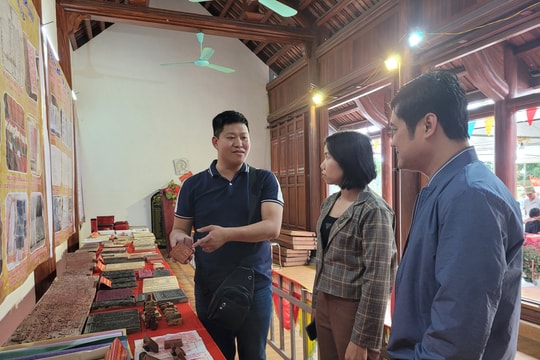
On his first visit to the Thanh Lieu shrine and the tomb of woodblock printing founder Luong Nhu Hoc in Tan Hung Ward, Hai Phong, Do Quoc Thang from Ha Noi, who previously worked in the printing and publishing industry, was deeply moved as Nguyen Cong Dat, a Thanh Lieu woodblock printing artisan, introduced him to the birthplace of Vietnam’s printing craft dating back to the Le Dynasty.
After viewing the first print of the restored ancient painting Truc Lam Dai Si Xuat Son Do (Truc Lam Grand Master Leaving the Mountain), Thang said: “I was truly surprised to see this restored painting of King-Monk Tran Nhan Tong with my own eyes. The carving and printing techniques are remarkably refined, with every delicate detail meticulously executed, demonstrating the exceptional craftsmanship of the artisans.”
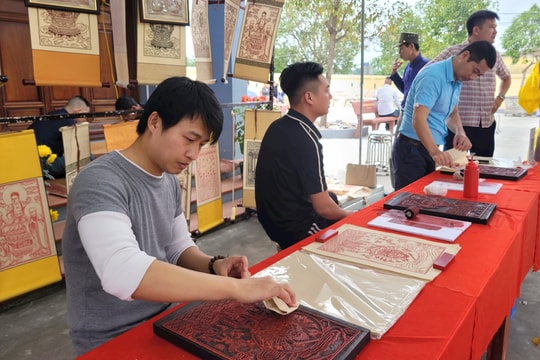
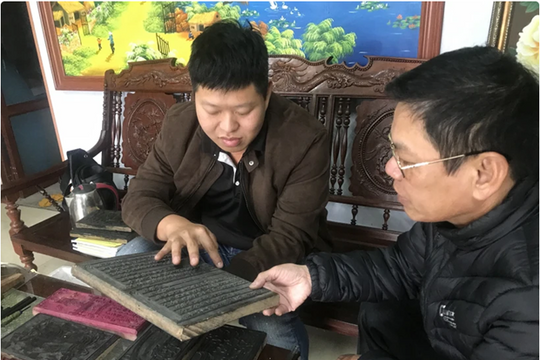
To revive the traditional craft, Dat and his colleagues spent five years visiting ancient pagodas and working with archives and libraries in Vietnam and abroad to study old woodblocks and printed books, document the names of former village artisans, and research traditional carving and printing techniques.
While collaborating with Vinh Nghiem pagoda to research, collect, and restore Buddhist scriptures and paintings associated with the Truc Lam Zen sect, with the aim of introducing representative works of this traditional craft to the public, Nguyen Cong Dat selected Truc Lam Dai Si Xuat Son Do. This masterpiece of Tran Dynasty art was taken to China during the Ming occupation of Vietnam and is now preserved at the Liaoning Museum. The painting depicts Truc Lam Grand Master (King-Monk Tran Nhan Tong) leaving Vu Lam cave, where King Tran Anh Tong and the royal court welcome him.
For this project, artisans Nguyen Cong Dat and Nguyen Cong Trang faithfully recreated the complete traditional production process, from selecting timber and preparing the printing blocks to performing ceremonial rites before beginning the work and presenting the finished woodblocks to the craft founder, Luong Nhu Hoc.
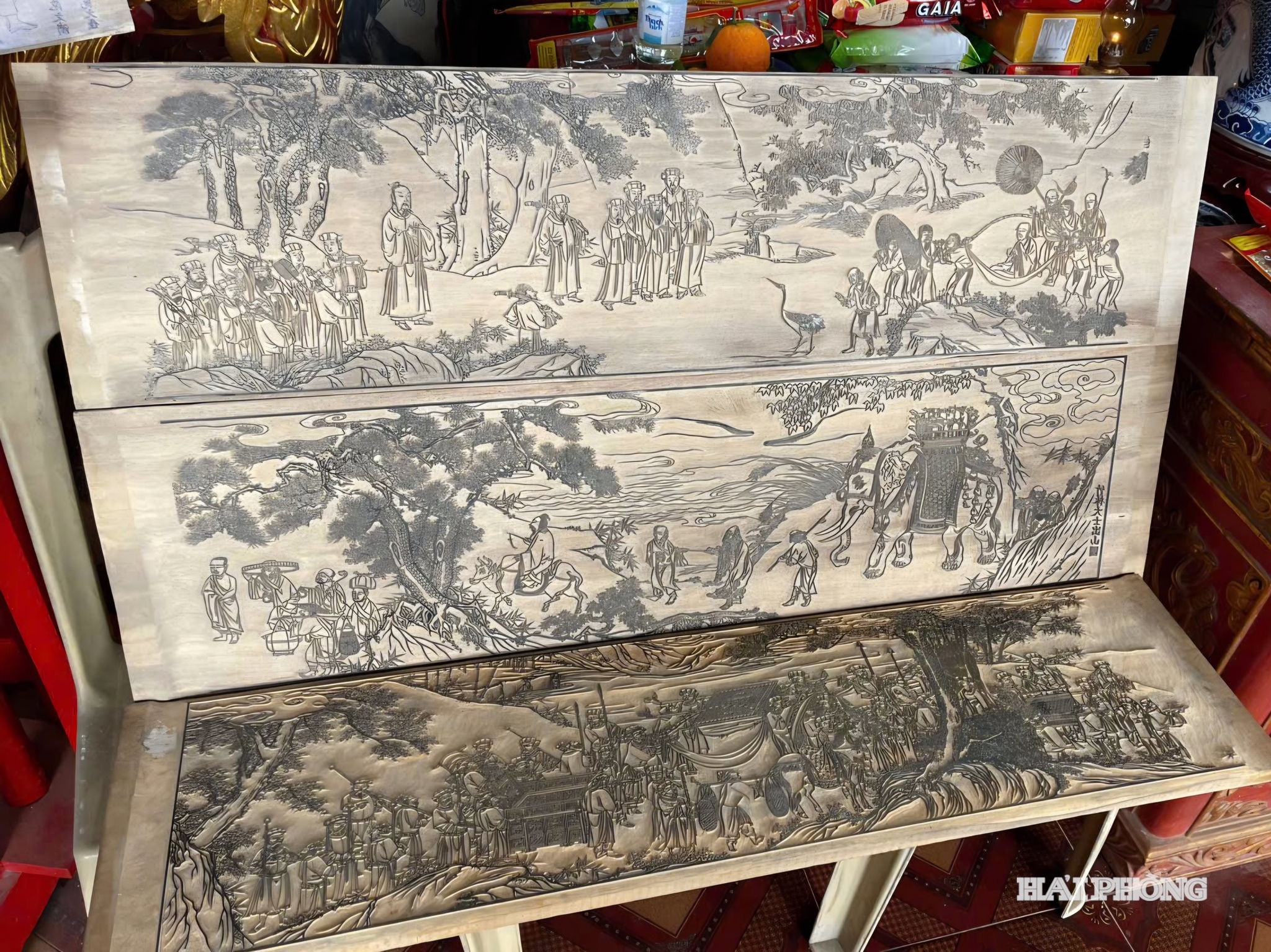
“This is the first complete set of printing blocks we have produced since reviving the craft using the full range of traditional techniques. The artwork faithfully recreates the expressions and details of 82 figures, ceremonial objects, trees, and landscapes with about 90% accuracy. Some elements were adjusted to suit the characteristics of woodblock printing so the finished prints would not have unwanted background marks,” said Dat.
Spreading cultural values
According to historian Tang Ba Hoanh, former Director of the Hai Duong Museum, Thanh Lieu woodblock printing holds exceptional scientific, educational, and cultural value. Especially, nearly 5,000 illustrations in scholar Henri Oger’s Technique of the Annamese (first published in 1908), carved by Thanh Lieu artisans Nguyen Van Dang, Nguyen Van Giai, Nguyen Van Dung, and Pham Van Tieu, vividly document the customs, agricultural and handicraft techniques, and daily life of the Vietnamese people in the past.
“The successful restoration of Truc Lam Dai Si Xuat Son Do in Vietnam using Thanh Lieu’s traditional woodblock printing techniques is a remarkable achievement. Half a century ago, I had the opportunity to work with woodblock artisans from the feudal era and witnessed their extraordinary skills. I once feared the craft would disappear, but fortunately it has been carried forward by a new generation represented by Nguyen Cong Dat,” Hoanh said.
From each carved line on a wooden block, the story of the Tran Dynasty has been retold in the language of today. The revival of Thanh Lieu woodblock printing continues to open new possibilities, ensuring that this heritage is not only preserved but also remains a living part of contemporary life.
MINH CONG