

Gửi bình luận
Artificial intelligence (AI) is becoming a powerful tool that helps teachers innovate teaching methods, improve education quality, and equip students with the essential skills needed in the digital age.
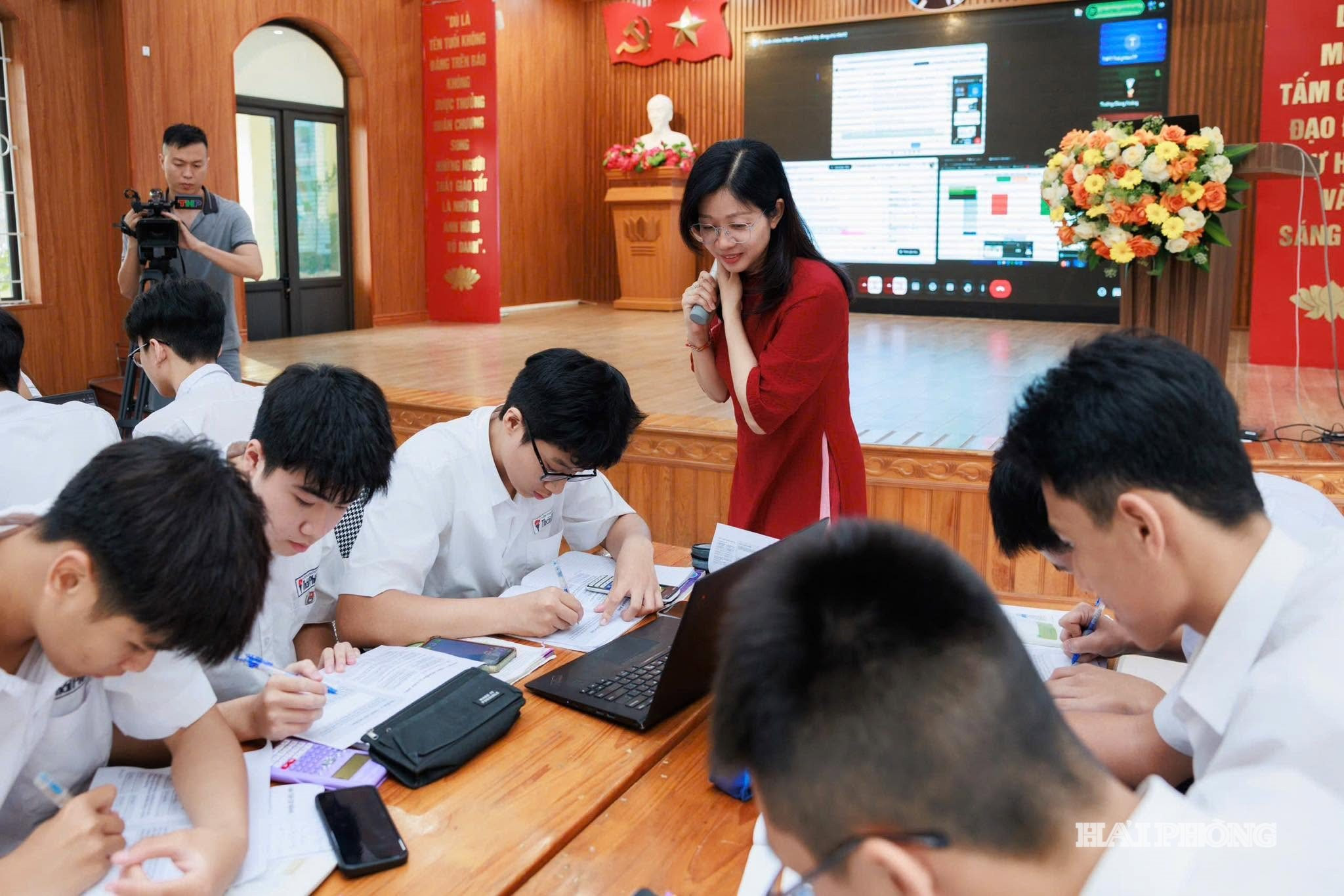
AI enters the classroom
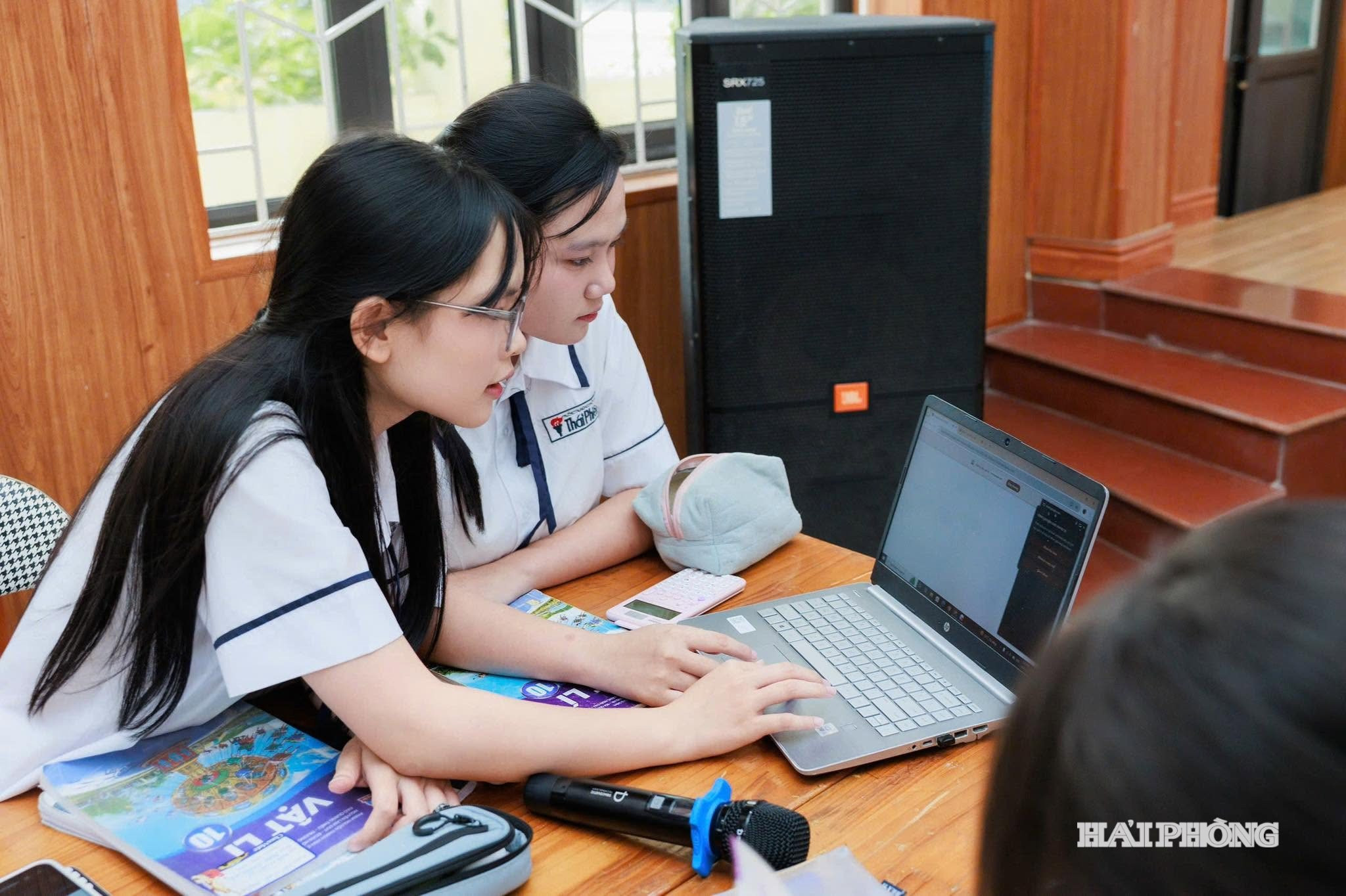
At a physics lesson on the topic of Mechanical Energy Exercises, Ms. Ha Thi Minh Phuong, a teacher at Thai Phien High School, uses AI (artificial intelligence) as a “digital laboratory” to help visualize scientific concepts. Based on diagrams and data from the textbook, students actively create prompts for ChatGPT or Gemini to generate simulations of free-falling objects, while illustrating the conversion between potential energy and kinetic energy through graphs, charts, and animated visuals.
According to Ms. Ha Thi Minh Phuong, teachers previously had to spend considerable time preparing learning materials or rely on specialized software. Today, AI enables them to quickly create interactive, accurate, and visually engaging models. For students, the process of formulating questions, refining prompts, and verifying results not only deepens their understanding of the law of conservation of mechanical energy but also develops critical thinking, problem-solving abilities, and digital literacy skills.
As one of the educators who early recognized the value of AI in education, Mr. Le Quang Hung, a teacher at Cat Ba High School, uses AI as a tool to advance personalized learning. By analyzing learning data, AI helps teachers accurately identify each student's strengths, weaknesses, and learning pace, enabling them to adjust lesson content and teaching methods accordingly.
According to Mr. Le Quang Hung, in classrooms with large numbers of students, AI does not replace the role of teachers; rather, it provides an additional “data lens” that allows educators to better understand their students. This enables teachers to offer timely and targeted support, helping improve educational quality, particularly in remote and disadvantaged areas where learning conditions remain limited.
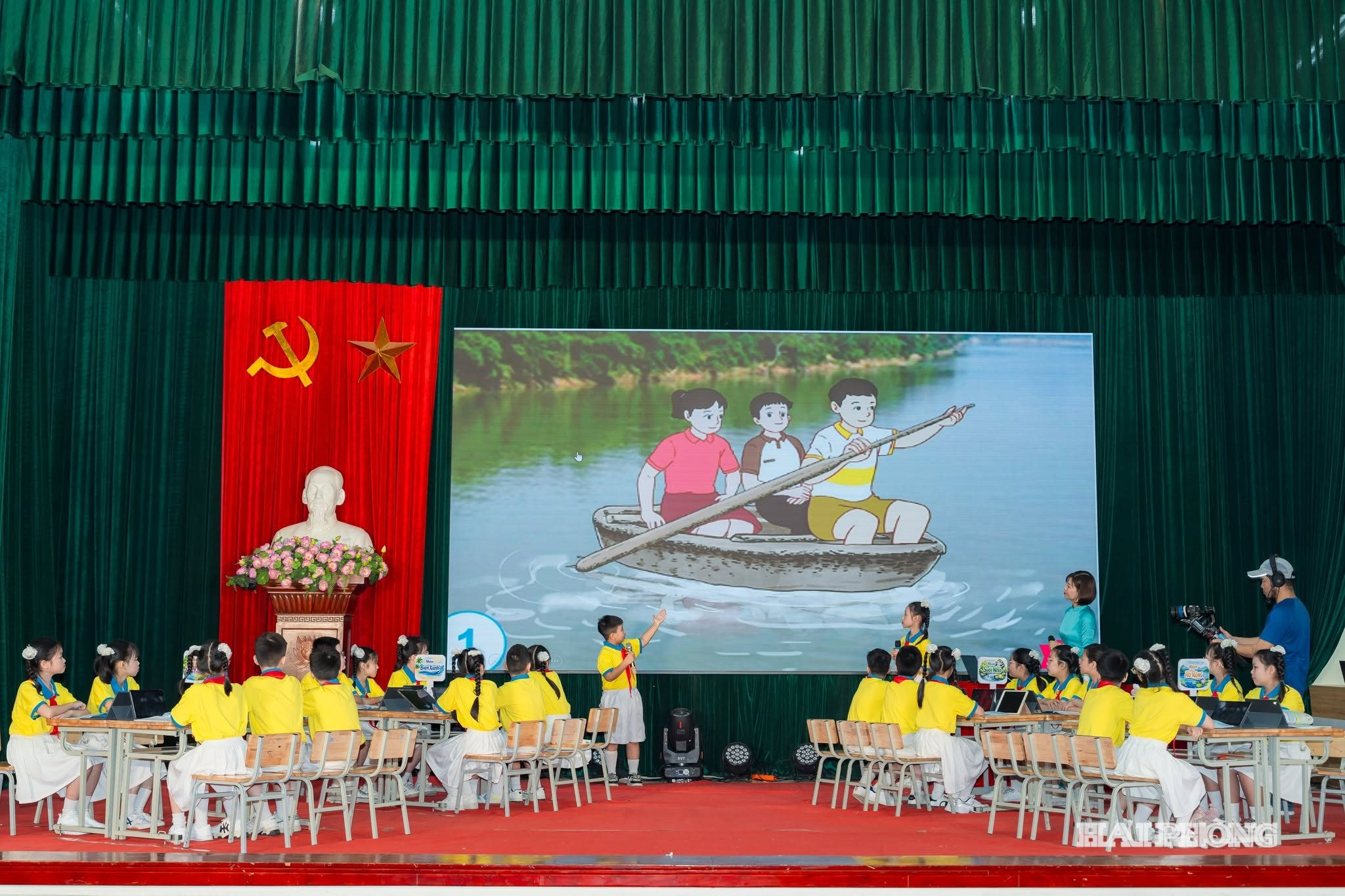
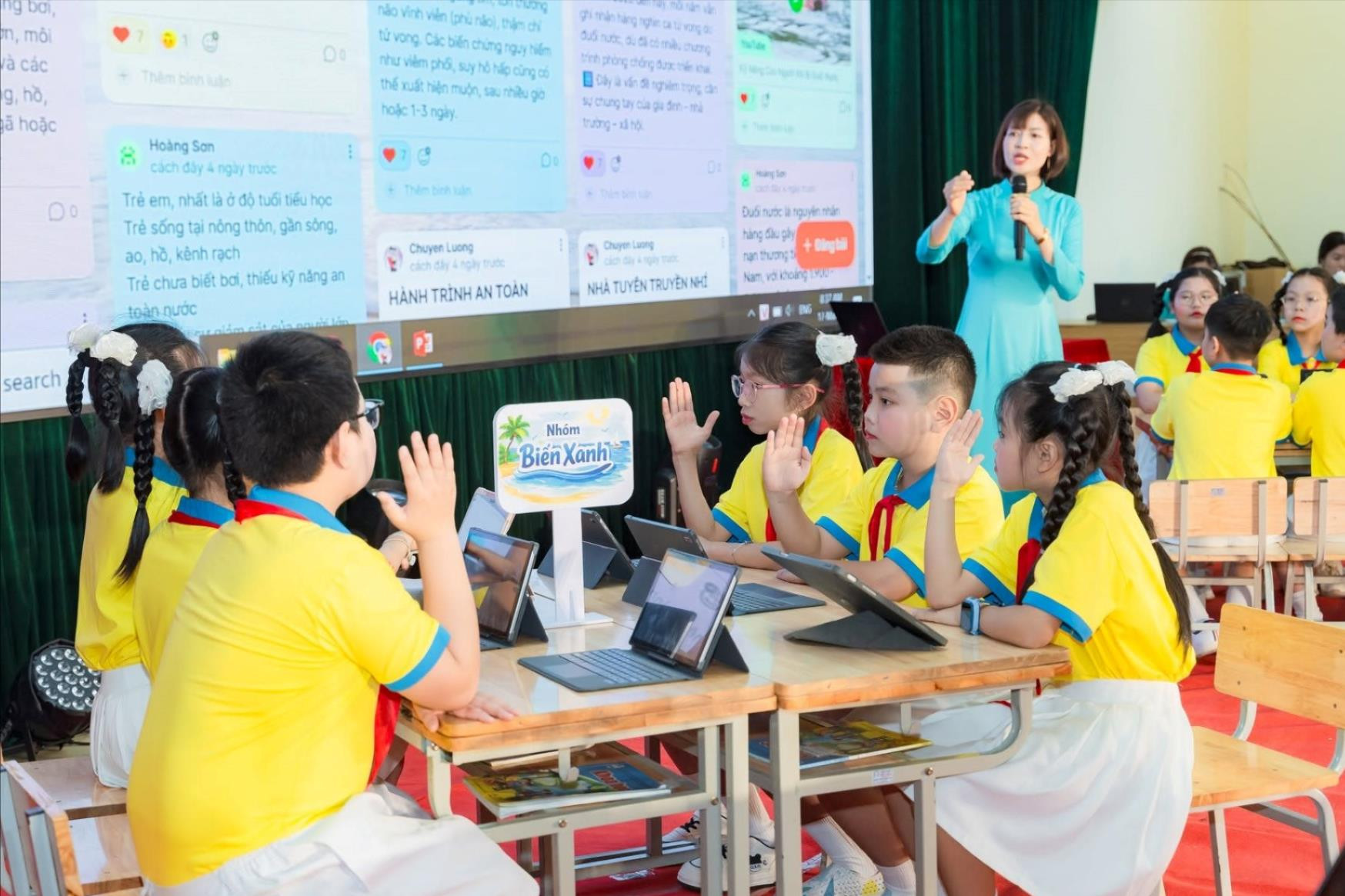
While AI helps high school teachers personalize learning based on student performance data, at the primary level, the technology is opening up more engaging and visual ways of delivering knowledge.
At Nguyen Luong Bang Primary School, the workshop “Applying AI to Support Grade 4 Science Teaching”demonstrated how teachers are proactively leveraging technology to improve lesson quality. In a lesson on Drowning Prevention, teacher Luong Thi Chuyen skillfully integrated AI tools such as Gemini, Canva, Padlet, Veo3, and Kling AI to create dynamic digital learning materials. Notably, the use of Aron AI to design lessons that incorporate digital competencies and develop dedicated learning applications not only helps students absorb knowledge in a more visual and enjoyable way but also fosters an interactive learning environment that encourages exploration and improves knowledge retention.
In Hai Phong, AI is not only being applied in general education but is also being effectively integrated into early childhood education. According to Nguyen Thi Hoa, a teacher at Dang Cuong Kindergarten, AI helps create vivid and engaging lessons through interactive animated characters that guide children in recognizing colors and shapes or tell stories through visual content. As a result, children become more enthusiastic about participating in activities, while learning more naturally and proactively.
Towards a generation of technology-savvy students
The emergence of AI is transforming many aspects of society, and education is no exception. In the past, teachers were the primary source of knowledge. Today, with just an internet-connected device, students can access an enormous amount of information. In this context, the value of education no longer lies in delivering as much knowledge as possible, but in helping learners identify reliable information, think critically, and apply knowledge in real-world situations.
According to Mr. Nguyen Phu Cuong, Vice Principal of Thai Phien High School, AI is accelerating the transformation of education. However, technology is not a solution to every challenge. Educational institutions still face numerous obstacles, ranging from limited funding for facilities and equipment to the need for teacher training so educators can effectively master and apply new technologies.
At the same time, the use of AI in education raises concerns about over reliance on technology, the misuse of AI in learning, and the potential decline of students’ independent thinking skills if AI is not used appropriately and under proper guidance.
Mr. Do Duy Hung, Deputy Director of the Hai Phong Department of Education and Training, believes that AI is an inevitable trend in digital-age education, but technology cannot replace teachers. AI can generate answers within seconds, yet it cannot replace human understanding, the ability to inspire, or the role of character education. For this reason, the city’s education sector is focusing on improving teachers’ digital competencies, encouraging the development of digital learning resources, expanding effective technology-based education models, and continuing to invest in infrastructure that supports digital transformation in schools.
Bui Hanh