




Gửi bình luận
As FDI factories continue to expand production while local recruitment becomes increasingly difficult, Hai Phong is seeking additional labor sources from other localities.
Limited local labor pool
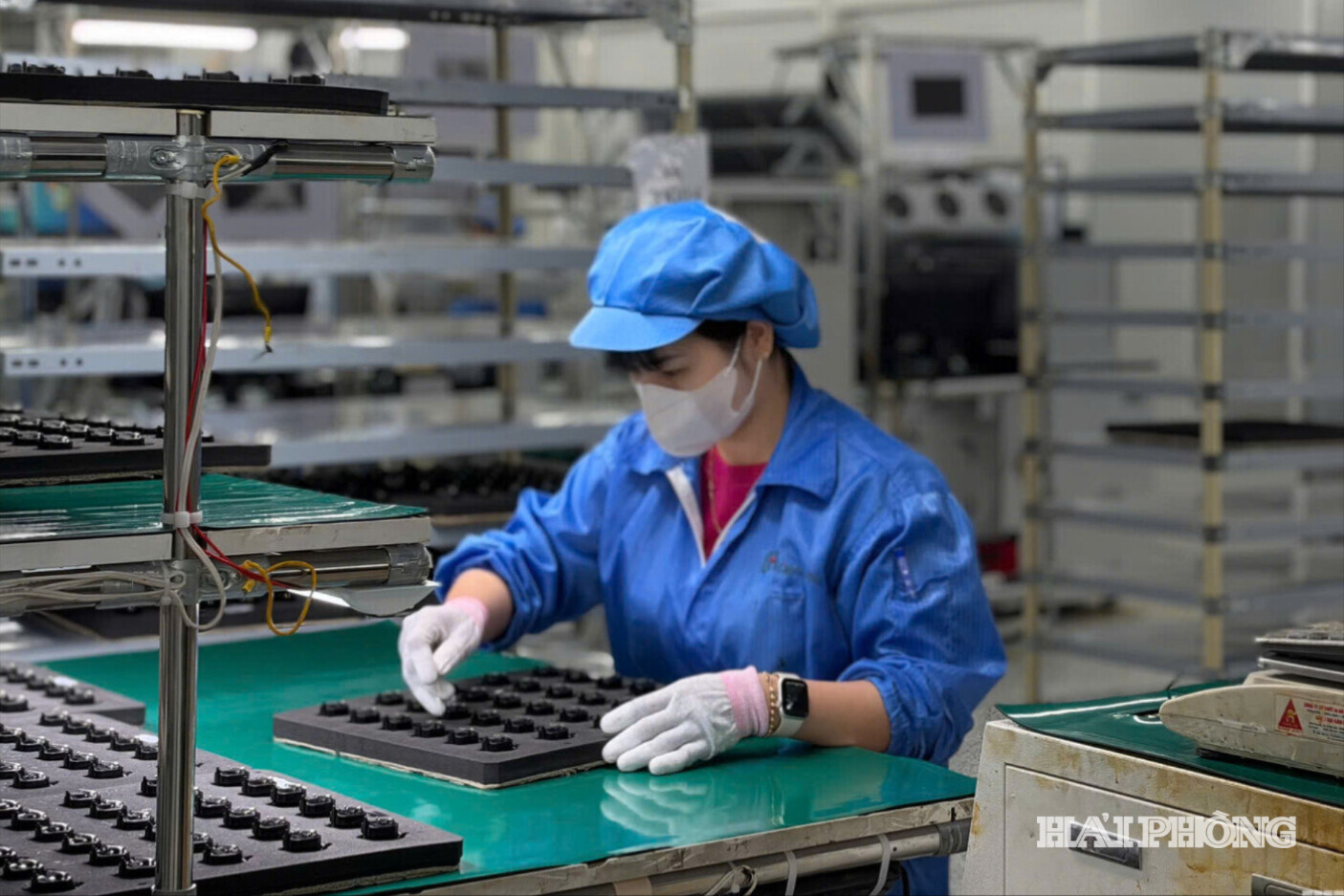
At Nam Dinh Vu Industrial Park and Non-Tariff Zone (Zone 1), the workshops of Innorex Vina LED Manufacturing Plant have been built and are expected to begin operations this November, supplying products to the automotive industry. The project is invested in by South Korea's DH Lighting Vina Co., Ltd., with total registered capital of USD 15 million.
Chea Kee Yeong, Director of DH Lighting Vina Co., Ltd., said the company is preparing its workforce to operate production lines. However, Nam Dinh Vu Industrial Park is located far from residential areas, making it difficult to recruit workers and maintain a stable workforce. The company has improved wages and benefits but still faces competition from businesses offering more convenient locations for workers' commuting and daily activities.
For factories already in operation, workers from outside Hai Phong also play a significant role. Universal Scientific Industrial Vietnam Co., Ltd. (USI), located in Dinh Vu Industrial Park, is currently employing 2,628 Vietnamese workers, including 767 from other localities. Among its direct production workers alone, more than one-third come from outside the city.
According to the Hai Phong Economic Zone Authority, industrial parks and economic zones across the city host more than 1,300 active businesses, employing over 362,000 Vietnamese workers and more than 10,000 foreign workers. As new factories begin operations and existing companies increase capacity, the local labor supply is becoming increasingly insufficient to meet demand.
The Hai Phong Economic Zone Authority estimates that businesses in industrial parks and economic zones need approximately 120,000 workers in 2026. Meanwhile, most of the local labor supply has already been absorbed. At recent job fairs, the number of job seekers has met only about 49% of businesses' recruitment needs.
Recruiting more workers and providing accommodation
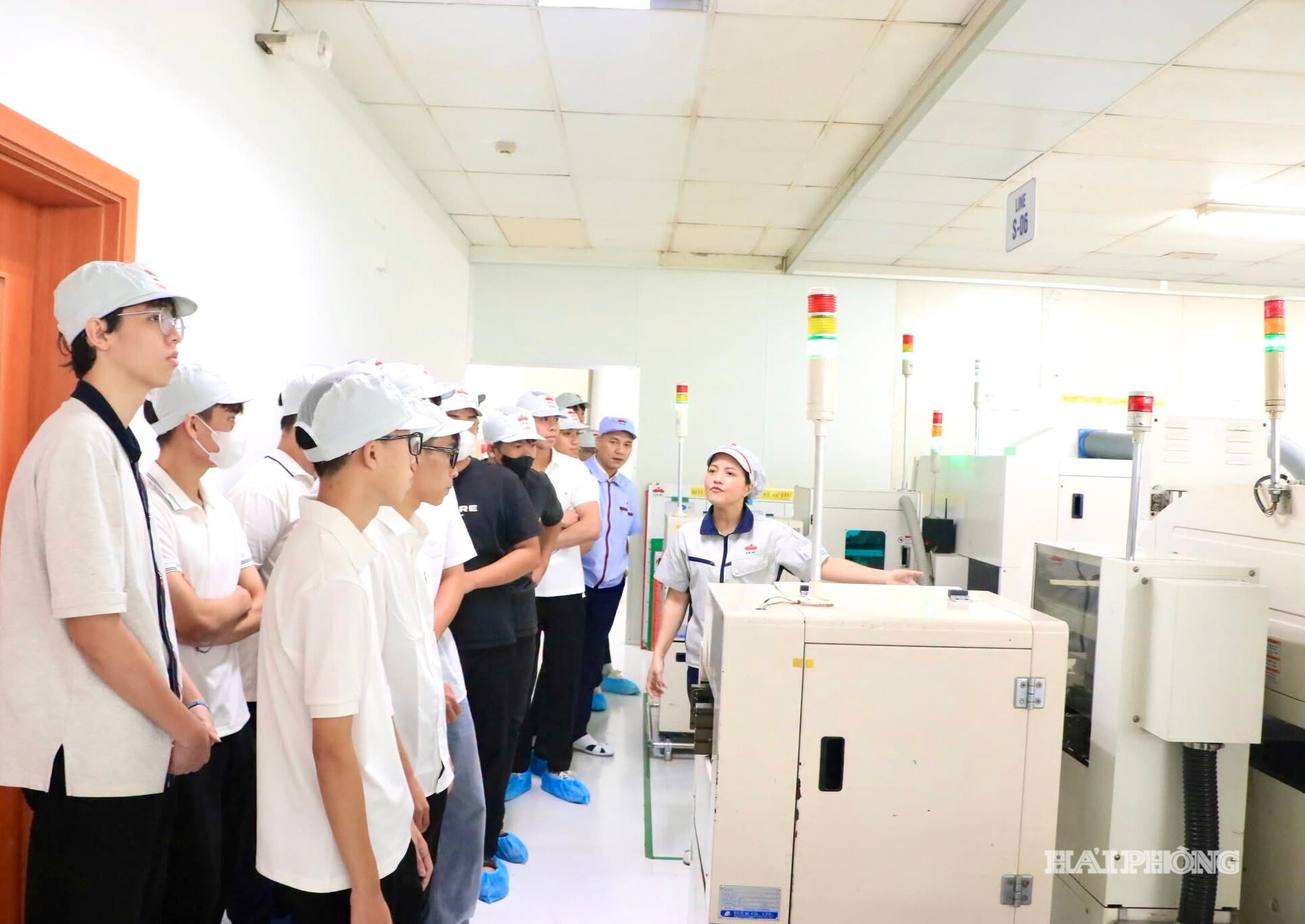
According to a survey by the Hai Phong Economic Zone Authority, businesses in industrial parks and economic zones are expected to need approximately 400,000 workers during 2026 – 2030, mainly in electronics, mechanical engineering and manufacturing, supporting industries, textiles and garments, and footwear. As local recruitment sources become increasingly limited, the authority has organized labor recruitment and connection programs in Son La, Thanh Hoa and Nghe An, among other localities. It has also coordinated with educational institutions to connect soon-to-graduate students with employment opportunities.
Housing needs have also attracted the attention of businesses considering investment in Hai Phong. Some companies have invested in accommodation for their workers. In Dong Hai Ward, Pegatron has put the first phase of its worker housing complex into operation, providing 784 dormitory rooms at a rental rate of VND 100,000 per person per month. LG Display's dormitory has 556 rooms.
Lee Sung Hyun, founder of NOF Service, said the company supplies Bangladeshi workers for technical positions at enterprises in Vietnam. According to him, since 2025, the company has brought nearly 2,000 people to Vietnam for employment and hopes to work with the Hai Phong Economic Zone Authority to explore recruitment needs in the city.
Pham Van Thep, Head of the Hai Phong Economic Zone Authority, said ensuring an adequate workforce for operating factories and projects preparing to begin production is an urgent task. The city is developing a scheme to support the recruitment of workers from other localities, including studying assistance with rental costs, bus fares and childcare arrangements for workers. At the same time, it is accelerating the development of social housing, worker housing and dormitories in industrial parks.
He added that the authority is also studying options for recruiting foreign workers. In 2027, the city may pilot the recruitment of workers from Bangladesh or other countries, provided that living conditions, management, security and order requirements are met.
LE HIEP