



Gửi bình luận
Journey back through time and encounter the thousand-year-old remains at the Cao Quy Stake Field in Luu Kiem Ward, Hai Phong, where the echoes of the historic Bach Dang River continue to resonate through the centuries.
A Living Classroom of Historical Tradition
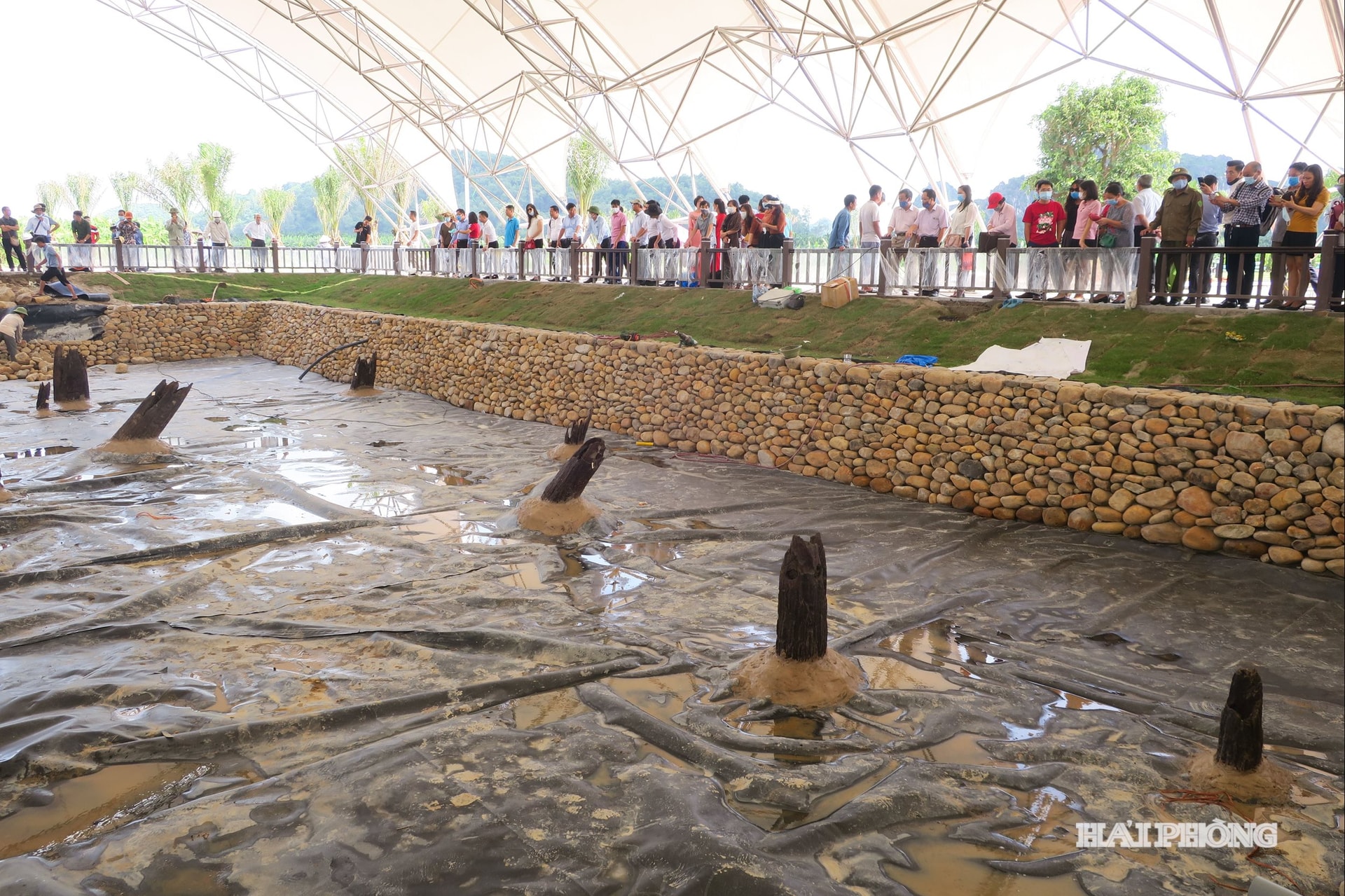
The Cao Quy Stake Field Conservation Site in Luu Kiem Ward covers an area of approximately three hectares. Its main entrance, measuring 22 meters in width, is constructed with four reinforced concrete pillars. The site also includes perimeter walls, a reception and exhibition building of 360 square meters, and a protective shelter covering 2,040 square meters above the in-situ preservation area.
Within the conservation zone, 18 wooden stakes have been excavated and preserved with surrounding gravel embankments. The remaining stakes have been conserved underground, while above-ground replicas have been installed to help visitors visualize the original battlefield layout.
After touring the site and listening to the historical presentation, Ms. Nguyen Thi Cam from Viet Hoa Ward shared her impressions: “Instead of only reading about history in textbooks, seeing the wooden stakes in person gives young people like us a sacred feeling, as if we are touching thousand-year-old evidence left behind by our ancestors.”
Ms. Nguyen Thi Thuy, a teacher at Duy Tan Secondary School in Nhi Chieu Ward, believes that learning about the Cao Quy Stake Field helps students gain a deeper understanding of the unique military strategy employed by Dai Viet in ancient times. It illustrates the ingenious use of natural conditions, the tactic of luring enemy forces into carefully prepared traps, and the courage of soldiers who drove wooden stakes into the riverbed to defend the nation. Through this historical site, younger generations are inspired to cultivate patriotism, develop strong character, and embrace their responsibility to contribute to the country's development in an era of integration and growth.
Professor Vu Minh Giang, one of Vietnam’s leading historians, has noted that the discovery at Cao Quy provides compelling evidence that enriches the historical map of relics associated with the famous Bach Dang Victory. It transcends modern administrative boundaries, confirming that the extensive area along the Bach Dang River, encompassing parts of present-day Hai Phong and Quang Ninh, once formed a vast battlefield.
The conservation site attracts not only archaeologists and researchers but also large numbers of visitors from across the country. Amid the fast pace of modern life, the presence of the Cao Quy Stake Field serves as a powerful reminder of the nation's heroic and glorious past.
Standing before the ancient stakes, visitors can almost hear the echoes of war drums, the battle cries of soldiers, and the enduring spirit of Bach Dang—a spirit that continues to flow through the hearts of the Vietnamese people.
Cao Quy stake field – A legacy of heroic glory
In late 2019, while clearing and preparing farmland for cultivation, local residents in Cao Quy Field, Mai Dong Village, Lien Khe Commune of the former Thuy Nguyen District (now Luu Kiem Ward), unexpectedly uncovered a series of wooden stakes deeply embedded underground. Authorities quickly secured the area and launched an emergency archaeological excavation.
The excavation, conducted jointly by the Institute of Archaeology and the Hai Phong Museum, opened a remarkable new chapter in the study of Vietnam’s military history and the strategic ingenuity of its ancestors.
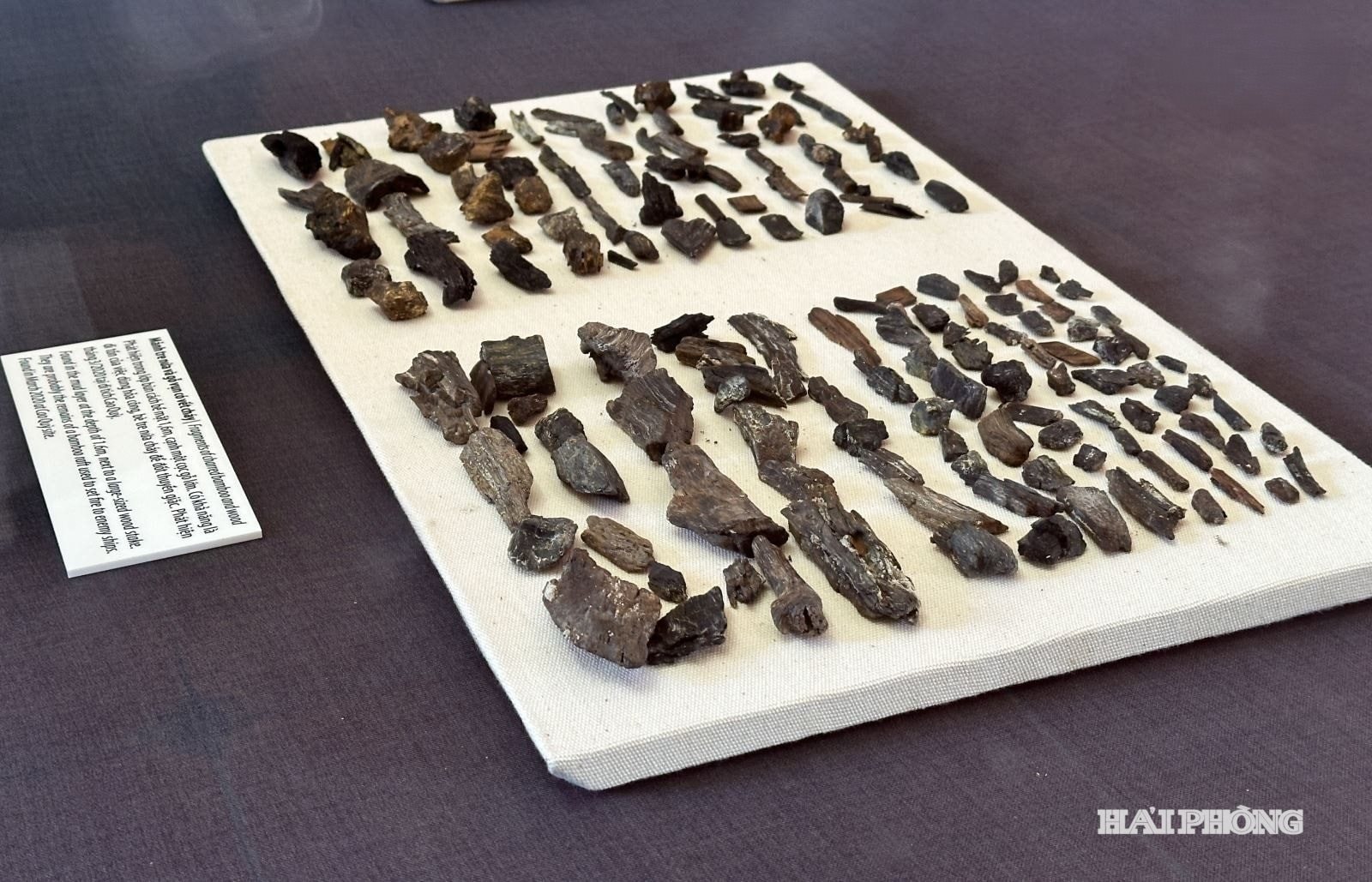
Archaeologists discovered a total of 27 wooden stakes scattered among 24 dark-soil pits. Most of the stakes were made from durable hardwood species such as ironwood, lim, and tau, with one end sharpened using rudimentary tools. What particularly astonished historians and archaeologists was not only the stakes themselves but also their density and arrangement. Rather than being installed in a simple linear formation, they were positioned in multiple layers and rows, creating a sophisticated trap designed to disable enemy warships.
The presence of large stakes measuring up to 40 centimeters in diameter alongside smaller stakes ranging from 10 to 18 centimeters indicates careful calculations by the defenders regarding river currents and the size and weight of enemy vessels. Furthermore, analysis of the dark-soil pits and surrounding geological layers confirmed that the site was a purely military installation rather than the remains of residential or civil structures.
Scientific dating methods determined that the stakes originated from the period of the third Mongol invasion of Dai Viet in 1288. The discovery has provided compelling evidence that reinforces—and in some respects reshapes—historical understanding of the scale and complexity of the Bach Dang naval battle against the Mongol forces.
Before the discovery of the Cao Quy Stake Field, most known stake-field relics associated with the Bach Dang victory had been found in the Quang Yen area of present-day Quang Ninh Province. As a result, many scholars and members of the public assumed that the defensive stake system was concentrated primarily along the left bank of the river. The discovery at Cao Quy, located on the right bank of the Bach Dang River, has shed new light on the extensive “heavenly net and earthly trap” strategy employed by the Tran Dynasty forces under the command of the revered military commander Tran Quoc Tuan, known as Hung Dao Vuong.
The section of the Bach Dang River flowing through the former Lien Khe area was a strategically advantageous waterway, characterized by narrow channels and terrain shaped by the Trang Kenh limestone mountain range. Recognizing these natural advantages, Tran Hung Dao ordered stake fields to be installed at key points along the river to force the massive Mongol supply fleet into a vulnerable position with no avenue of escape.
When the tide receded, the concealed stakes at Cao Quy would emerge as deadly obstacles capable of piercing the hulls of enemy ships. Combined with ambush forces stationed along both riverbanks, the stake fields formed part of a coordinated encirclement strategy that contributed to the destruction of one of the most formidable military forces in the world at that time.
Thu Huong