
Distinctive flavors of Hai Phong cuisine
Hai Phong cuisine appeals not only for its abundant ingredients but also for the ways local people select, combine and prepare them.
From rustic ingredients to the art of flavor pairing
For residents of Co Trai Village in the former Kien Thuy area, now part of Kien Hung Commune, the secret to a delicious bowl of crab paste vermicelli soup lies in the combination of ingredients and the cooking method.
Tran Thi Van, a local resident, said crabs are ground together with shrimps, then strained to extract the broth, which is simmered with pork bones. The broth must be kept at a gentle simmer to ensure the crab roe remains firm and flavorful. Maintaining a consistently high temperature also helps reduce any fishy smell while preserving the crab's natural flavor.
Meanwhile, the former Tu Ky area is renowned for its ruoi (ragworm), particularly in what is now Chi Minh Commune. Its low-lying delta terrain, network of rivers and canals, and rice fields are well suited to the rice – ragworm farming model, providing a distinctive local ingredient. Ragworms are used to prepare a variety of dishes, including ragworm omelets, grilled ragworms, braised ragworms, ragworm soup with bamboo shoots and ragworm soup with mustard greens.
Nguyen Van Duc, Vice Chairman of the Hai Phong Tourism Association, observed that Hai Phong dishes are rustic, generous in portion, colorful and full of character. These qualities are reflected in the selection of ingredients, the combination of seasonings and the creation of distinctive flavors. The port city's cuisine draws not only on its abundant seafood but also on ingredients from inland fields, with each rural area contributing its own culinary traditions and cooking expertise.
This identity has also been shaped by cultural exchange over time. According to cultural researchers, as a port city with a long history of trade, Hai Phong has had contact with diverse communities and adopted different ingredients, cooking methods and tastes. Influences from Chinese and French cultures can be seen in certain local dishes and seasonings, such as spicy baguettes, pâté, sui din (glutinous rice balls in sweet ginger syrup), xi long cau (a traditional pastry) and chi chuong (Hai Phong-style chili sauce). Over time, these adopted elements have been adapted to local ingredients and tastes, gradually becoming familiar features of the city's culinary life.
Innovation to expand the value of cuisine
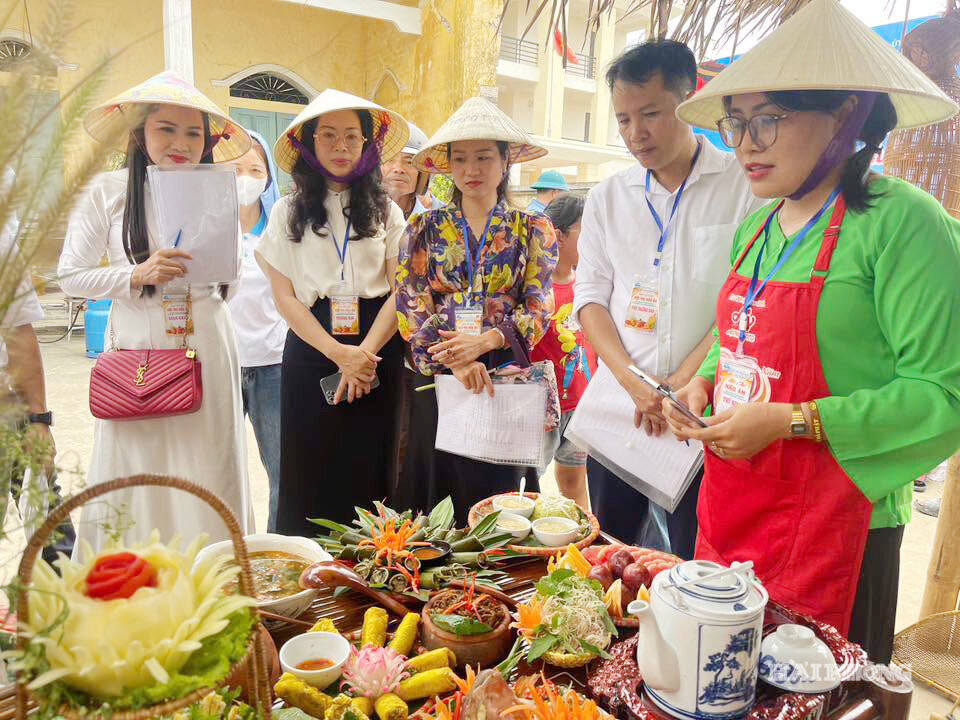
Building on its existing ingredients and culinary expertise, Hai Phong cuisine continues to evolve through chefs' creativity. At the 2026 Hai Phong International Golden Chef Competition, chef Doan Phu Dung, representing Dream Dragon Resort Do Son, won the Golden Chef award with a salad featuring flamboyant flowers, jellyfish and nhot (a local leafy vegetable). Inspired by the flamboyant flower, a familiar symbol of the city, the dish brings a local identity to a modern presentation.
Ha Lung cha chia, an OCOP-certified product from Hai An Ward, is another creative take on traditional food processing. Drawing on his family's pork roll-making trade, which began in the early 1990s, Le Khac Hoat developed the dish by combining pork, dried Cat Ba squid, seasonings and sugarcane cores. This combination of ingredients and preparation techniques gives the dish its distinctive flavor, adding to the diversity of Hai Phong's culinary products.
Such innovations show that the potential of Hai Phong cuisine lies not only in making use of local produce but also in the creativity of food artisans and their efforts to give dishes a distinctive identity. In recent years, food tours have also helped bring many of the city's everyday dishes to a wider audience. However, to move into a higher-end segment such as fine dining, local cuisine needs investment in ingredient quality, cooking techniques, menu development and service standards.
According to Do Ngoc Cong, Chairman of the Hai Phong Professional Chefs Association, local dishes have the potential to enter this segment if chefs know how to bring out the value of indigenous ingredients and combine them with modern techniques while preserving their distinctive flavors.
Hai Phong cuisine is rooted in abundant local produce, culinary expertise and a long history of cultural exchange. Building on these strengths, together with investment and innovation from those working in the food industry, will help local dishes reach beyond their traditional scope and establish their value in contemporary life.
HA LINH