
Developing eco-industrial clusters in tandem with social progress and equity
Hai Phong is developing eco-industrial clusters in a green and sustainable direction, linking economic growth with environmental protection and improved living standards for workers.
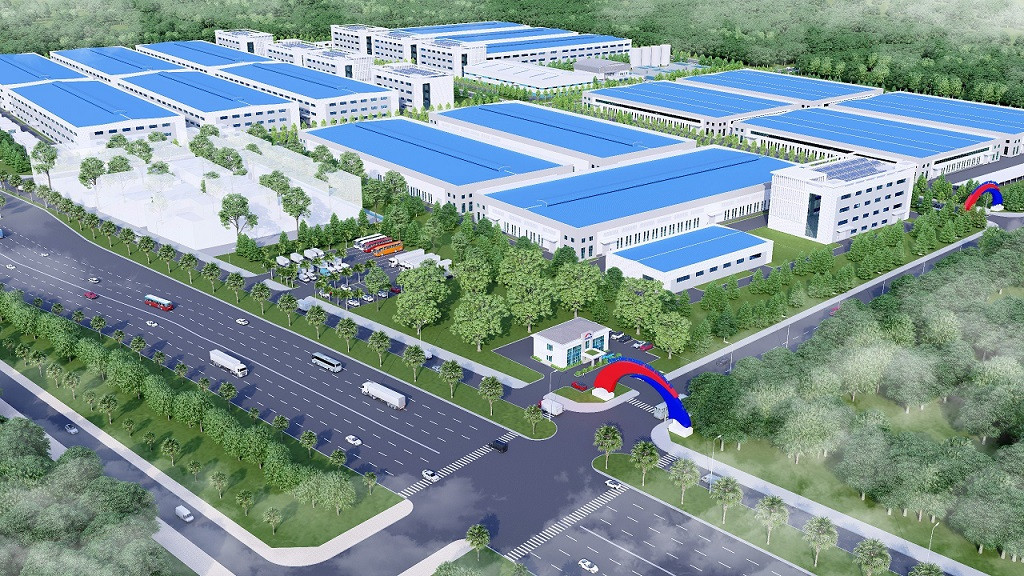
Developing eco-industrial clusters is a necessary direction for Hai Phong. It is also one of the models outlined in Resolution No. 05 of the Municipal Party Committee on building socialist models associated with socialist citizens in Hai Phong for the 2026–2030 period and the following years.
Industrial clusters play an important role in attracting investment, creating jobs and restructuring the economy. However, when each enterprise operates independently, sourcing materials, consuming energy and treating waste separately, resources are difficult to utilize efficiently, while pressure on the environment continues to increase. Therefore, the requirement is no longer simply to expand production, but to reorganize industrial activities towards resource conservation and minimizing negative environmental impacts.
Hai Phong aims to develop eco-industrial clusters in a green, modern, smart and sustainable manner, with a focus on efficient resource use, promoting industrial symbiosis, the circular economy and cleaner production. These efforts will help improve economic efficiency and business competitiveness, reduce greenhouse gas emissions and enhance climate change adaptation.
The city also seeks to ensure social progress and equity while improving workers' material and spiritual well-being. It aims to create a civilized and modern production environment, contributing to the goal of building socialism and socialist citizens.
On this basis, Hai Phong will gradually establish an interconnected industrial production network in which businesses can collaborate and share resources. The city will accelerate green and digital transformation to improve growth quality and enhance the competitiveness of its industrial sector.
A notable feature of Hai Phong's development orientation is that eco-industrial clusters will be built on three pillars: environment, economy and society. In addition to investing in technical infrastructure and environmental protection, industrial clusters must prioritize improving workers' working and living conditions, ensuring access to housing, essential amenities and occupational safety.
During the 2026–2030 period, Hai Phong will focus on piloting the eco-industrial cluster model, with priority given to An Tho – Chien Thang Industrial Cluster in An Hung Commune and Nam Am Industrial Cluster in Vinh Am Commune.
The city will complete management mechanisms, assessment criteria, operational models and technical infrastructure to support industrial symbiosis. By 2030, it aims to establish two to three pilot eco-industrial clusters while promoting the development of industrial clusters specializing in interconnected sectors.
During the 2031–2035 period, the city will support two to three industrial clusters that meet the necessary conditions in completing their dossiers for assessment and recognition as eco-industrial clusters in accordance with the criteria, procedures and guidelines issued by the Ministry of Industry and Trade. The model will gradually be expanded across the city. Hai Phong aims to develop an additional two to three pilot eco-industrial clusters with proven operational results and official recognition.
During the 2036–2045 period, the city will continue expanding the model, providing guidance and support to industrial clusters that meet the requirements for assessment and recognition as eco-industrial clusters in accordance with the law and the Ministry of Industry and Trade's guidelines.
Implementing this model requires close coordination and clearly defined responsibilities between infrastructure developers and enterprises operating within industrial clusters.Infrastructure developers must ensure adequate technical infrastructure and organize efficient management and operations. Enterprises themselves must also take the initiative in making changes, as green production cannot rely solely on infrastructure investment or requirements imposed by management authorities. Saving raw materials and energy, upgrading technologies and reducing waste must become integral requirements of daily production activities.
Facilities serving workers, including housing, healthcare facilities, schools and cultural institutions, must receive attention alongside production infrastructure. Workforce training in green technologies, environmental management and digital transformation must also be aligned with actual needs.
Developing eco-industrial clusters is a necessary step towards improving the quality of industrial growth. The effectiveness of this model must be demonstrated through tangible results: businesses use resources more efficiently and reduce environmental pollution, while workers enjoy safer working conditions and better living standards. These outcomes will also serve as a measure of the model's sustainability, ensuring practical benefits for businesses, workers and the wider community.
Huyen Trang