

Universal health checkups linked to long-term care
Following the 2026 universal health checkup campaign, Hai Phong is continuing to review data and strengthen grassroots medical quality to improve the effectiveness of long-term healthcare.
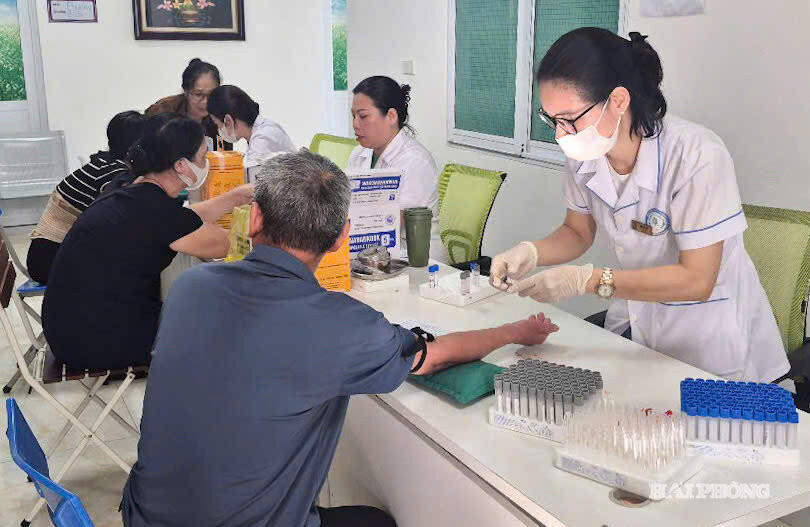
Care beyond health checkups
According to statistics from the Department of Health, more than 4.2 million people in Hai Phong were included in the 2026 universal health checkup program. The free health checkup campaign was rolled out on a large scale, providing an important source of information for the health sector to assess people's health conditions, detect disease risks, and organize regular, long-term care.
At the Kinh Mon Ward Health Station, screening is integrated with regular care. The station manages nearly 400 people with hypertension and provides monthly checkups and health insurance-covered medication. During its first round of periodic checkups for 881 older people in 2026, the facility identified approximately 300 cases of hypertension.
Receiving care locally makes it easier for older people to return for follow-up examinations, while healthcare workers can monitor their conditions through successive checkups. For those requiring long-term treatment, this convenience helps them maintain regular examinations, medication use, and health monitoring as prescribed.
Checkup results can deliver their full value only when used in subsequent care. For people with chronic conditions, regular examinations enable doctors to assess disease progression and adjust treatment when necessary.
Those with abnormal results also need clear guidance on further tests, follow-up visits, and lifestyle precautions. People in stable health still need preventive advice, encouragement to maintain healthy lifestyles, and checkups appropriate to their age.
Completing data and strengthening grassroots healthcare
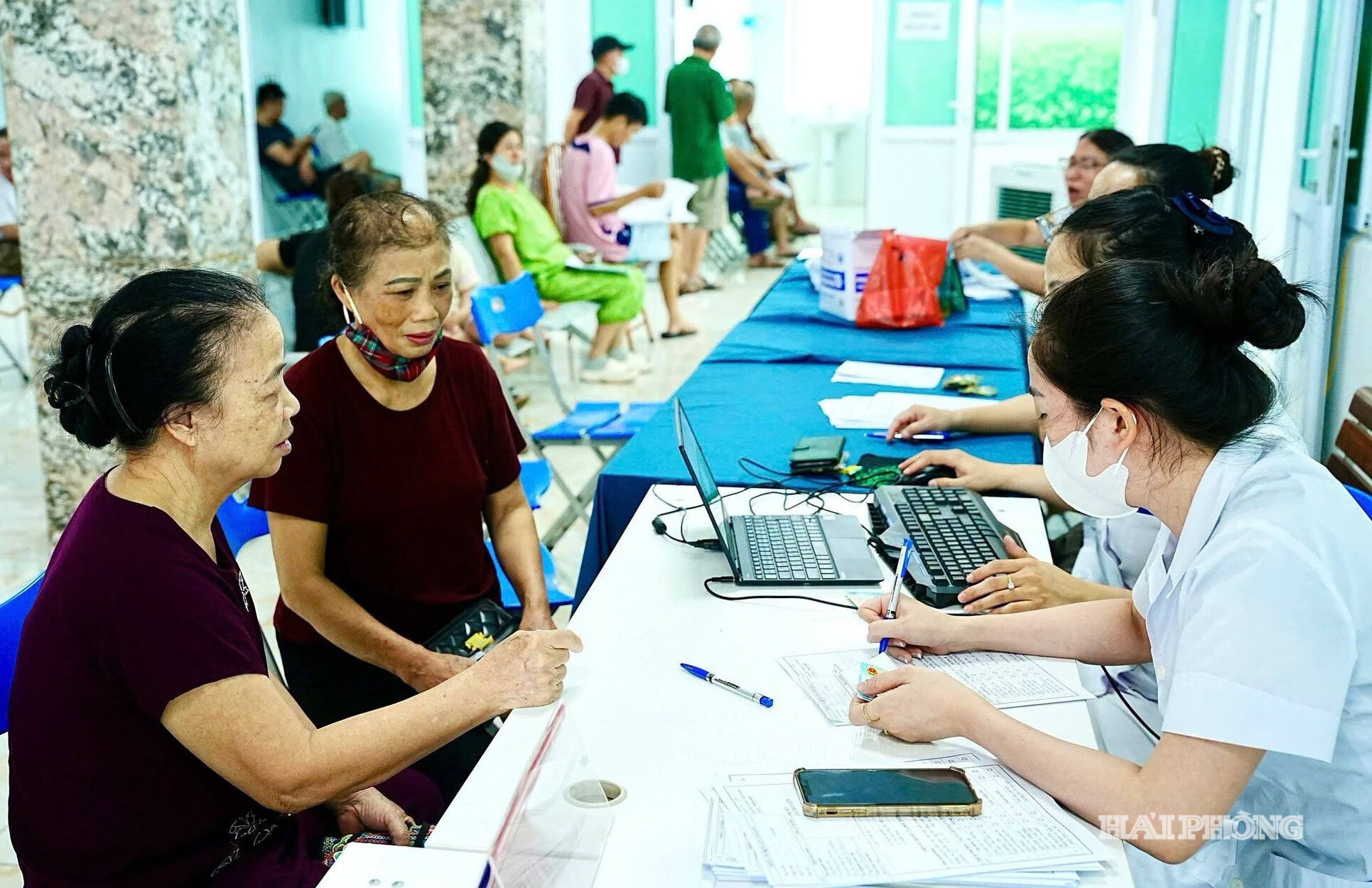
During the implementation of the universal health checkup campaign, Dao Trong Duc, Vice Chairman of the Hai Phong People's Committee, called on localities and relevant units to ensure substantive implementation, focusing not on quantity but on quality and effectiveness, while giving due attention to data digitization.
Following the campaign, the health sector is continuing to review, cross-check, and update checkup results for different groups, particularly employees at businesses. The Department of Health is focusing on distinguishing between people who have not yet undergone checkups and those who have been examined but their information has not been updated. It is also coordinating the transfer of health records for employees who have left their jobs or changed workplaces to local authorities for continued management and monitoring.
Data reviews need to be linked to health status classification and the identification of people requiring further examinations, monitoring, or regular treatment. Health stations should coordinate with medical examination and treatment facilities to provide advice, manage illnesses, refer patients to higher-level facilities when necessary, and limit interruptions in care when people change jobs or places of residence.
Le Minh Quang, Director of the Department of Health, said the sector aims to build a grassroots healthcare system capable of managing the health of the entire population, detecting illnesses early, and providing primary health care, thereby helping reduce the burden on higher-level hospitals.
The results of the 2026 universal health checkup campaign give Hai Phong a foundation for providing more proactive and regular health care. When health information is kept up to date and used effectively, and grassroots healthcare facilities have sufficient capacity to meet people's needs, residents can receive attention and care not only during large-scale checkup campaigns but also in their daily lives.
HA KIEN