
Facilitating access to land to promote private sector development
Hai Phong has publicized available land, reduced land rental costs and helped businesses access production premises, thereby contributing to the development of the private sector.
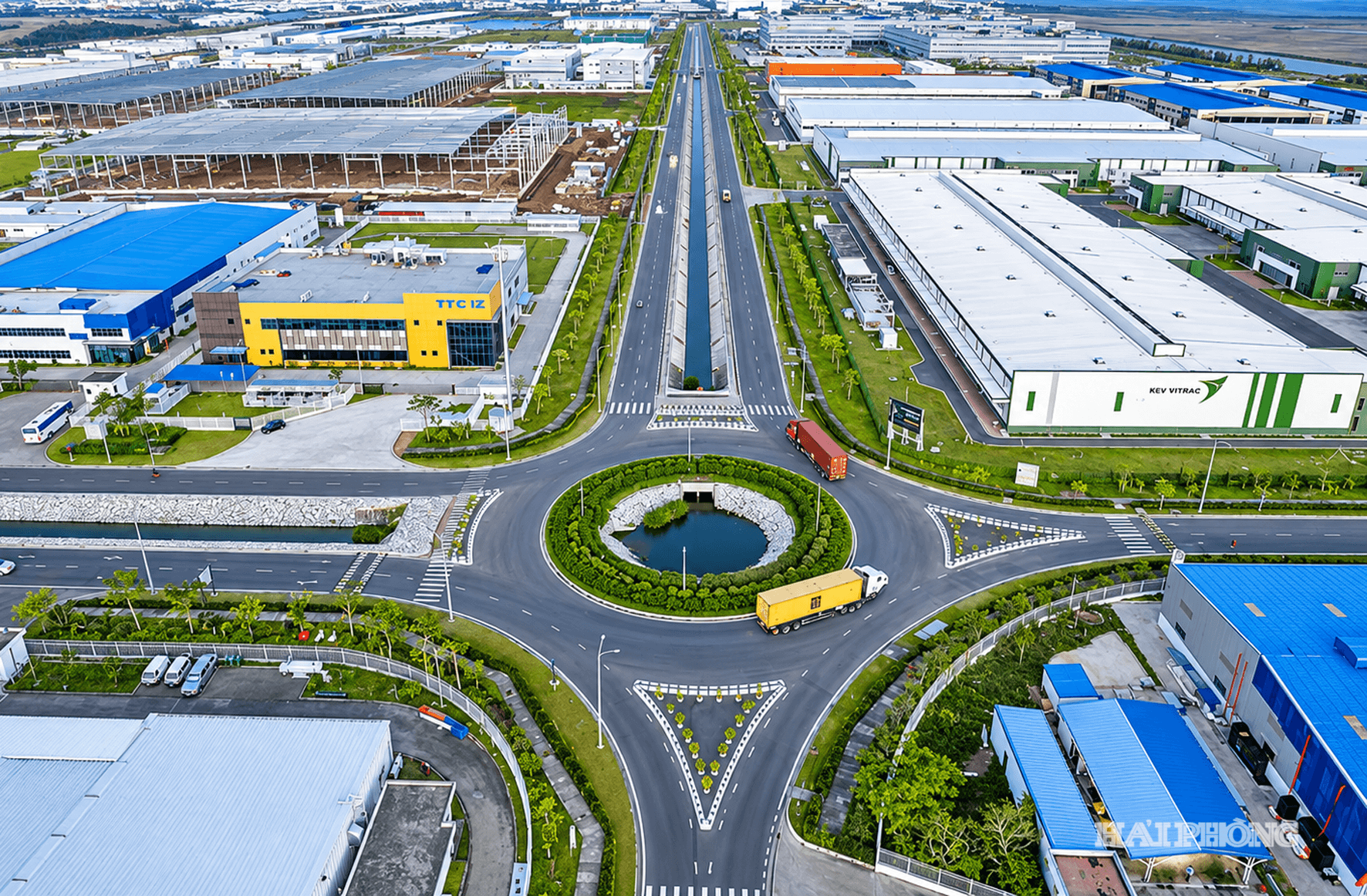
The Hai Phong Economic Zone Authority has recently made public information on land reserves available to high-tech businesses, small- and medium-sized enterprises (SMEs), and innovative startups in industrial parks across the city.
The City People's Committee has also introduced a policy providing a 100% reduction in sublease payments for the first five years from the date of contract signing for high-tech enterprises in the private sector, SMEs, and innovative startups leasing land in industrial parks, industrial clusters, and technology incubators.
Securing production premises of a suitable size and at an affordable cost remains one of the challenges businesses face when investing in or expanding their production and business operations, particularly SMEs.
In response to businesses' difficulties, the city has directed relevant departments, agencies and units to review and publicly disclose the 5% land fund and the 20-hectare land fund for lease to high-tech enterprises, SMEs, and innovative startups in industrial parks. It has also called for research and proposals on policies to exempt or reduce land rental payments.
Public disclosure of land information enables businesses to proactively explore and select locations suited to their needs. The policy reducing land sublease payments helps lower costs and provides additional resources for investment in machinery and equipment, technological innovation, and production expansion.
These measures also translate into concrete action the policy of developing the private sector, in line with the Politburo’s Resolution No. 68-NQ/TW and the National Assembly’s Resolution No. 198/2025/QH15. Both resolutions call for equal access to resources among all economic sectors, particularly land, capital and human resources, while requiring appropriate support policies for SMEs and innovative startups.
In implementing Resolution No. 68-NQ/TW, Hai Phong has set a target of having more than 87,000 businesses operating in the city by 2030. The private sector is expected to grow by an average of 14.5 – 15% annually and contribute approximately 43 – 45% of the city's gross regional domestic product (GRDP).
To achieve these goals, the city is pursuing a shift toward a more intensive growth model, driven by science and technology, innovation, and digital transformation.
Enabling SMEs, innovative startups, and high-tech enterprises to access production premises at reasonable costs not only helps address immediate difficulties and obstacles but also enhances their competitiveness, promotes innovation, and creates additional momentum for the city's growth.
Removing barriers to accessing production premises is a practical step toward expanding development opportunities for the private sector. However, the effectiveness of these policies depends not simply on the amount of land made available or the level of support announced, but, more importantly, on whether businesses can actually access the land and benefit from the policies with ease.
The key requirement, therefore, is to measure success by businesses' ability to access land and the extent to which they benefit from the support. The city needs to create a favorable environment in which businesses not only increase in number but also strengthen their technological capabilities, competitiveness, and capacity for innovation, making an increasingly significant contribution to the quality of growth and the sustainable development of Hai Phong.
NGUYEN HA