
Facilitating business through smart management
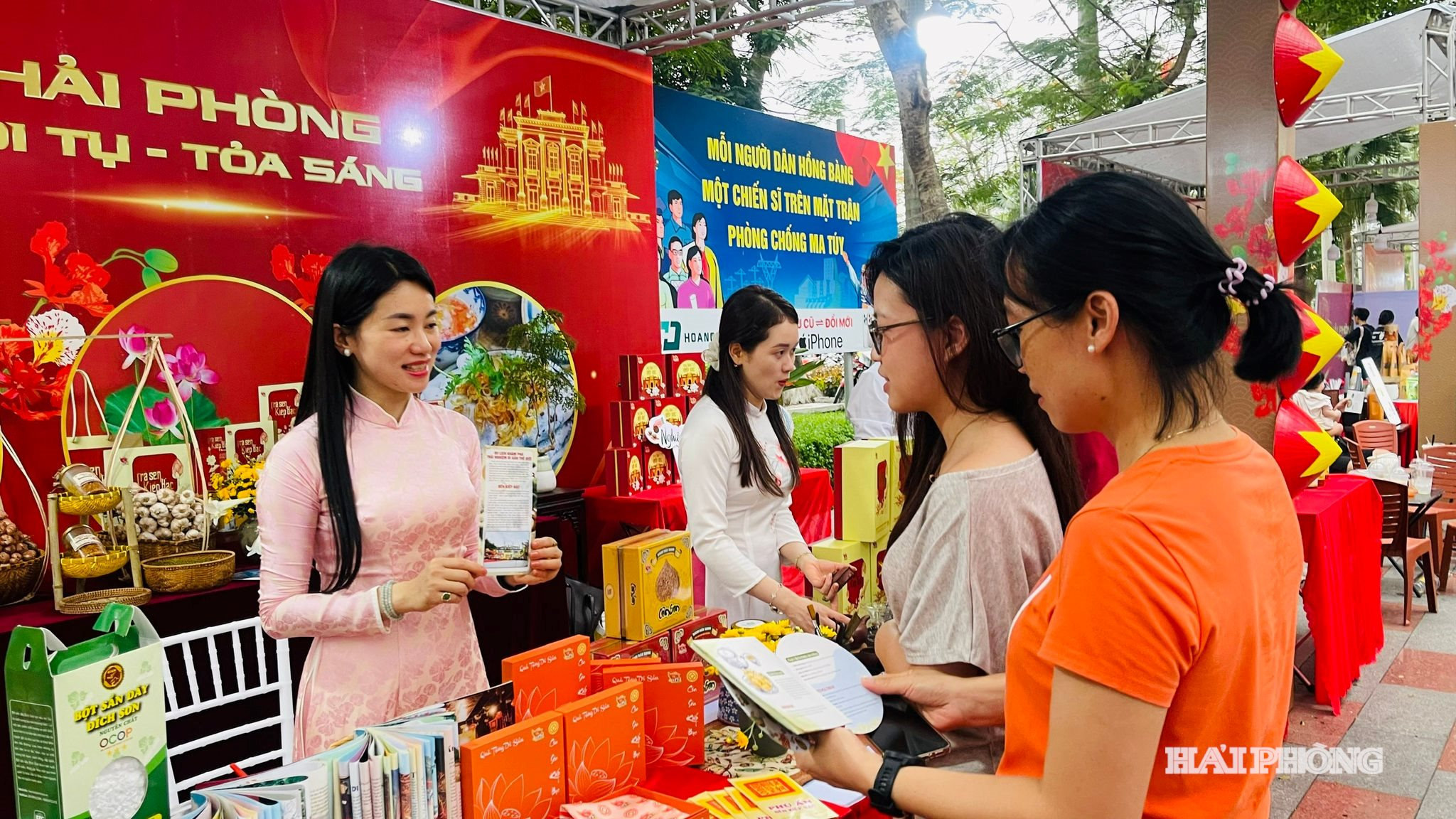
From the night-time economy and traditional markets to e-commerce, business activities in Hai Phong are becoming increasingly diverse.

Business activities in Hai Phong are taking many forms, ranging from traditional markets and commercial streets to online platforms. The night-time economy is also opening up new business opportunities, attracting large numbers of residents and visitors.
With nearly 94,000 active business households, according to figures released in mid-2026, and e-commerce growing rapidly, management requires authorities to gain a comprehensive understanding of economic activities. The city is finalizing plans to organize and manage night-time economy streets, creating more opportunities for business and services.
At a meeting of the Standing Committee of the City Party Committee on November 5, Secretary of the City Party Committee Le Ngoc Chau called for a comprehensive and accurate accounting of the output value and added value of all economic sectors, ensuring that no economic activity is overlooked. He also urged a review of the night-time economy, street-based businesses, markets and e-commerce, as well as stronger tax management and better data connectivity and sharing.
The directive is aimed not only at managing budget revenues but also at gaining a complete picture of economic activities and accurately reflecting the contributions of different sectors to growth. The use of data should help management agencies keep abreast of actual activities and create favorable conditions for businesses.
Hai Phong's tax sector has been using data from e-commerce platforms and delivery companies to improve management efficiency. Based on data from Shopee, Lazada, Tiki and Giao Hang Tiet Kiem, the city's tax authorities have reviewed more than 23,800 taxpayers, who have paid tens of billions of VND in taxes. This result demonstrates the effectiveness of data application, but data matching and the determination of tax obligations must be accurate.
Therefore, the tax sector needs to work with banks, e-commerce platforms, delivery companies and payment intermediaries to standardize and cross-check data using tax identification numbers or appropriate personal identification information.
Discrepancies must be clarified, ensuring taxpayers' right to provide explanations and correct their information. Inspections should focus on cases showing signs of irregularities or potential violations and minimize disruption to normal business activities.
Another task is to reduce compliance costs as business households switch from presumptive tax to declaration-based taxation from early 2026. Hai Phong has set up teams to provide direct guidance at markets and in central commercial areas, while developing online support tools. The use of e-tax applications and e-invoices is becoming increasingly widespread.
Commune-level authorities, market management units and tax agencies need to coordinate in updating information and assisting with tax declarations without imposing procedures beyond those stipulated by regulations. At the city level, data sharing must go hand in hand with clearly defined responsibilities and information security safeguards. Issues beyond local authorities' jurisdiction should be compiled and submitted to the Ministry of Finance and Central tax authorities for improvements to guidance and support tools.
In addition to results in revenue management, implementation efficiency should be assessed through indicators such as the time needed to resolve data discrepancies, the proportion of documents requiring adjustments, the number of taxpayers receiving assistance to file accurate declarations from the outset, and the level of voluntary compliance. These indicators will provide a basis for the city's tax sector to refine its management measures for 2027 and subsequent years.
Smart management must go hand in hand with facilitating business activities. When economic activities are fully recorded, data is accurately utilized, obligations are determined fairly and procedures are simplified, businesses will have better conditions to grow. This also provides a foundation for Hai Phong to improve the quality of State management, sustainably develop budget revenues and contribute to its economic growth targets.
HA KIEN