
Unlocking the potential of marine economy
Hai Phong has significant advantages in seaport development. If these advantages are harnessed in a synchronous manner, they will become additional pillars of growth, helping the city diversify its economic growth drivers.
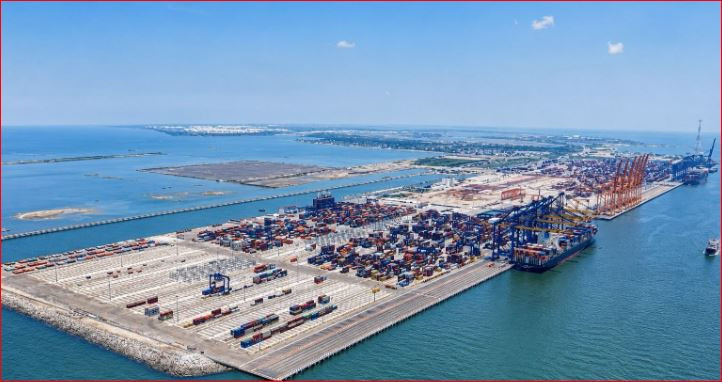
The Hai Phong People's Committee has recently issued an action plan to implement Resolution No. 20-NQ/TW on building and developing Vietnam into a strong maritime nation. Under the plan, by 2030, Hai Phong aims to establish a solid foundation for becoming a major marine economic hub and a modern international logistics centre.
This is not merely a development orientation for one of the city's key economic sectors, but also a strategy to expand its growth potential and enhance Hai Phong's position in regional and international marine economic networks.
By 2030, the city aims to handle 380 million tonnes of cargo through its seaports, establish a modern logistics hub and reduce logistics costs to below 12% of GRDP. It also plans to develop an international centre for marine science and technology training, research and application, ranking among the leading centres in Southeast Asia.
Looking ahead to 2045, Hai Phong aims to become a major marine economic hub and the country's leading marine science centre, playing a leading role in the Asia-Pacific region.
Notably, following its merger with Hai Duong, the city's development space has expanded, creating favourable conditions for connecting seaports with industrial centres, production areas, and inland trade and service hubs. As a result, the benefits of the marine economy can extend beyond coastal areas and spread across multiple sectors of the city's economy.
Another key direction is to broaden the scope of marine economic development beyond seaports and maritime transport. Hai Phong aims to build a multi-sector marine economic ecosystem in which science and technology, innovation, and high-quality human resources play vital roles, laying the foundation for long-term competitive advantages.
Marine economic development must also go hand in hand with improving the living standards of coastal and island communities. Ensuring access to electricity, clean water, healthcare, education and digital infrastructure not only meets social welfare requirements but also provides a foundation for building stable coastal communities.
Shifting from simply exploiting seaport advantages to participating more deeply in marine economic value chains, and from growth driven primarily by infrastructure investment to development powered by science, technology and innovation, is a key pathway for Hai Phong to fully realise its potential and advantages and gradually affirm its position as a major marine economic hub.
Hai Phong News