
Three policies to boost year-end growth
The simultaneous activation of three policies as ‘levers’ to achieve growth targets is considered a necessary solution to lower production and consumption costs across the economy.
In late October 2026, a series of banks announced rate cuts following a directive from the State Bank of Vietnam to lower lending interest rates. The reductions generally ranged from 1.5 to 2 percentage points per year.
Then, on November 1, the Government issued Resolution No. 45 on special consumption tax on gasoline. Accordingly, the special consumption tax rate on all types of gasoline was reduced to 0%, effective from November 1, 2026, through March 31, 2027.
In addition, Vietnam Electricity (EVN) announced a reduction in the average retail electricity price to VND 2,159.9037 per kWh, excluding value-added tax, effective November 1. This represents a 2% decrease from the previous rate.
Amid pressure to achieve double-digit economic growth while inflation remains high, the Government's use of available fiscal and monetary policy space, together with reductions in gasoline and electricity prices, is seen as an effective way to meet growth targets and stimulate consumption during the final two peak months of the year.
In Hai Phong, the State Bank of Vietnam's Regional Branch 6 has instructed credit institutions operating in Hai Phong and Quang Ninh to implement coordinated measures to lower lending rates and direct credit toward production and business, while strengthening risk controls to ensure banking safety. In particular, the branch asked credit institutions to prioritize lending to production and business, priority sectors and key drivers of economic growth.
Lower interest rates are an important measure to support businesses, stimulate investment and generate growth momentum. At a 2026 meeting with the city's business community, held under the theme “Hai Phong businesses connect to grow stronger, innovate to take the lead” to mark the 22nd anniversary of Vietnamese Entrepreneurs' Day (October 13, 2004 – 2026), enterprises raised proposals for the city to help them access preferential short-term credit packages, introduce more flexible lending conditions and reduce reliance on collateral.
While interest rates represent the cost of capital, electricity and petroleum products are essential input costs for every production sector. Against the backdrop of geopolitical conflicts, particularly the increasingly complex situation in the Middle East, gasoline and oil prices have remained high, directly affecting the Consumer Price Index (CPI). Meanwhile, the drive for double-digit growth is pushing up demand for energy, including petroleum products and electricity. This creates considerable pressure on efforts to keep prices of essential goods under control.
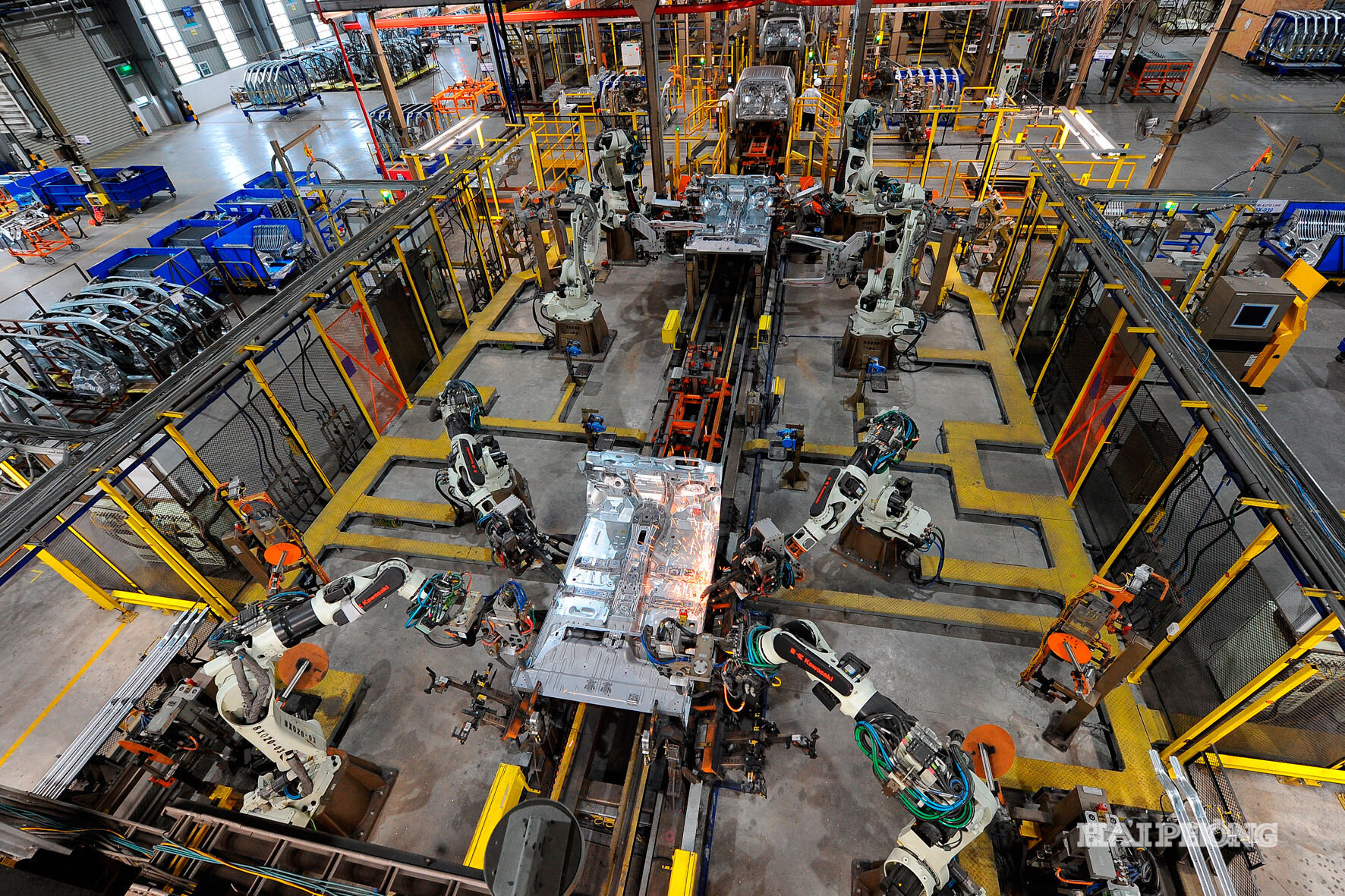
The simultaneous activation of the three policy “levers” to achieve growth targets is therefore considered a necessary solution to lower production and consumption costs across the economy. It is even seen as a “launchpad” that could help control inflation while achieving double-digit growth. For manufacturing businesses, benefiting from all three policy measures at the same time would provide greater confidence to expand investment, secure new orders and recruit workers. Meanwhile, lower monthly electricity and gasoline bills could encourage consumers to spend more.
Hai Phong is entering the final stretch of the year, targeting GRDP growth of 15.39% in the fourth quarter of 2026 and 13% for the full year. These ambitious targets pose a major challenge for the city, as well as its departments, sectors and localities, during the remaining two months of 2026.
The positive momentum generated by the three policy measures is expected to provide a significant boost to production, business and consumption across the city.
VAN CUONG