

Root-cause approach to protecting workers’ health
Occupational health examinations need to move beyond ensuring coverage toward improving the quality of disease detection, monitoring and prevention.
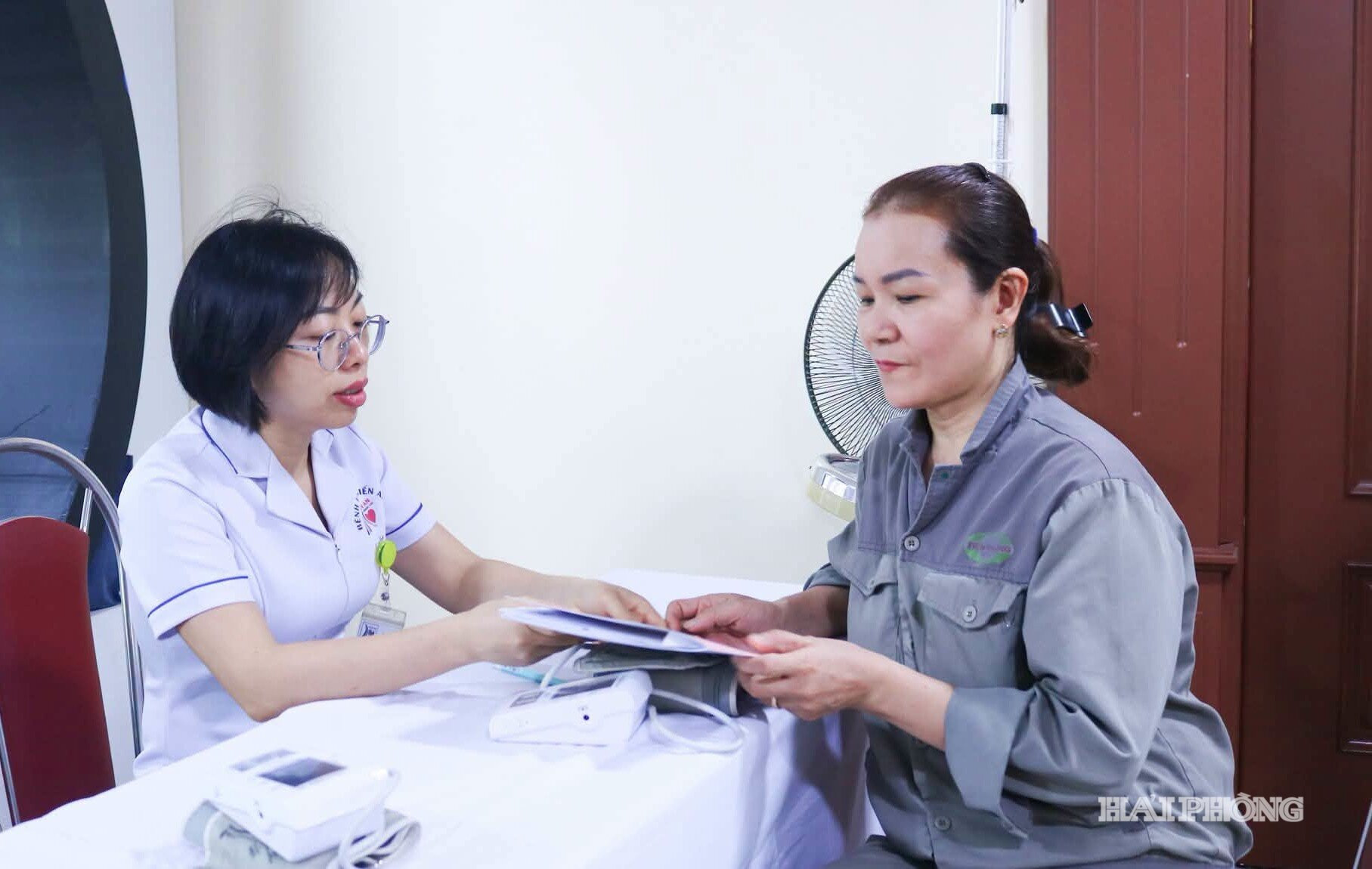
By the end of September 2026, more than 331,000 employees at businesses in Hai Phong had received health examinations, accounting for approximately 30% of the city's total workforce. This was also the lowest participation rate among all groups during this year's campaign to provide health checkups for the entire population.
Periodic health examinations are a legal responsibility of employers under the Law on Occupational Safety and Health. However, inspections at some businesses have found cases in which employers have not arranged examinations for all employees, particularly those working in arduous, hazardous or dangerous conditions. In some workplaces, examination results have also not been fully updated in electronic health records.
Hai Phong is an industrial city with industries ranging from mechanical engineering, shipbuilding, construction materials and electronics to garment manufacturing, footwear, chemicals and logistics. Each sector presents different occupational health risks.
Occupational diseases, meanwhile, often do not develop after just one day or one month of work. Health examinations therefore cannot follow the same approach for mechanical workers, shipbuilders, chemical industry workers and production-line employees.
In the first nine months of 2026, the Hai Phong Center for Disease Control conducted occupational disease examinations for 3,835 people at 51 companies and monitored working environments at 48 companies. These two activities were carried out in tandem to identify workplace hazards and assess their effects on workers' health.
As part of the “90 Days of Acceleration – Completing the 2026 Nationwide Health Examination Campaign” initiative, the city is inspecting businesses to ensure compliance with regulations on periodic health examinations and screening for occupational diseases. The inspections aim to ensure that no one required to undergo an examination is overlooked, particularly those working in arduous, hazardous or dangerous conditions.
Protecting workers' health is not only about safeguarding their legitimate rights and benefits; it is also directly linked to production stability. When workers' health is monitored, their duties are adjusted to suit their physical condition, and they work in safe environments, businesses can also reduce losses caused by illness, absenteeism and declining work capacity.
The focus, therefore, should extend beyond the proportion of workers examined to the quality of the information collected and how the results are used afterward. Health examinations can make a real difference only when their findings are used to monitor workers' health, adjust job assignments and control disease-causing risk factors.
This provides a more meaningful measure of occupational health examinations in an industrial city like Hai Phong, where the goal is for detection, monitor for management, and thereby reducing risks in the workplace
NGOC HAN