
Hai Phong expands low-emission rice farming
Hai Phong is a leading locality in adopting low-emission rice farming methods, helping increase production value and protect the environment sustainably.
Applying new techniques, reducing production costs
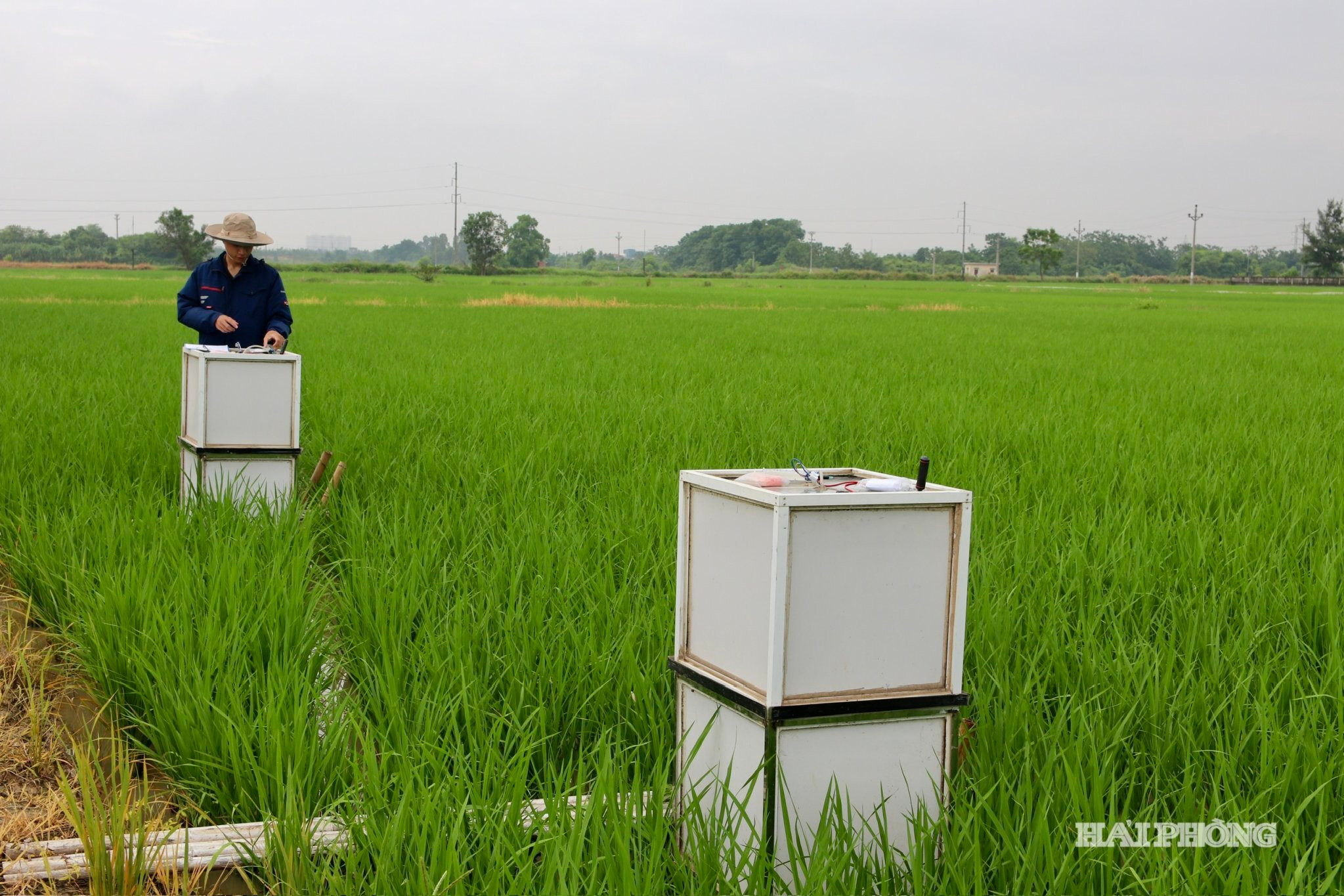
Since the 2026 spring crop, farmers in Nam Sach Commune have adopted alternate wetting and drying (AWD) irrigation for rice cultivation across 330 hectares with support from specialized agencies. Although the model is newly implemented, it has demonstrated its feasibility and effectiveness under actual production conditions.
“Continuous flooding in rice cultivation is one of the causes of increased greenhouse gas emissions because it generates large amounts of methane. Alternate wetting and drying not only addresses this problem but also offers several practical benefits. Assessments show that this technique can reduce emissions by up to 55% compared with traditional cultivation. It also saves one to three irrigation cycles per crop, reduces pest and disease pressure, facilitates mechanization, and increases rice yields by 5.2% to 16.5%,” said Dr. Vu Duy Hoang of the Vietnam National University of Agriculture, who directly manages and monitors the model.
In addition to AWD, Hai Phong's agricultural sector is actively piloting rice cultivation techniques that use fertilizers appropriately and efficiently to reduce emissions. During this year's summer-autumn crop, the Sub-department of Crop Production and Plant Protection established three demonstration models using this approach in Hong Chau and Tan An communes to assess their economic and environmental effectiveness.
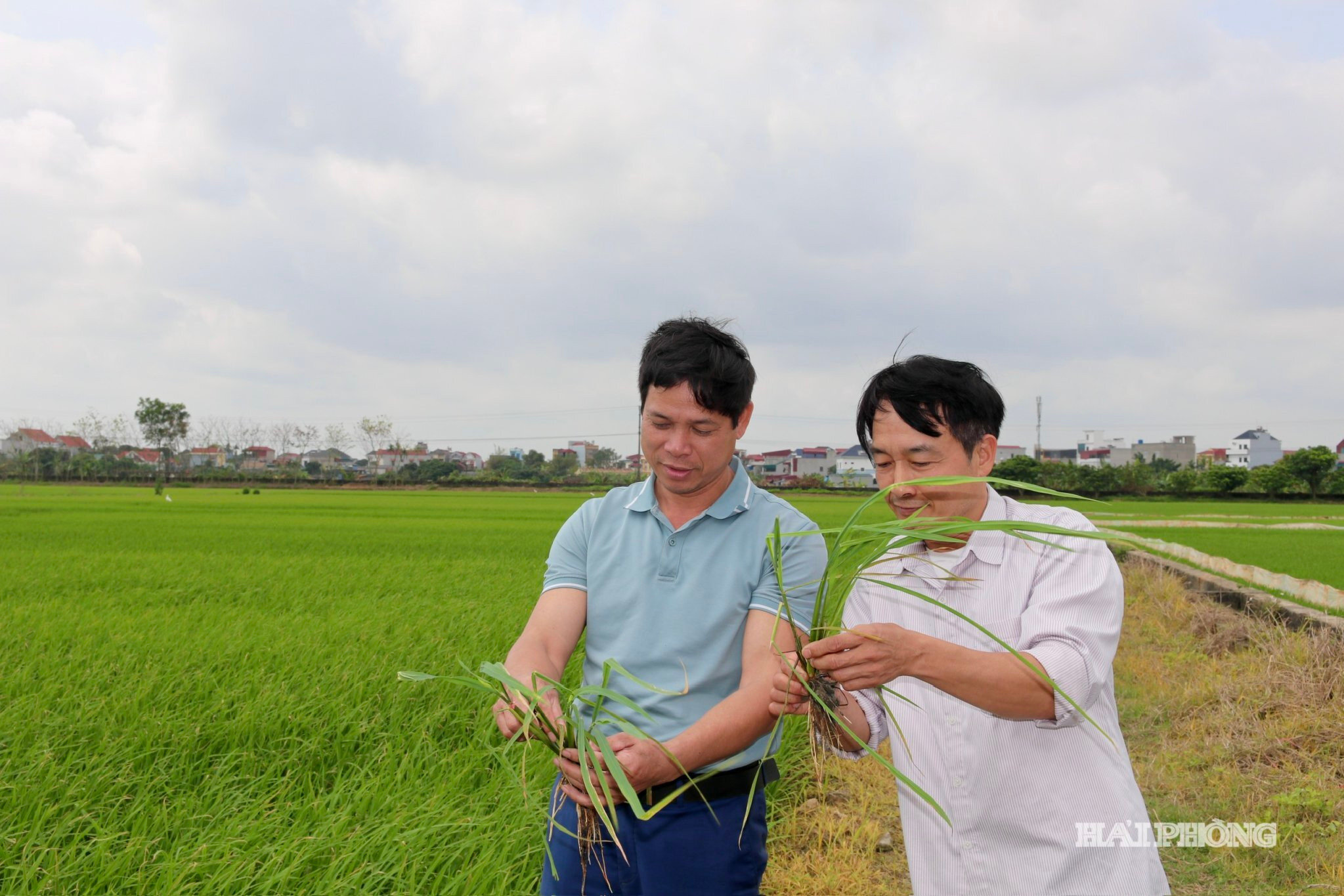
According to Le Dinh Doan, Director of Hung Thai Agricultural Service Cooperative in Hong Chau Commune, assessments show that appropriate and balanced fertilizer use combined with mechanized planting could deliver two benefits: lower input costs and greater economic returns per unit of cultivated area.
Prospects for developing carbon credits from rice
Along with Ninh Binh and Hung Yen, Hai Phong is one of the first three localities selected to launch a high-efficiency, low-emission rice cultivation model under the project “Low-emission cultivation in the 2025 – 2035 period, with a vision to 2050,” led by the Ministry of Agriculture and Environment. In practice, however, Hai Phong had already proactively adopted and applied greenhouse gas emission reduction methods in rice cultivation since 2023.
From an initial three-hectare pilot, Hai Phong now has more than 3,400 hectares of rice cultivated using low-emission methods across nine communes: Tan An, Hong Chau, Thanh Mien, Nguyen Binh Khiem, Quyet Thang, An Quang, Viet Khe, An Khanh and Nam Sach.
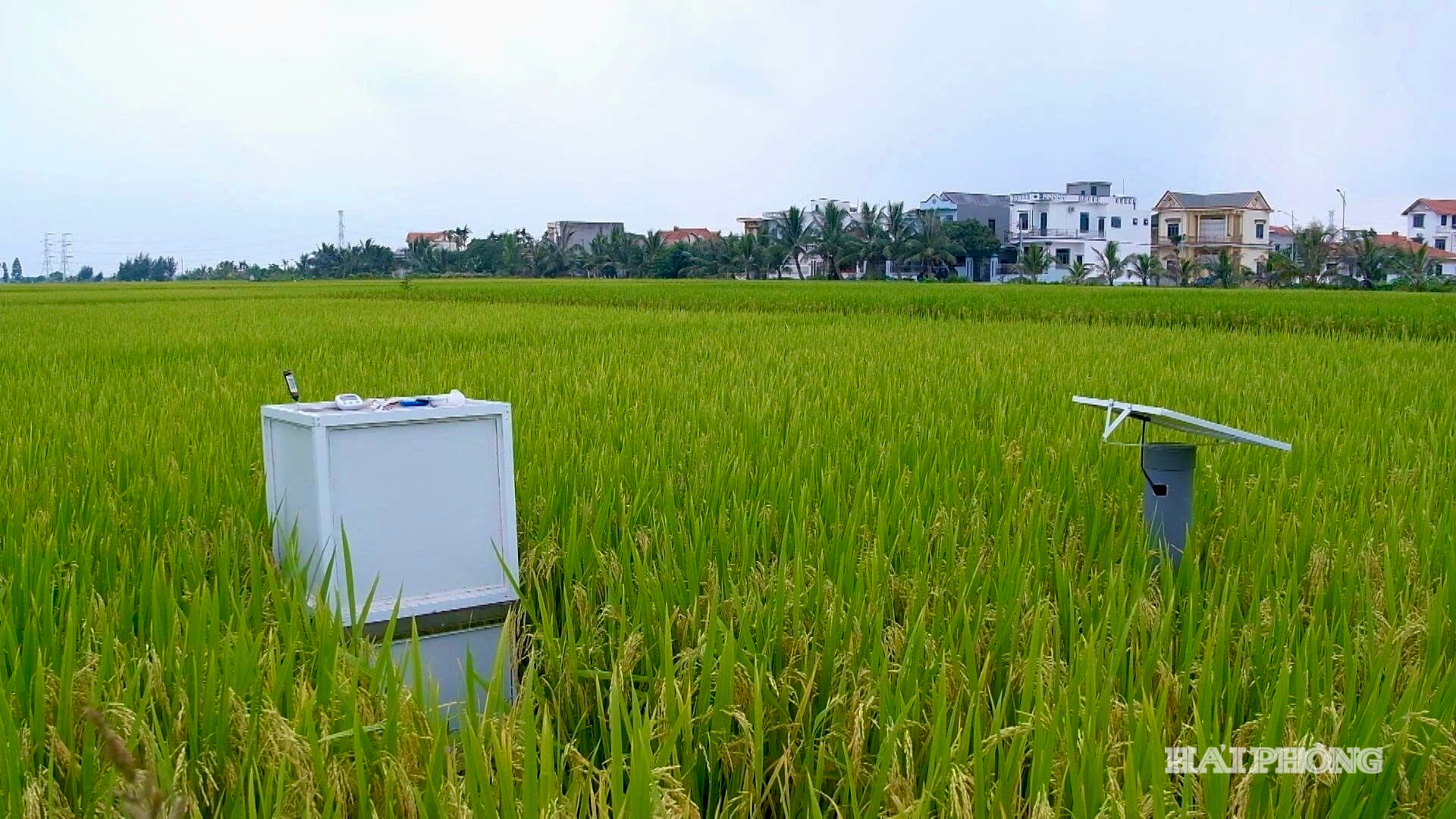
The city is currently maintaining approximately 77,000 hectares of rice cultivation per crop. Given its cultivation practices and production scale, the city has chosen rice as a priority crop for developing low-emission agricultural products. Cultivated areas will be expanded annually based on the specific production conditions of each locality. The techniques used to limit emissions from rice farming are relatively simple and easy to implement.
Luong Thi Kiem, Deputy Director of the Hai Phong Department of Agriculture and Environment, affirmed that the city has strong prospects for low-emission rice production because irrigation and balanced fertilizer application can be effectively controlled. Emission reductions achieved through these models can be measured and verified, providing a basis for considering their conversion into carbon credits. This could generate additional financial resources for reinvestment in agricultural infrastructure and support farmers in developing green, environmentally friendly agriculture that adapts to climate change. These efforts would gradually help establish a modern, sustainable ecological agricultural sector.
DUNG CUONG