

Heritage expands Hai Phong night-street experiences
Relic sites amid Hai Phong’s night pedestrian and food street create a multilayered urban experience, taking visitors from the rhythm of modern life into the cultural depth of the port city.
Heritage in the heart of night street
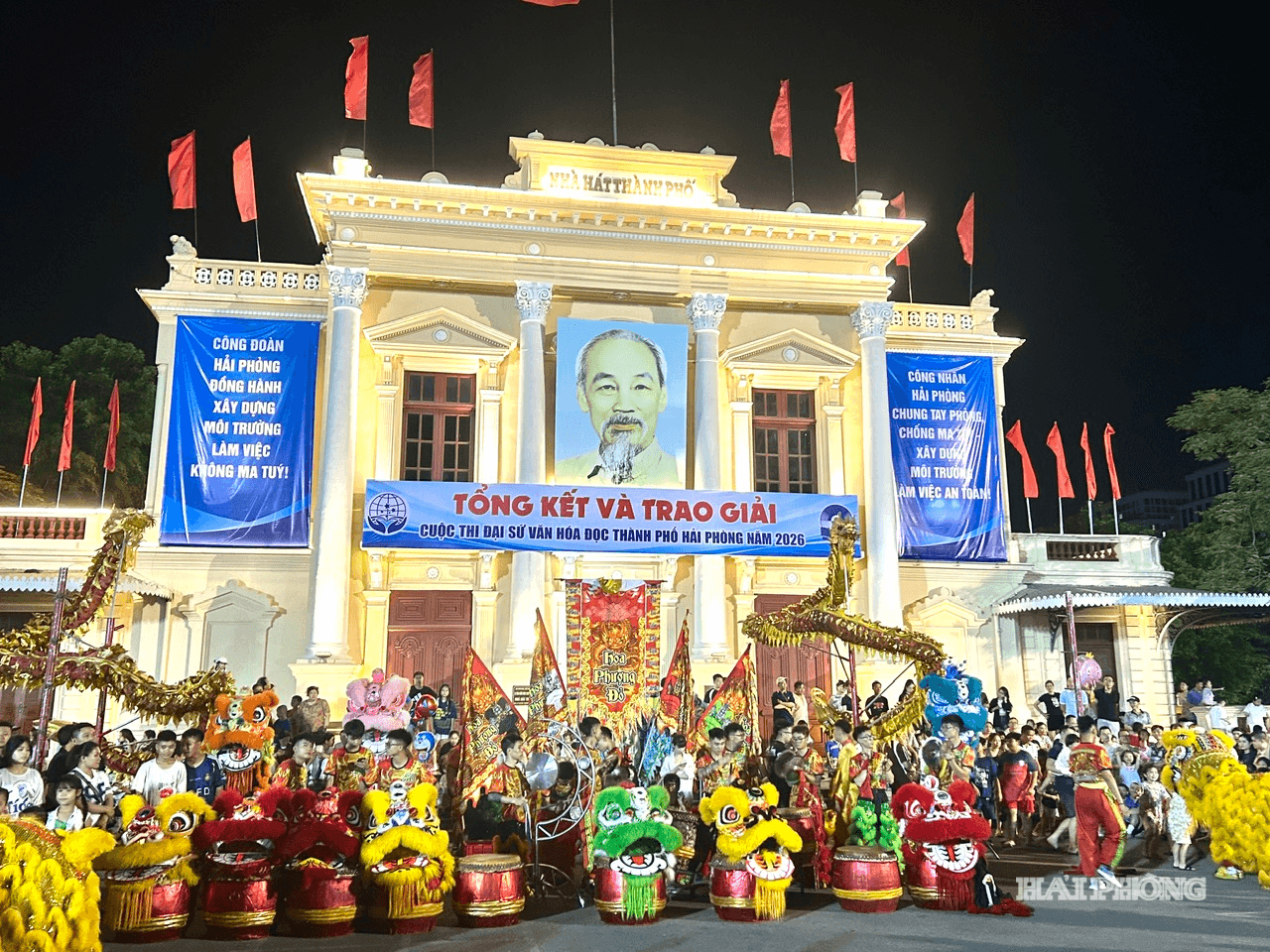
Hai Phong’s night pedestrian and food street is located in the city center, stretching from Quang Trung Street to Tran Hung Dao Street and surrounding the City Theater Square and Flagpole Grounds. The area is home to numerous relic sites and old architectural buildings. These attractions are close to one another, forming an almost continuous walking route.
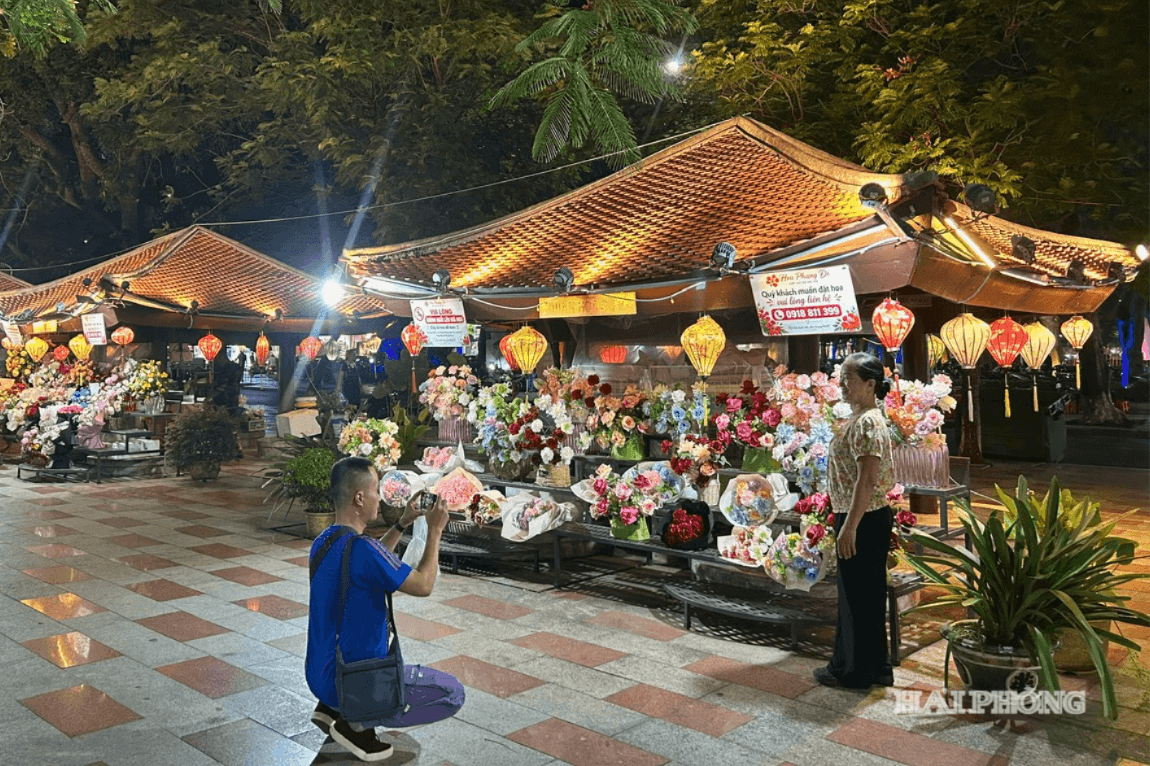
The City Theater is a more than 100-year-old French colonial building featuring distinctive Gothic architecture. It serves as a focal point and is considered the “heart” of the night street. Just a few minutes’ walk away is Quan Hoa, a structure built in 1944 comprising five small pavilions that combine Eastern and Western architectural styles. Once a place where fresh flowers were sold in the city, Quan Hoa has become a symbol that evokes memories of Hai Phong for generations.
A little farther away, in Le Chan District, stands Nghe Temple, a national-level historical and cultural relic dedicated to Female General Le Chan, who founded the ancient An Bien settlement, the predecessor of present-day Hai Phong. The temple preserves many valuable artifacts, including a collection of gold objects recognized as national treasures.
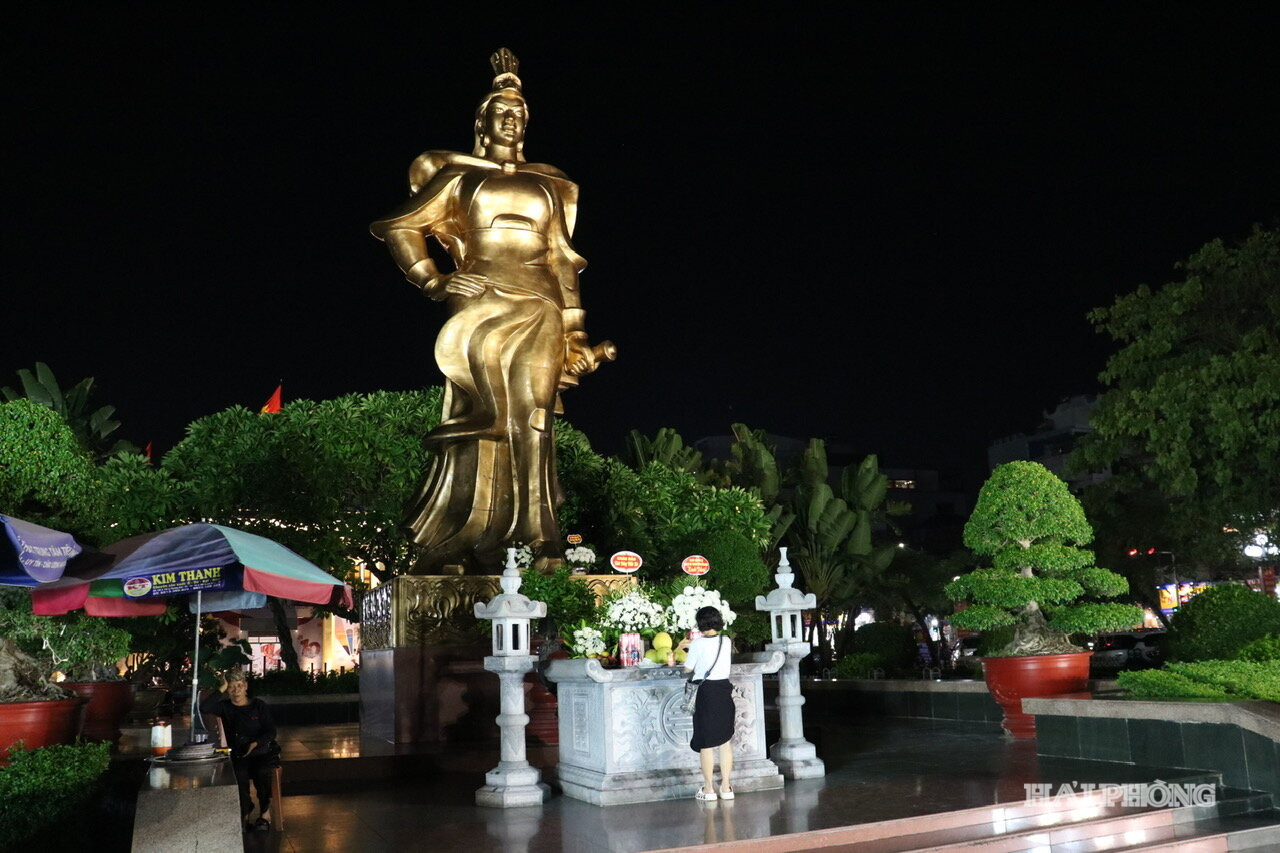
Associated with Nghe Temple is the statue of Female General Le Chan, where processions and ceremonial rites are held during the annual traditional festival honoring her.
From the night street, visitors can extend their journeys to explore other landmarks and historic architectural works bearing the city’s historical and cultural imprint, including Tam Bac Lake, the City Exhibition and Fine Arts Center, the Bandstand, Hai Phong Museum and the Central Post Office. All these destinations can be reached on foot within a short time.
Extending experiences
During the early days of operation of the night pedestrian and food street, the city introduced several initiatives to connect the street with nearby heritage sites. These efforts have begun to incorporate cultural stories into entertainment activities rather than separating heritage spaces from dining and leisure activities.
“I like being able to enjoy local dishes, listen to music, stroll around and admire the historic buildings at the same time. The night street is very lively, but I can still feel Hai Phong’s distinctive culture,” said Amélie Cordonnier, a French visitor.
Architect Nguyen Minh Duc, a graduate student at Politecnico di Milano in Italy, said buildings such as the City Theater, Quan Hoa and Nghe Temple give the area a distinct identity that an ordinary night district would struggle to achieve. The key is to organize the night district so that new activities complement rather than overshadow historic buildings. In this way, heritage adds depth to the night street, while the night street brings these historical values closer to contemporary life.
An appealing night street is defined not only by the number of dishes or entertainment activities on offer, but also by what visitors can discover with every step. A journey might begin with a meal, continue with music and architecture, and then open up stories about the land and its people. When these experiences are naturally connected, they can provide a foundation for an urban tourism ecosystem in which cultural values reinforce one another, helping extend visitors’ stays and enriching their experiences in Hai Phong.
MINH TAM