
Technology tackles urban operation challenges
New technology solutions are being developed and applied to address flooding, traffic, manufacturing, port and logistics challenges in Hai Phong.
Addressing challenges with technology
Alongside urbanization and the expansion of development space, Hai Phong City is facing growing demands to improve the operation of infrastructure and urban services. Flood monitoring and alerts, traffic management, data management and infrastructure operations require flexible, accurate solutions with practical applications.
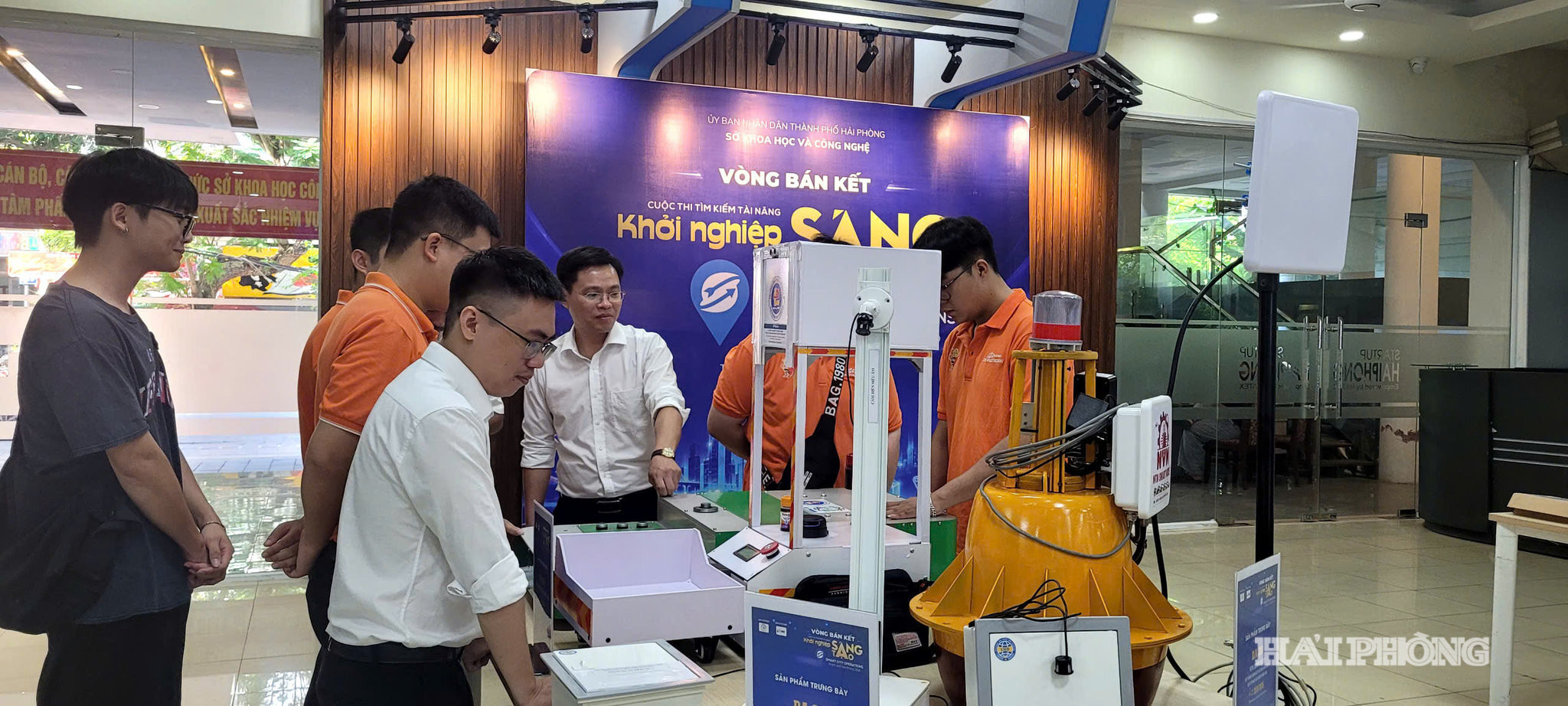
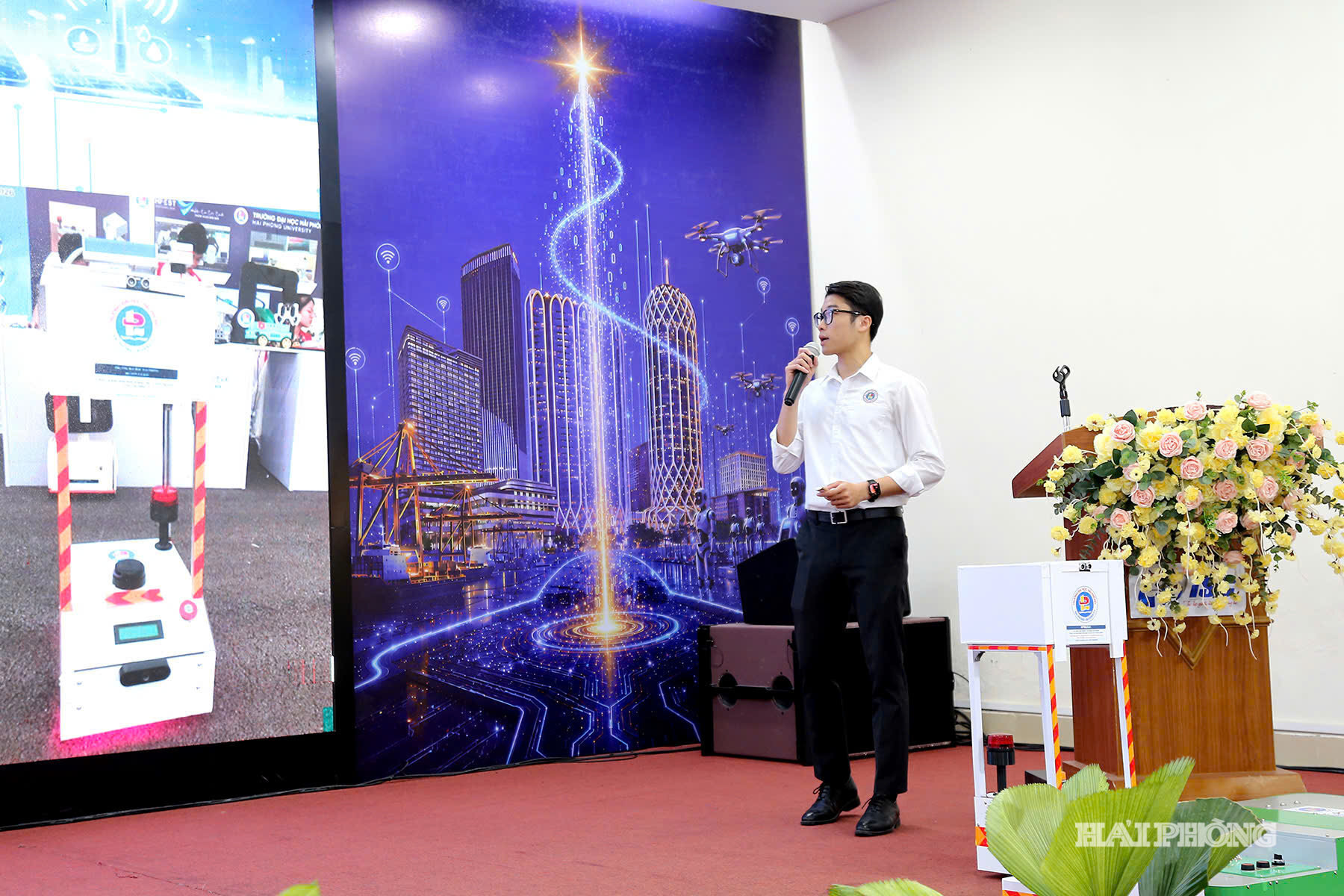
In response to these needs, a research team from Hai Duong University brought the project “Real-time flood monitoring and automatic pump station control system” to the 2026 Hai Phong Creative Startup Talent Search Competition.
The solution integrates sensors, IoT, AI and automation into a chain spanning monitoring, alerts and operations. Ultrasonic sensors measure water levels and transmit data via LoRa, Mesh or 4G to a central system.
The pilot model consists of two monitoring stations connected to controllers, pump relays and a central dashboard. According to the research team, the production cost of each station is less than one-third that of imported equipment. The team aims to pilot 10 stations at frequently flooded intersections and industrial parks.
Not only urban areas, but also industrialization and the development of ports and logistics are creating significant demand for new technology solutions.
According to lecturer Le Duc Thuan, Head of the Economics Department at FPT Polytechnic Hai Phong College, two of the school's projects entered the semifinal round of the 2026 Hai Phong Creative Startup Talent Search Competition: Factory Vision AI and a smart waste collection project.
Factory Vision AI applies AI, computer vision and IoT to monitor safety in factories, from checking the use of protective equipment and identifying hazardous areas to detecting fires, smoke and leaks and monitoring forklifts and machinery. The solution can make use of existing IP camera systems, reducing investment costs while analyzing data in real time, issuing risk alerts and generating reports for management.
A large market driven by operational needs
The scale of urban areas, industry and seaports is creating a large market for solutions that optimize operation. In the first nine months of 2026, the city's port cargo throughput reached 156.3 million tons, up 11.8% year on year. Revenue from transportation, warehousing, transportation support services, postal and delivery services was estimated at VND 153.367 trillion, up 20.3%, while the Index of Industrial Production increased 15.23%.
Le Luong Thinh, Deputy Director of the Department of Science and Technology, said that as the city's economic scale continues to expand, it is facing more practical management challenges that require new solutions. Technology must help shorten processing time and reduce costs in port operations and logistics, enable industrial parks and businesses to optimize resources and meet green development requirements, and improve the quality of urban infrastructure and services toward greater convenience, safety and transparency.
Therefore, startup ideas are expected to address real-world problems, match market needs, have technologically and financially feasible models, and be scalable. To ensure that ideas do not stop at prototypes, an environment must be created for startups to continue refining their technologies, conducting trials and finding customers.
The Department of Science and Technology is promoting an “open innovation” model, under which management agencies and businesses can act as clients, share testing facilities and data within permitted limits, while startups provide new solutions.
The city also plans to connect startups with businesses, industrial parks and investment funds and provide appropriate support mechanisms for pilot testing.
THANH VAN