

Lach Huyen expands capacity, creating new room for growth
Hai Phong is accelerating investment in new port berths at Lach Huyen while completing connecting infrastructure and logistics facilities to enhance its appeal to investors and attract more cargo.
Port expansion to attract more cargo
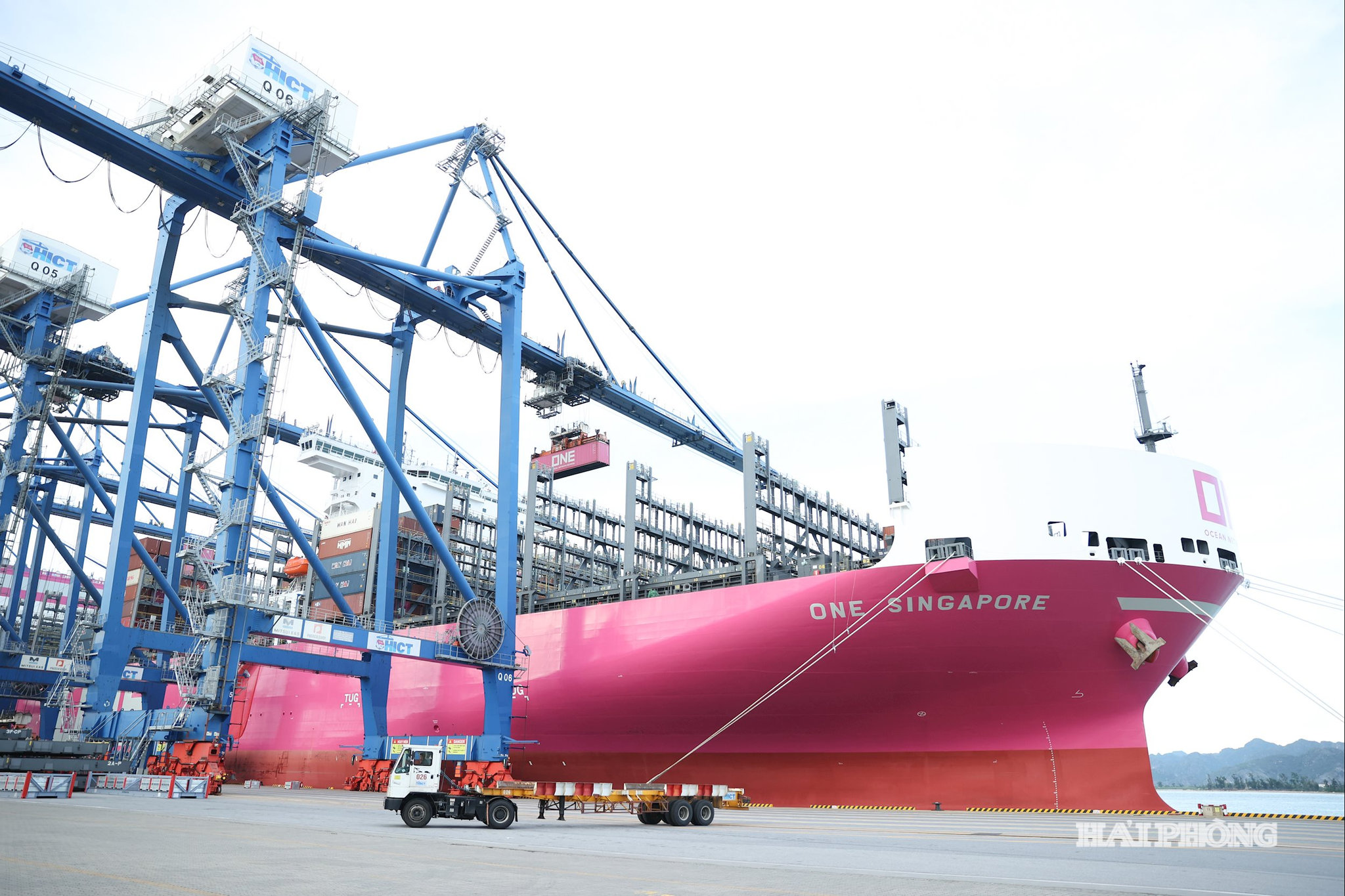
Lach Huyen Port has put six berths into operation, with a total quay length of approximately 2.4 kilometers and a designed capacity of around 4.7 million TEUs per year. Its capacity to accommodate large vessels continues to increase, with the port regularly receiving ships of more than 200,000 DWT. This has made a significant contribution to Hai Phong Port’s rise to 13th place globally in container port operational efficiency in 2025.
Two subsequent projects, with a combined investment of approximately VND 39.612 trillion, are completing the necessary procedures. The project to develop berths 7 and 8 is being invested in by Saigon Newport Corporation in partnership with shipping line CMA CGM, with a total investment of approximately VND 14.766 trillion. Covering 79.9 hectares of land and water, the project will include two main berths with a combined length of 900 meters and a designed capacity of 1.9 million TEUs per year.
The project to develop berths 9 to 12 is being invested in by Lach Huyen Port Investment Joint Stock Company, with a total investment of approximately VND 24.846 trillion and a development area of 146.2 hectares. The company has signed a strategic cooperation agreement with PSA Vietnam. Berths 9 and 10 are scheduled for construction during the 2026–2030 period, while berths 11 and 12 are planned for 2031–2035.
According to the plan, Hai Phong is completing the necessary procedures, with the aim of commencing construction on berths 7 and 8, as well as berths 9 and 10, in the fourth quarter of 2026. Once completed, these projects will help increase handling capacity at Lach Huyen, creating favorable conditions for the development of additional shipping routes and services.
Mr. Nguyen Van Tien, Deputy General Director of Hateco Hai Phong International Container Terminal, said that before Lach Huyen Port came into operation, cargo had to be transshipped through Hong Kong and Singapore. Direct shipping services to North America, along with the trial of a route to Europe from Lach Huyen, have helped reduce transportation time and costs, enhancing the port’s competitiveness.
Cargo demand continues to provide a foundation for attracting investment. In the first nine months of 2026, cargo throughput across Hai Phong’s port system was estimated at 156.3 million tonnes, up 11.8% year-on-year. The city’s export turnover was estimated at USD 43.72 billion, while imports reached USD 34.98 billion. Industrial parks and economic zones attracted an estimated more than USD 3.3 billion in foreign investment, generating additional demand for transportation, warehousing and production support services.
However, capacity expansion must be aligned with market demand. Mr. Chew Boshen, who oversees investment and business development at PSA Singapore, said that the timing of bringing new berths into operation must be carefully considered. Capacity needs to keep pace with cargo growth while ensuring investment efficiency and avoiding excessive oversupply that could trigger price competition.
This presents a challenge: aligning investment schedules with the ability to attract shipping routes and cargo volumes. Cooperation between port operators and international partners needs to be translated into concrete operational plans and service development strategies to ensure that the new berths become commercially viable as soon as possible.
Coordinated infrastructure and streamlined procedures
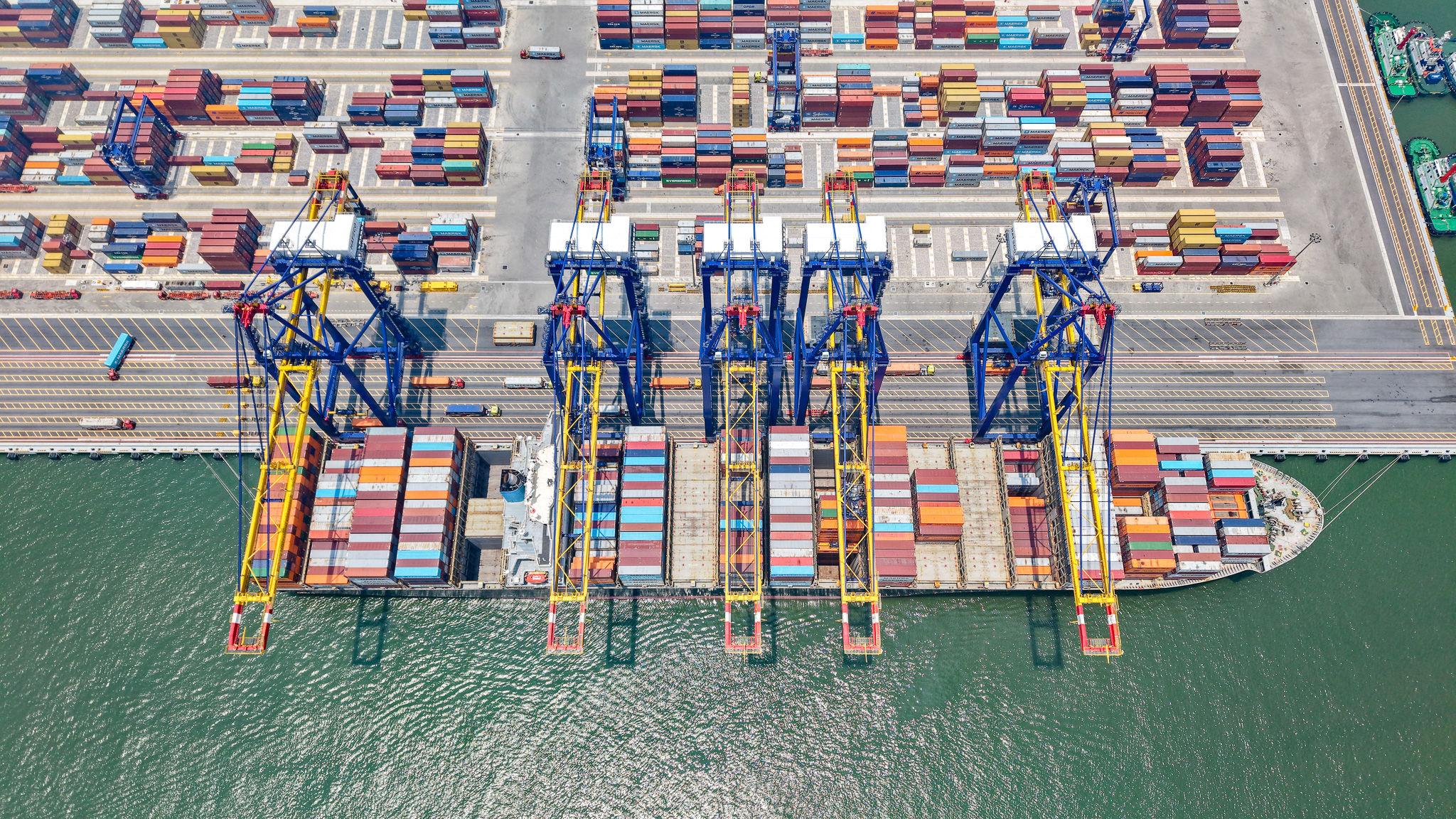
Mr. Pham Van Thep, Member of the Standing Committee of the Hai Phong Party Committee and Head of the Hai Phong Economic Zone Authority, said the city is implementing special mechanisms and policies and stepping up administrative reform to facilitate investors. The Economic Zone Authority, together with customs and tax authorities, is focusing on shortening the time required to process procedures to meet the operational needs of logistics and import-export businesses.
The city is also completing planning for inland waterways, inland waterway terminals and connecting transport corridors. Hai Phong has also proposed that planning for additional berths beyond berth 12 be completed soon, proactively preparing space for long-term development. In the long term, alongside the goal of developing the special-class seaport system toward a throughput of 184.8–228.9 million tonnes per year by 2030, Hai Phong aims to turn Lach Huyen into an international transshipment port, coupled with digital and green transformation throughout the entire operational chain.
The municipal People's Committee is seeking interested investors to study and implement a project for a road connecting Lach Huyen Port with Gia Binh Airport, with a preliminary total investment of more than VND 43.743 trillion.
The route will be approximately 46.55 kilometers long, running from the interchange between Ring Road 3 and National Highway 10 in Luu Kiem Ward to the eastern interchange of Gia Binh Airport. The project is expected to be developed under a public-private partnership model. It aims to improve connectivity between seaports and airports and the inter-regional transport network, while creating a land fund along the route for the development of industry, logistics, commerce and urban areas.
Alongside new transport routes, the organization of services serving cargo sources is also drawing strong interest from businesses. At the discussion session “Attracting Investment in Lach Huyen International Gateway Port – Expanding Growth Space,” held as part of the 7th Regional Logistics Forum recently organized in Hai Phong, delegates proposed developing seaports in tandem with logistics systems in production areas.
Mr. Phung Ngoc Minh, Deputy General Director of Saigon Newport Corporation, said the gateway port needs a network of inland container depots, container yards, logistics centers and multimodal transport services in production areas. This approach would expand the port's service coverage, ease congestion around the port and facilitate the shift of part of cargo volumes to waterways and railways.
In addition to transport infrastructure, data connectivity is also a concern for investors. A representative of PSA noted that ports in Hai Phong currently operate separate digital systems, requiring businesses to work across multiple platforms and procedures. Therefore, a shared platform is needed to enable stakeholders to share and access information and coordinate their work.
Attracting investment in Lach Huyen should focus on developing an interconnected ecosystem of seaports, industry, logistics and commerce. Alongside new port berths, synchronized investment in connecting infrastructure and post-port services will enhance the area's appeal to cargo owners, businesses and international production chains. This will provide a foundation for Hai Phong to strengthen its role as a trade gateway for northern Vietnam, increase the value of port services and create a long-term growth driver for the city.
Le Hiep