
Addressing investment resource challenges for development
By combining public and private resources for infrastructure investment, Hai Phong is gradually addressing investment challenges and expanding room for its growth targets.
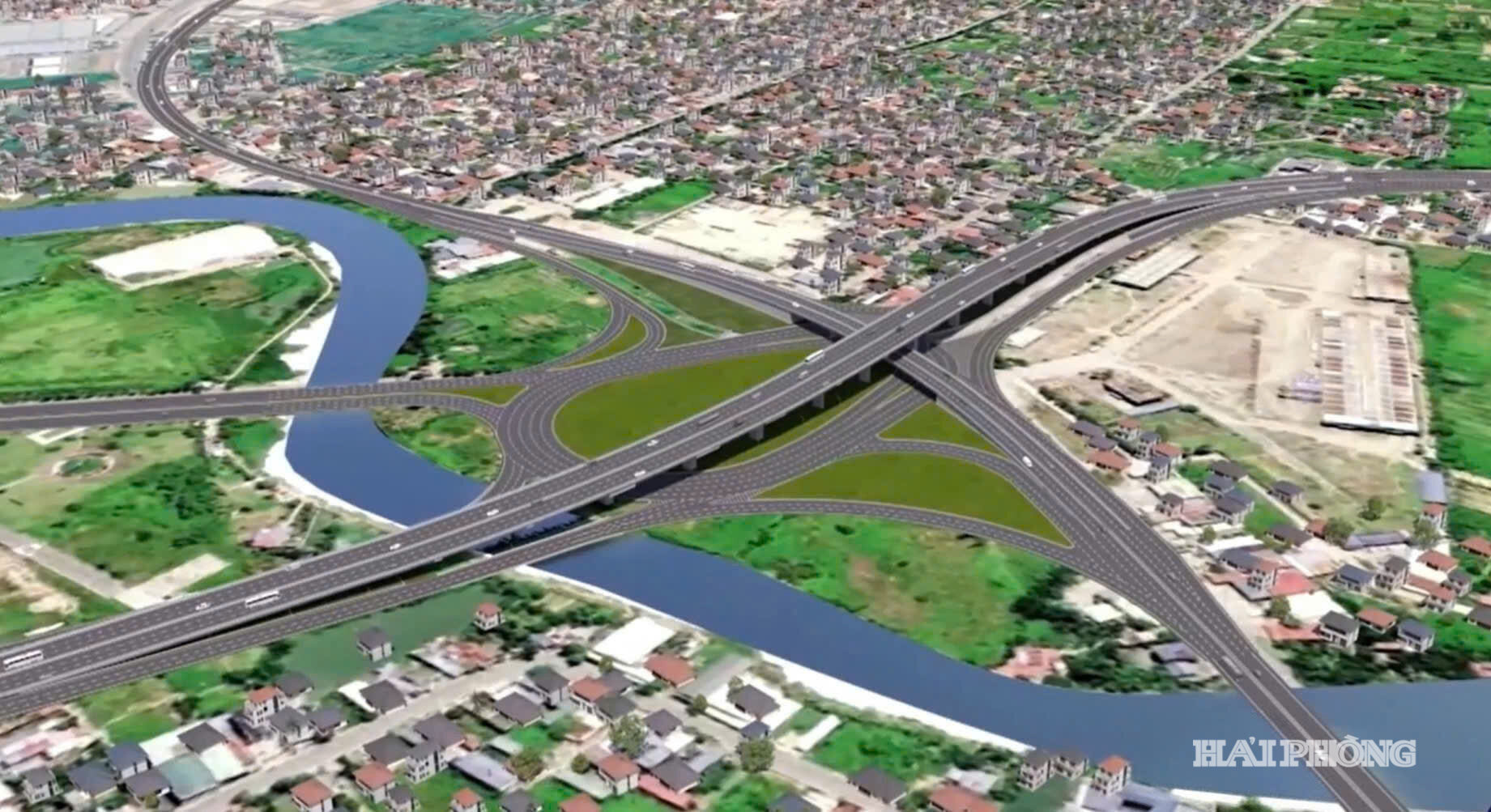
The Hai Phong People’s Council has recently approved a resolution on the investment policy for construction of an East-West road, with a total investment of approximately VND 22.669 trillion. Of this, the city budget will provide about VND 7.552 trillion, accounting for approximately 33%, while investors will contribute about VND 15.117 trillion, equivalent to 67%.
The investment policy decision for the project is significant not only for connecting the western and eastern parts of the city, completing the transport network and expanding development space, but also for demonstrating the diversification of methods for mobilizing investment resources for development.
To achieve an annual growth target of at least 13% during the 2026-2030 period, the city needs approximately VND 2.4 quadrillion in investment. In 2026 alone, to meet its growth target, the city aims to mobilize total social investment of VND 363 trillion. This is a major challenge for the city amid a number of difficulties and challenges.
In addition, of the total capital needed to achieve the growth target, public investment is expected to account for around 10-11%, with the remainder coming from off-budget investment, including private and foreign direct investment. Amid increasingly intense competition for capital, this also creates a need to diversify methods of mobilizing investment resources.
To address this challenge, the city has set out key groups of tasks and solutions. Alongside increasing budget revenue and accelerating public investment disbursement to create spillover effects, the city has identified the need to mobilize resources, particularly domestic ones, while diversifying sources of capital to invest in the city’s key infrastructure systems. Priority will be given to transport, industrial, post-port services, urban, science and technology, and innovation infrastructure...
Among them, Public-Private Partnership (PPP) has been identified as a channel for mobilizing capital for strategic infrastructure development. This is also one of the tasks set out in Resolution No. 11-NQ/TU.
In practice, before the 2020 PPP Law took effect, Hai Phong had implemented several PPP projects, mainly under the BT model and a small number under the BOT model. These projects helped effectively mobilize off-budget resources, reduce pressure on public investment spending, promote urban infrastructure development, renovate old apartment buildings, improve the urban landscape and enhance residents’ quality of life.
Following the issuance of the 2020 PPP Law and its guiding documents, the legal framework for PPP and BT contracts gradually became more complete and consistent. The city has identified a list of 19 projects that can be implemented under the BT model.
Alongside the East-West road project, the city is now seeking investors for a road project linking Lach Huyen Port with Gia Binh Airport and has proposed implementing it under the PPP model through either a BOT or BT contract.
Diversifying methods of mobilizing resources is also a concrete step toward realizing the Central government’s orientation of promoting the guiding and leading role of public investment in activating resources from the private sector. This will create more room for infrastructure investment, contribute to growth and help realize Hai Phong’s development goals.
NGUYEN HA