

Expectations for Hai Phong's East-West Connecting Road
The Hai Phong East-West Connecting Road Project has been approved by the City People's Council, prompting considerable interest and expectations among voters and local residents.
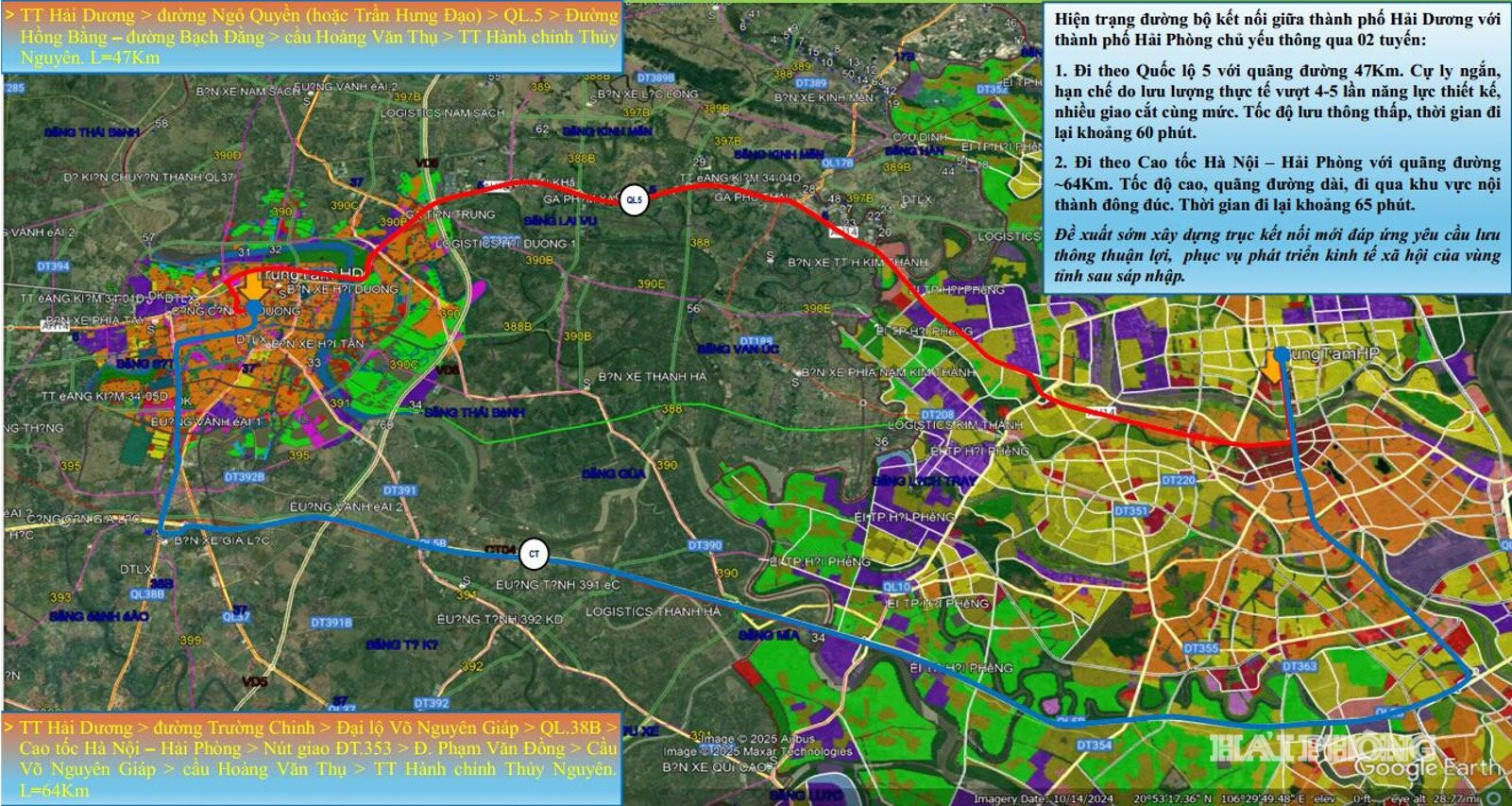
Total investment of nearly VND 22.67 trillion
On September 25, the Hai Phong Municipal People's Council voted to approve a resolution on the investment policy for the East-West Connecting Road Project. Under the resolution, the project will be implemented from 2026 to 2030.
The East-West Connecting Road will link the centers of the western urban area (the former Hai Duong city) and the eastern urban area (the former Hai Phong city). The entire route will be approximately 23.59 kilometers long, with a 68-meter-wide cross-section. The main carriageway will have six lanes with a design speed of 100 km/h, while four parallel lanes will have a design speed of 60 km/h.

The route will pass through the communes and wards of Nam Dong, Ai Quoc, Thanh Ha, Ha Bac, Ha Nam and Kim Thanh in the western area, and An Phong and An Duong wards in the eastern area of the city.
The project's preliminary total investment is estimated at approximately VND 22.669 trillion. Under the resolution of the municipal People's Council, state capital will account for around 33% of the total investment, or approximately VND 7.551 trillion, while the investor's capital will account for around 67%, or approximately VND 15.117 trillion.
Payment will be made in multiple installments under the BT project payment mechanism using land funds, in accordance with Clause 3, Article 16 of Government Decree No. 257/2025 dated October 8, 2025. Seven land plots are expected to be used as payment assets, with a total area of approximately 360.28 hectares. These include two plots in Hong Bang Ward, two in An Hai Ward, two in An Duong Ward and one in Thuy Nguyen Ward.
According to the Hai Phong Traffic Construction Investment Project Management Board, this approach is intended to combine state resources with social resources, creating additional room for mobilizing investment capital for infrastructure development while making effective use of land funds in accordance with planning. Once the infrastructure is completed, access to newly developing areas will be improved, creating favorable conditions for attracting urban, commercial, service, industrial and logistics projects, as well as production and business activities, thereby generating more jobs, revenue and growth momentum for the city.
Regarding the choice of a public-private investment model for the project, Mr. Pham Quang Quynh, Deputy Director of the Hai Phong Traffic Construction Investment Project Management Board, said the East-West Connecting Road is a relatively large-scale project and one of Hai Phong's major projects to date.
"The project has a total investment of more than VND 22 trillion. If only one investment model were used, mobilizing sufficient capital would be very difficult. If the entire project were implemented as a public investment project, it would be difficult for the city to balance its budget. If the project were implemented entirely under the BT model, the land fund required to make payments to the investor would also be very large. Therefore, based on the city's capacity to balance funding sources and make payments to the investor through land funds, relevant departments and agencies studied and advised the city on an appropriate investment plan combining two sources of capital. This is also consistent with current regulations, while making use of both investor capital and the city budget for investment during the 2026–2030 period," Mr. Quynh said.
At the same time, not putting the land plots used for payment up for auction will help reduce the time required for administrative procedures and the auction process, thereby accelerating project implementation. This investment model is also being widely used in many major cities.
What are residents hoping for?
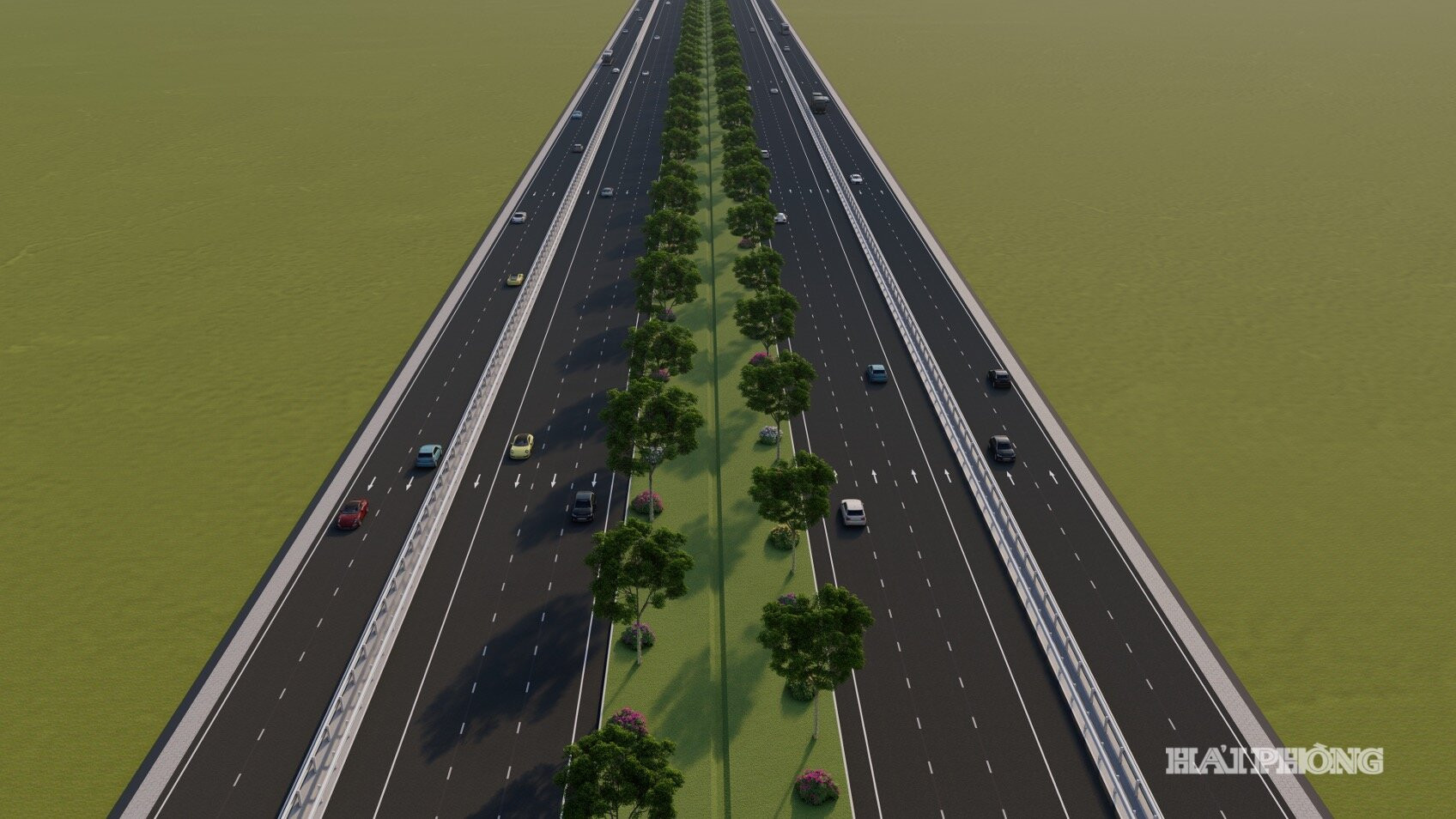
The Hai Phong East-West Connecting Road Project is expected to use approximately 284.77 hectares of land, including residential, agricultural and non-agricultural land. An estimated 655 households will have to be partially or fully relocated. Therefore, site clearance, compensation, support and resettlement are among the project's key tasks.
The family of Mr. Nguyen Van Nham in Dai Duc Village, Kim Thanh Commune, has just completed a spacious new house where three generations live together. The house was built with savings accumulated by the entire family over many years and was intended to be their long-term home. However, after learning that their land falls within the proposed area for the East-West Connecting Road, Mr. Nham is concerned about his family's future living conditions and housing situation.
"If the project is implemented, we understand that we will have to comply with the overall policy, but we still have concerns and worries. We hope that when the project is implemented, the authorities will provide clear and public information about the land acquisition area, compensation and support plans, and resettlement arrangements, so that residents have time to prepare and stabilize their lives. If we have to relocate, we also hope the policies will be implemented appropriately and that the legitimate rights and interests of residents will be ensured," Mr. Nham said.
These are also the concerns of many residents regarding the city's plan to invest in the East-West Connecting Road, particularly households directly affected by the project.
On this issue, the resolution assigns the Hai Phong municipal People's Committee to direct the acceleration of preparations and construction of resettlement areas; assess the capacity to meet resettlement needs in each locality, ensuring that resettlement arrangements are put in place ahead of time to promptly serve site clearance and project implementation. At the same time, the city will review and address in a coordinated manner intersections, connections to existing roads, drainage systems and related technical infrastructure.
In addition, attention should be paid to creating an urban landscape along both sides of the route, in conjunction with architectural planning, effective management and use of land funds, ensuring consistency with urban development orientations and maximizing the project's investment efficiency.
The city will also review and organize integrated connections between the road and existing infrastructure systems and related projects, particularly at intersections with roads, local access roads, drainage culverts, irrigation canals and technical infrastructure. This is intended to ensure seamless connectivity without affecting residents' production and daily activities, while minimizing overlaps, conflicts, additional costs and waste of the city's resources.
The East-West Connecting Road is a major transport project that residents hope will strengthen connectivity following the administrative merger and shorten travel times between the two ends of the city. Therefore, its implementation needs to comply with regulations and stay on schedule, while also paying due attention to the social impacts on the thousands of residents living in areas through which the project will pass.
Phong Tuyet