

Exploiting advantages to drive growth
Communes, wards and special zones across Hai Phong are focusing on tapping their potential, boosting production and business activities, and mobilizing resources to achieve the city’s growth targets.
Tapping potential and advantages
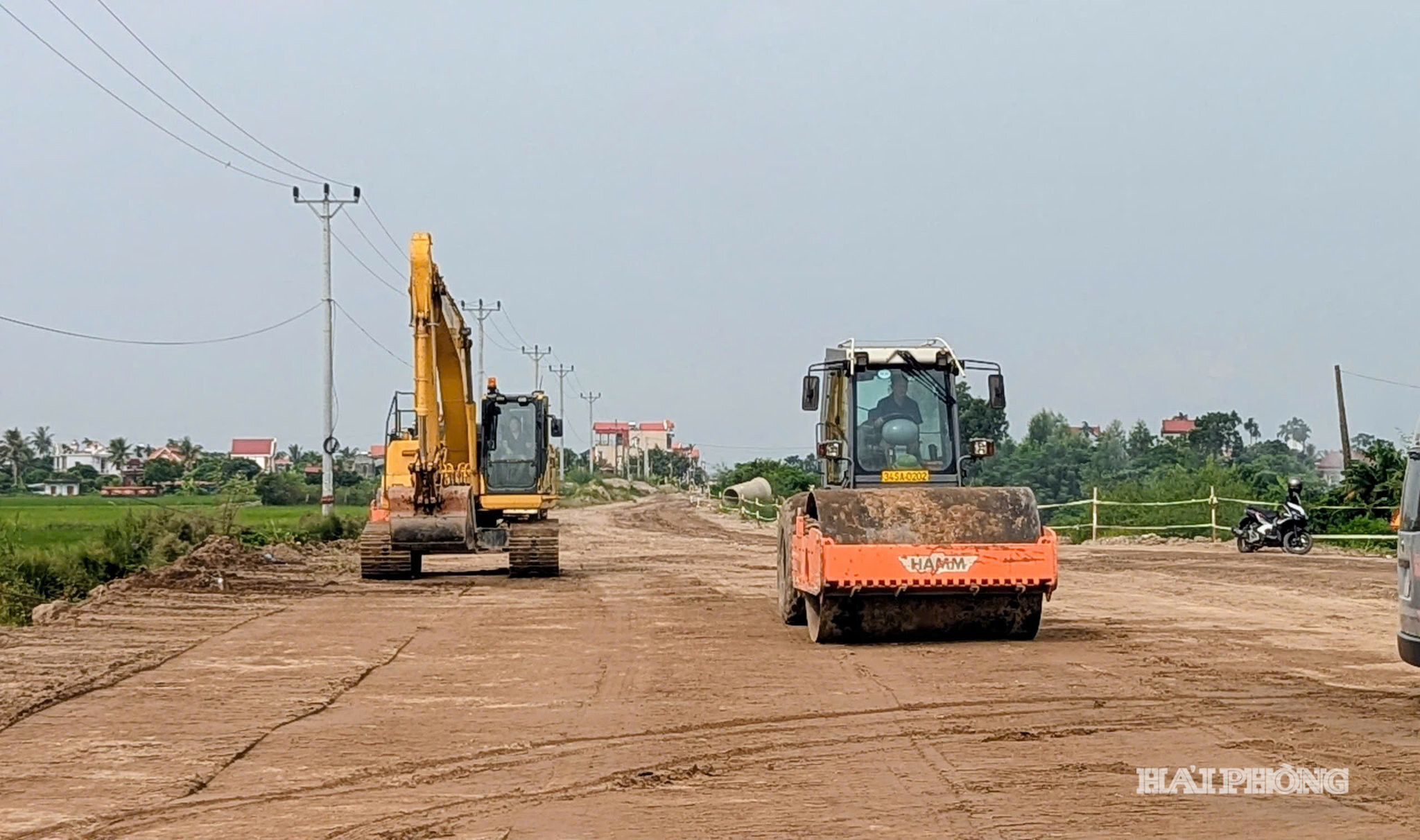
Following the administrative restructuring, Dai Son Commune covers an area of around 23 square kilometers and is home to 9,500 households. The commune is crossed by Provincial Road 391 and a number of intra- and inter-regional transport routes, while the Lao Cai–Hanoi–Hai Phong railway project is currently under construction. These advantages provide favorable conditions for the development of trade and services, industry and handicrafts, commercial agriculture, and the gradual formation of an urban development area.
To capitalize on these advantages, the local authorities are focusing on site clearance for projects, land management, aligning planning with infrastructure investment, reorganizing development space, and promoting sectors with strong potential. According to Mr. Dao Van Soai, Chairman of the Dai Son Commune People’s Committee, in the first eight months of 2026, the commune’s total production value at constant prices reached 2,791.5 billion VND, equivalent to 71.9% of the annual target and up 13.8% year on year. Industrial and handicraft production value rose by 16.2%, while construction increased by 35%. Budget revenue reached 266.5 billion VND, equivalent to 93.8% of the annual estimate, with domestic revenue reaching 143.5% of the estimate assigned by the city.
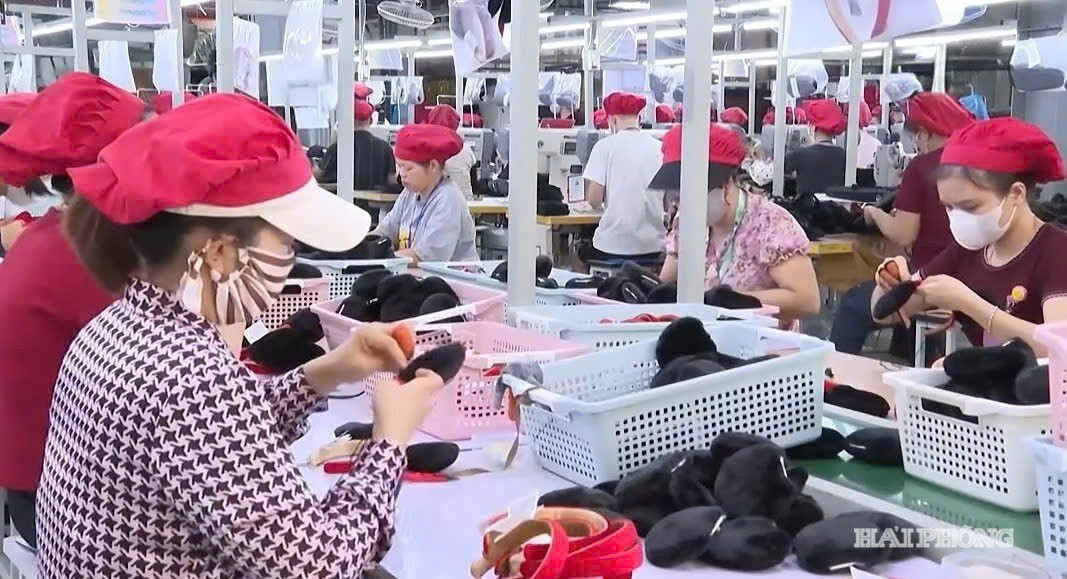
In Khuc Thua Du Commune, the advantages offered by Provincial Roads 396 and 396C, together with the East-West transport corridor, have been identified as a foundation for developing agriculture, industry, traditional craft villages, trade and services, culture and tourism. In the first eight months of 2026, the commune’s total production value exceeded 2,126 billion VND, including more than 437.5 billion VND from agricultural production, over 1,000 billion VND from industry and handicrafts, and 683.6 billion VND from trade and services. Budget revenue exceeded 230 billion VND, reaching nearly 103% of the annual estimate.
In Luu Kiem Ward, with its diverse terrain, long-established residential areas and key transport routes, particularly National Highway 10, the local authorities are focusing on restructuring the economy in line with the area’s urban development orientation. Mr. Nguyen Huy Hoang, Chairman of the Luu Kiem Ward People’s Committee, said that in the first eight months of 2026, industry and construction, along with trade and services, continued to play a leading role in economic growth.
Total production value reached more than 6,257.7 billion VND, equivalent to 90.6% of the annual target and up 10% year on year. Support for businesses has been strengthened, with 52 new enterprises established in the first eight months of the year. Budget revenue reached 229.4 billion VND, including 169.3 billion VND in regular revenue, equivalent to 95.3% of the annual estimate.
Not only Khuc Thua Du and Dai Son communes and Luu Kiem Ward, but also other localities have been focusing on tasks directly related to economic growth. Monitoring visits and working sessions by city delegations to assess the implementation of Resolution No. 11 showed that localities are prioritizing public investment disbursement, site clearance, budget collection, planning, administrative reform, digital transformation, and business support.
At the same time, localities are implementing comprehensive measures to capitalize on their potential and advantages, promote socio-economic development, and contribute to the city’s overall goals.
Addressing bottlenecks from the grassroots
Building on the results achieved, localities are continuing to identify their potential and advantages, as well as solutions to capitalize on them. However, feedback from many localities shows that the implementation process still faces a number of difficulties and obstacles that need to be addressed.
According to leaders of Dai Son Commune, the locality is facing the need to quickly shift from a development model heavily reliant on agricultural production toward a more diversified economy, making better use of its advantages in transport connectivity, land and major infrastructure projects. To turn its location, land and infrastructure advantages into drivers of growth, the locality must address multiple issues simultaneously, including site clearance, planning, public investment and resource mobilization.
One of the major challenges currently facing Dai Son is that land records originate from different periods of use; cadastral and previous site-clearance records are incomplete; and some land parcels have changed hands or undergone changes involving multiple users. These issues directly affect the progress of site clearance and the issuance of land-use right certificates. Meanwhile, demand for infrastructure investment is high, while the commune’s budget resources are limited. Many rural development, school, transport, irrigation and environmental projects require support from the city.
Like Dai Son Commune, many localities have reported that following the administrative restructuring, there is a significant need to invest in and upgrade transport, urban, education and healthcare infrastructure, particularly in commune-level areas. They have asked the city to continue allocating resources and creating favorable conditions for completing infrastructure to support socio-economic development. In some areas of Thuy Nguyen and An Duong, local authorities have proposed that the city consider adjusting and adding land for urban and service development to the planning in response to development needs.
Working sessions have shown that the difficulties, obstacles and proposals raised by localities are being addressed under the city’s direction, with relevant departments and agencies coordinating to resolve issues ranging from planning and investment resources to specific problems facing individual localities.
At regular meetings and working sessions with localities, Chairman of the Hai Phong People’s Committee Do Thanh Trung emphasized that, to successfully achieve the 2026 growth target and the objectives for 2026–2030, localities need to continue implementing growth scenarios linked to specific targets for budget revenue, public investment disbursement, site clearance, land development, administrative reform, digital transformation, business support and investment attraction.
They should also proactively coordinate with departments and agencies in implementing key projects and works, while actively proposing and reporting issues beyond their authority.
Ha Minh