
Changing production mindsets to take agricultural products abroad
As many major markets tighten their sanitary and phytosanitary measures, stricter control of residues and improved traceability are needed, along with changes in agricultural production mindsets.
Changing production mindsets
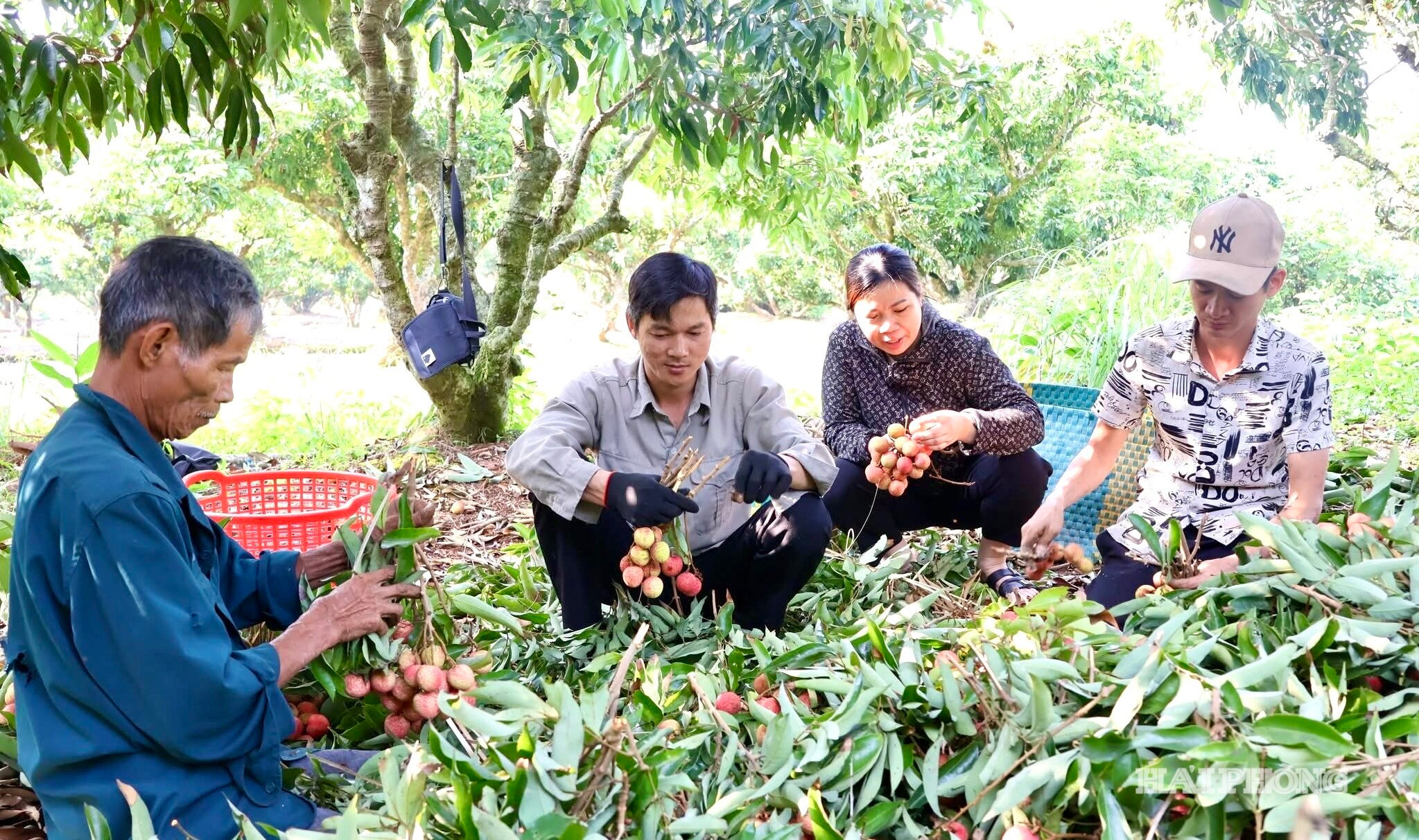
As a locality with a long tradition of lychee cultivation, Thanh Ha Commune in Hai Phong City has nearly 940 ha of lychee, including nearly 500 ha of specialty thieu lychee. Over the past decade, Thanh Ha lychee has gradually established its brand with exports to a number of demanding markets such as the US, Japan, Singapore and South Korea.
To date, the locality has established 18 lychee export production groups covering a total area of more than 250 ha, with each group covering 10-15 ha. The groups focus on controls ranging from orchard hygiene and irrigation water sources to pest and disease control. The entire production process is fully documented, facilitating traceability and contributing to enhancing the value and reputation of Thanh Ha lychee in international markets.
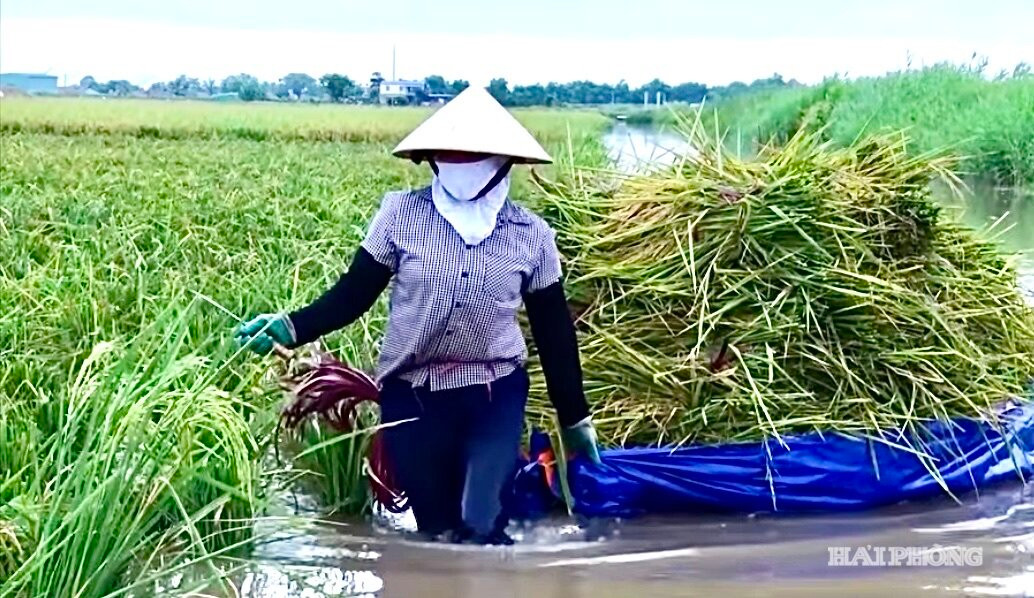
From a product favored by consumers in Hai Phong and many other localities, Kien Quoc ruoi (ragworm) rice is now being promoted for export. After nearly three years of developing a linked production area, the product has obtained USDA Organic certification, meeting standards for export to the US market.
As export markets impose increasingly stringent requirements on quality, food safety, traceability and production standards, improving the quality of agricultural products has become an urgent requirement for Hai Phong. The agricultural sector needs not only to increase productivity but also gradually establish concentrated commodity production areas, with strict control from seeds and input materials through harvesting, preliminary processing and processing.
Promoting linkages
According to the Hai Phong Sub-Department of Crop Production and Plant Protection, the city is planting about 3,500 ha of low-emission rice in this year's summer-autumn crop, an increase of more than 700 ha compared with the 2025 summer-autumn crop and 300 ha compared with the 2026 winter-spring crop.
The low-emission rice model requires strict compliance with technical procedures, from balanced fertilization and alternate wetting and drying to integrated pest management and control of pesticide residues. Expanding the low-emission rice model is considered a suitable approach, contributing to innovation in production methods, improving economic efficiency and promoting green growth in agriculture in line with global market trends.
Purchasing units are also focusing on establishing linkages with raw material areas. Cao Thi Hang of Thang Thuy Agricultural Production, Business and Service Cooperative said the cooperative focuses on securing outlets for farmers' products. Each year, the cooperative signs contracts with companies and exporters to supply about 1,000 tons of vegetables, tubers and flowers of various kinds. In addition to expanding acreage and output, the cooperative focuses on improving the quality of key products such as cabbage and chrysanthemum tea to meet international market requirements.
In response to import markets' requirements for growing area codes and packing facility codes, as well as demand for agricultural exports, the Department of Agriculture and Environment has advised on the issuance and maintenance of 270 growing area codes, including 190 codes serving exports. 10 packing facilities have been granted 38 export codes, with a maximum capacity of about 770 tons per day. The markets for which codes have been issued include China, Japan, the US, Australia, New Zealand, the EU and Thailand.
According to Luong Thi Kiem, Deputy Director of the Department of Agriculture and Environment, in the coming period, the department will continue coordinating with ministries, sectors and relevant agencies to ensure food safety for products under its management when participating in events involving foreign elements. The department also regularly participates in coordination meetings and trade promotion activities organized by Vietnamese Trade Offices abroad under the Ministry of Industry and Trade.
The department promptly updates and informs local exporters about draft regulations, new regulations and measures related to food safety, animal quarantine, plant quarantine and sanitary and phytosanitary (SPS) measures of WTO members, as notified by the Vietnam SPS Office and the Ministry of Agriculture and Environment.
HUY DAI