

Hai Phong invests in smart classrooms, promotes AI application
Many schools in Hai Phong have put smart classrooms into use, innovated teaching and learning methods, and promoted artificial intelligence (AI) application to improve the quality of education.
Innovation starts with smart classrooms
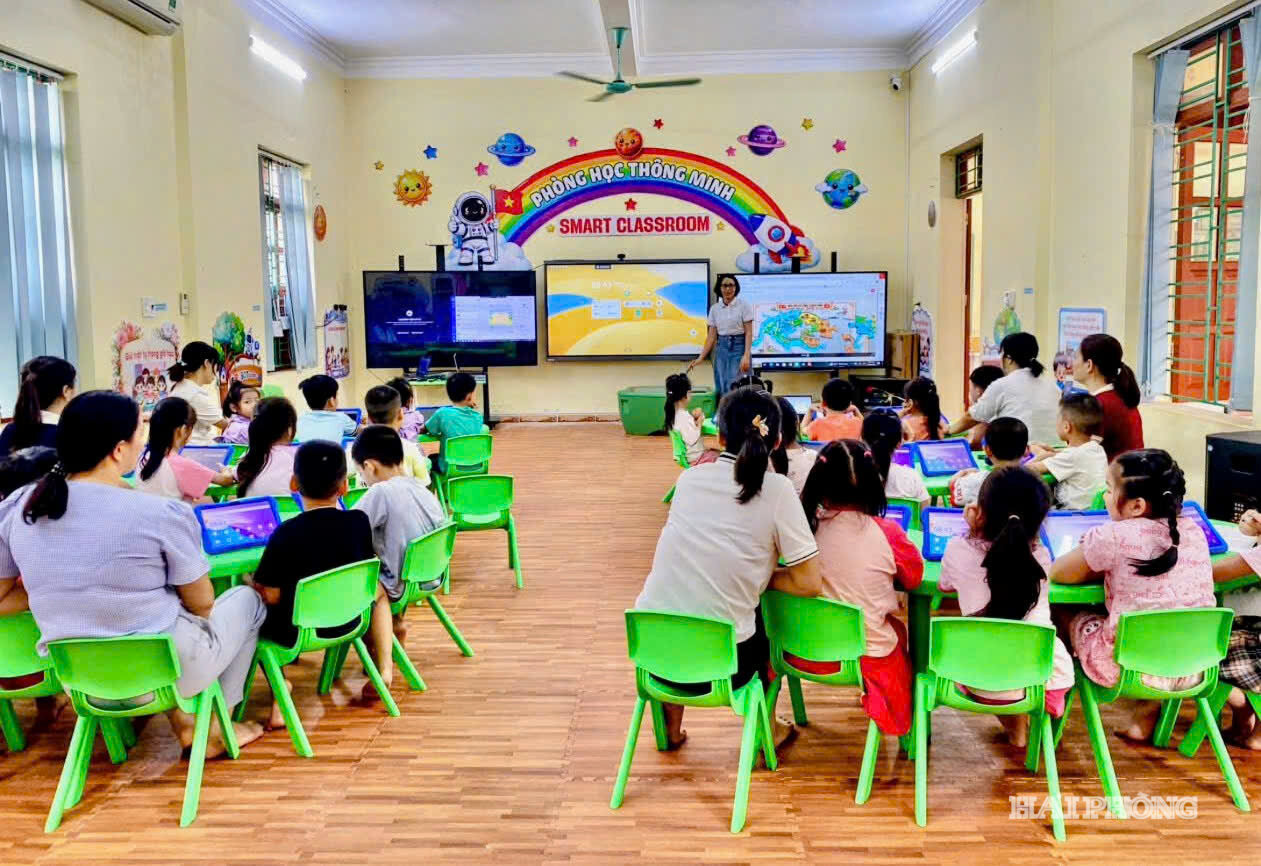
As the new school year begins, teachers and children at Vinh Thinh Preschool in Vinh Thinh Commune have more favorable conditions for innovating teaching and learning activities as the school puts its smart classroom into use. The classroom is equipped with 36 smart tablets, two specialized display screens, an interactive screen, a preschool touch table and many other equipment.
The modern equipment system not only creates a new learning space but also gives teachers better conditions to harness digital technology and apply AI in designing and organizing educational activities. Notably, this school year, the school is operating the smart classroom in three sessions a day, thereby making the most of the investment.
The smart classroom at Vinh Thinh Preschool is part of a project to develop a smart classroom model for preschools to junior high schools in the commune. The project has a total investment of more than VND 4.3 billion from public investment funds and has been implemented since the 2025 – 2026 school year.
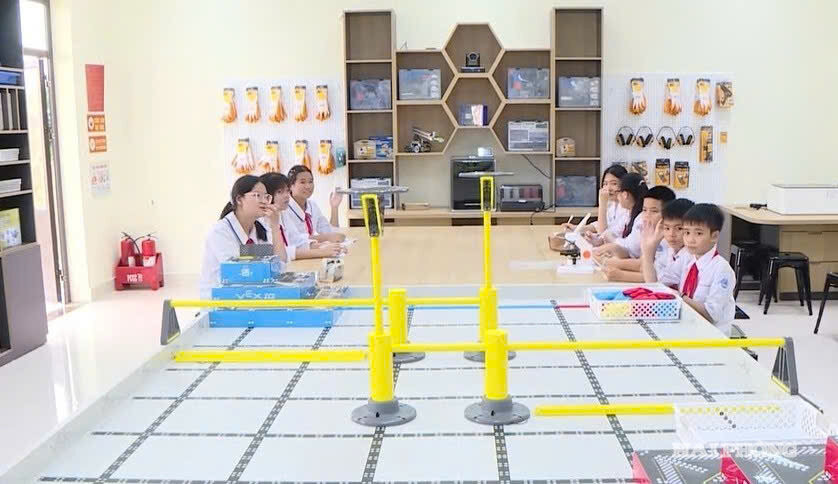
According to a report by the Department of Education and Training, the city has around 100 smart classrooms and 30,387 computers. On that foundation, 685 schools are implementing digital classroom, AI, STEM, innovation and digital school models.
Teachers have developed nearly 40,000 electronic lessons and more than 1,000 self-designed digital teaching devices. Notably, AI education content has been piloted at 150 junior high schools and 44 senior high ones, while 65,145 education managers and teachers have received digital skills training.
During the 2025 – 2026 school year, hundreds of thematic sessions on digital transformation and AI application were organized at school and city levels, gradually building the capacity to harness technology among teachers and students.
Laying the foundation for AI in every lesson
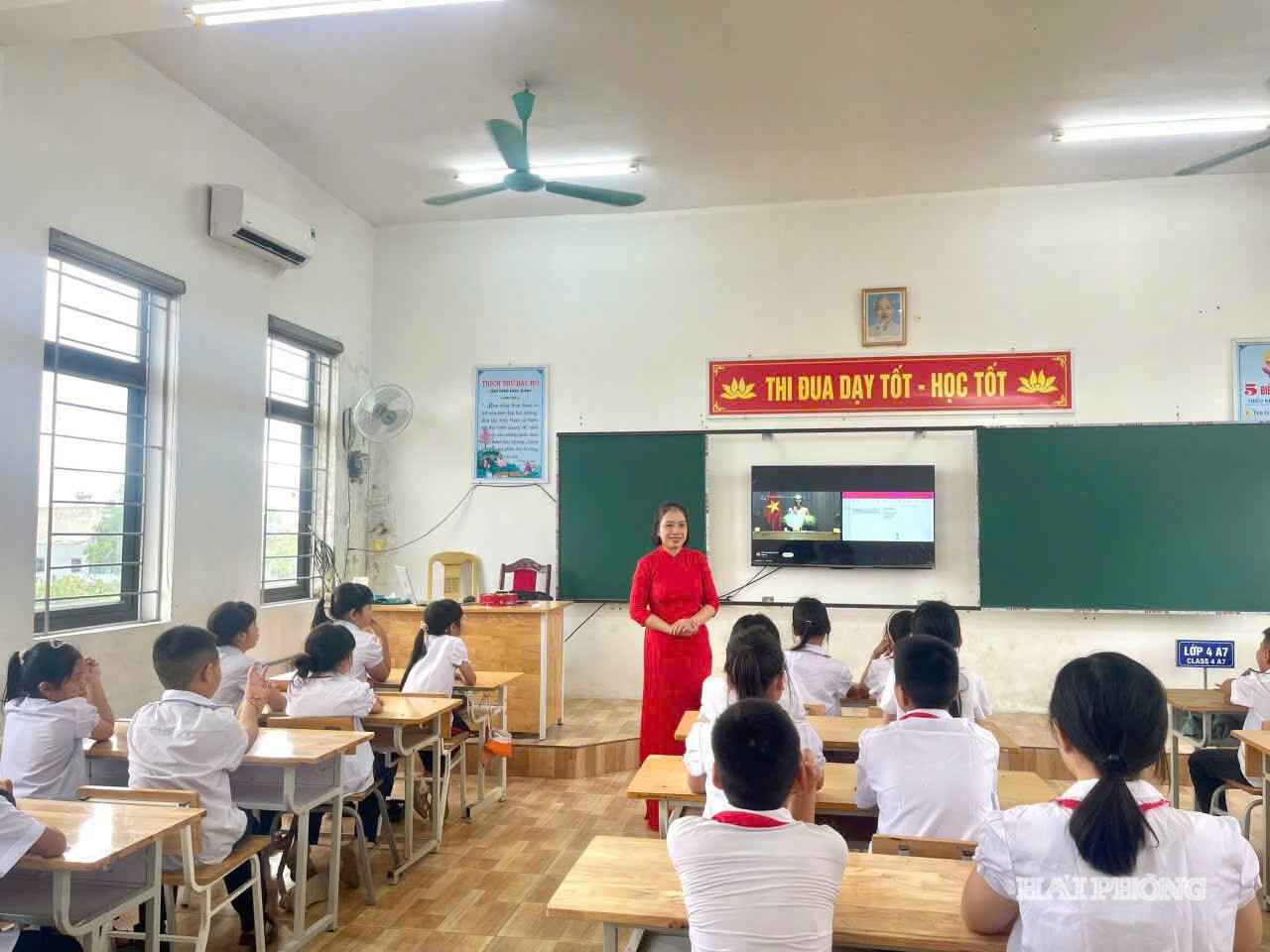
The education and training sector has set a target that, during the 2026 – 2030 period, all public educational institutions will be equipped with at least one smart classroom, toward building modern schools. This is a major requirement in terms of resources but also a necessary step to establish an infrastructure foundation for innovating teaching methods and applying technology.
According to Deputy Director of the Department of Education and Training Uong Minh Long, the City People's Committee has issued a plan to invest nearly VND 11.57 trillion in facilities for public preschools and general education schools during the 2026 – 2030 period.
Within these overall resources, smart classrooms have been identified as an important investment component, alongside the proactive allocation of resources by localities.
The education and training sector is implementing the Hai Phong Digital Education Data Ecosystem Project, aiming to build a centralized data repository, management, analysis and forecasting systems, and a shared digital learning resource repository.
This provides a foundation for teachers to exploit data, learning resources and digital tools in lesson design, testing, assessment and effective teaching, gradually improving the quality of education. At the same time, it creates conditions for students to take a more active role in learning, enhance interaction, personalize learning and develop their competencies.
BUI HUONG