
Hai Phong education diversifies foreign language teaching for integration
Hai Phong's education sector is striving to diversify foreign teaching in schools, proactively preparing human resources to meet development and international integration requirements.
Meeting students' diverse learning needs
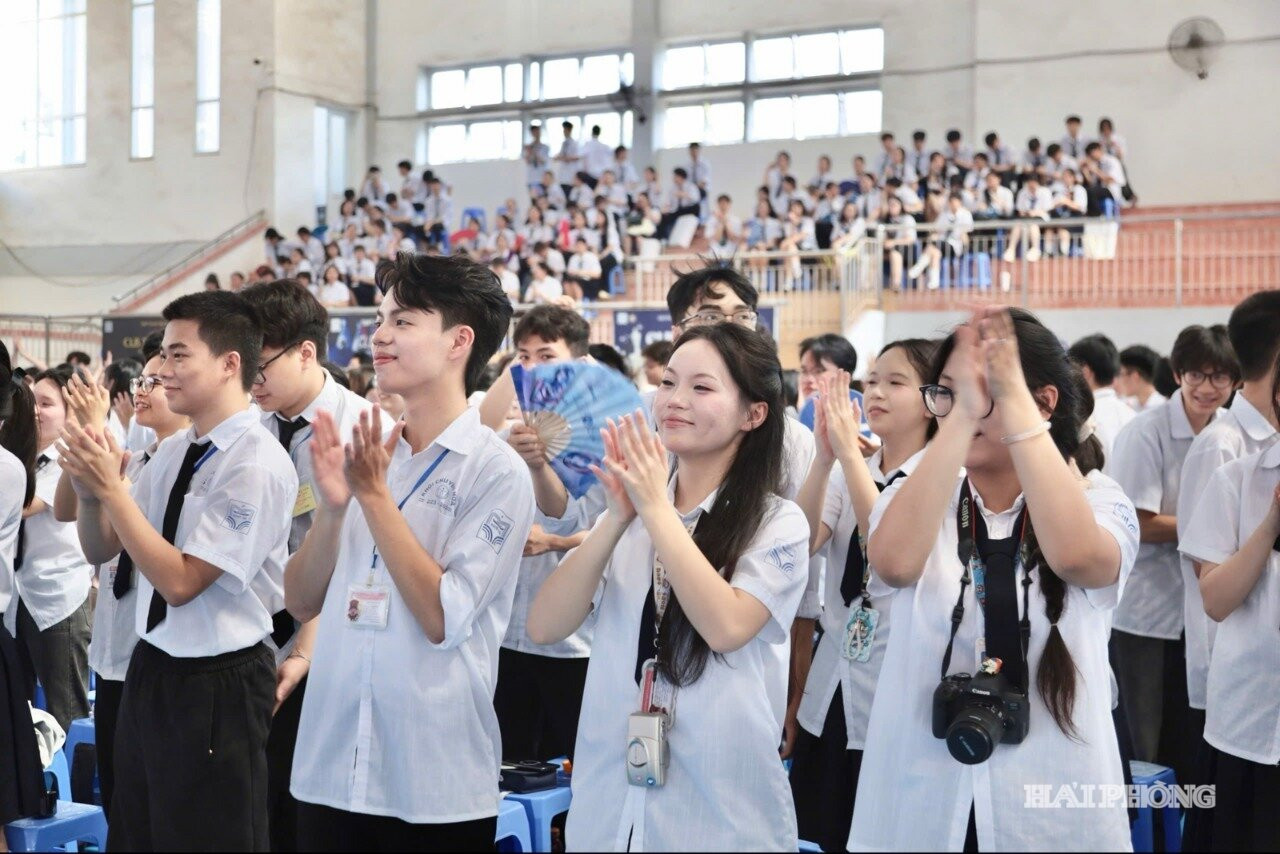
From the 2026 - 2027 academic year, Nguyen Trai Senior High School for the Gifted will open an additional specialized Chinese class with 35 students. According to Le Van Luc, the school's principal, this is the first step in a roadmap to diversify foreign language classes beyond English, French and Russian. The school is expected to open a Korean class in the 2027 - 2028 academic year and continue with a Japanese one in the 2028 - 2029 academic year.
At general education schools, the teaching of multiple foreign languages has also seen clear changes. While English was previously the main foreign language and the number of schools offering two or more foreign languages remained limited, an increasing number of schools are now teaching multiple foreign languages to meet students' diverse learning needs and career orientations.
Ho Thi Dinh, Principal of Luong The Vinh Senior High School, said that, with the goal of enabling students to use two foreign languages simultaneously after three years of study, the school began implementing a program offering two or more foreign languages to 10th-grade students in the 2025 - 2026 academic year. Accordingly, students choose one foreign language, either English or Chinese, and also choose one of four other foreign languages, namely English, Chinese, Japanese or Korean, to study as a second foreign language or through a club.
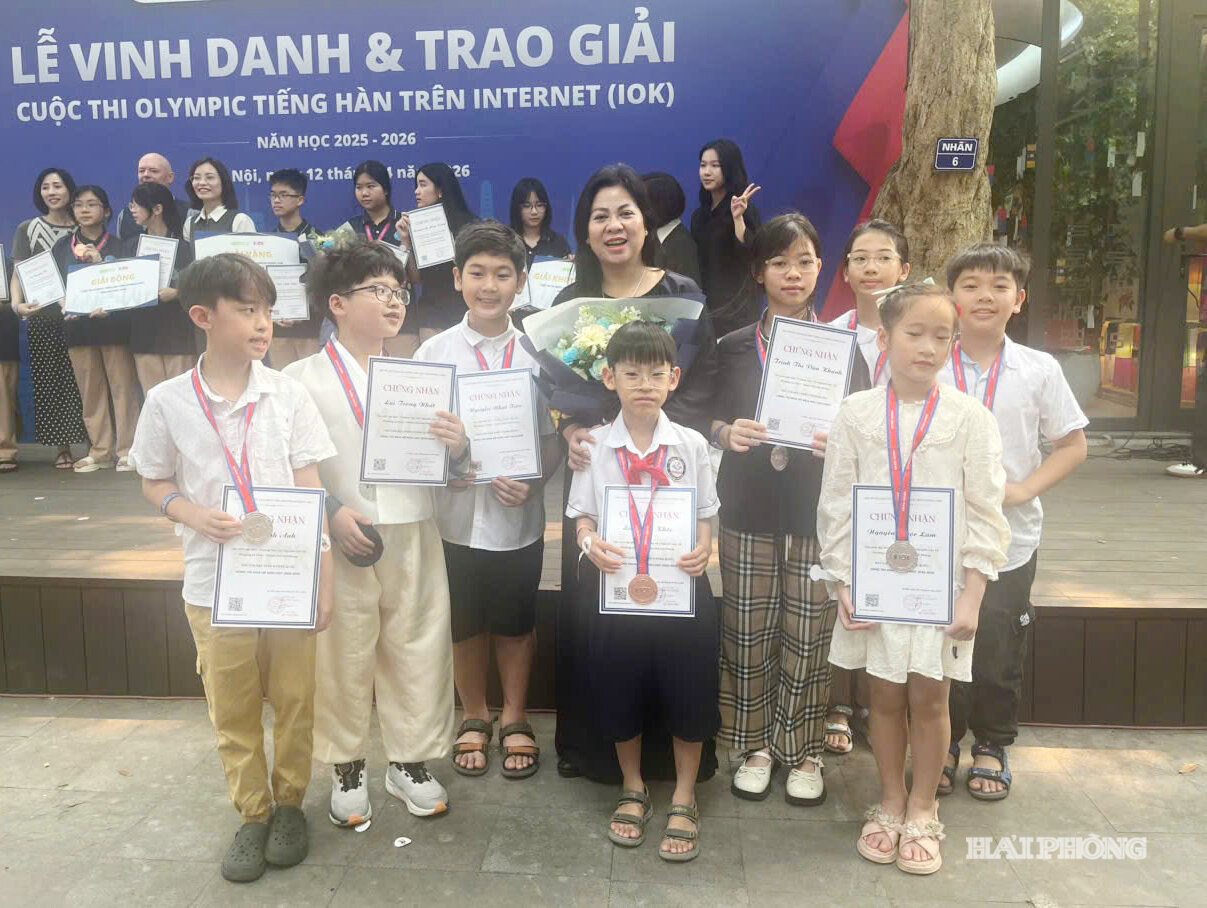
The teaching of multiple foreign languages is not limited to senior high school, but is also being implemented at lower levels, including Chu Van An Junior High School in Gia Vien Ward, which teaches English and Japanese, Da Nang Junior High School in Ngo Quyen Ward, which teaches English and Korean, Hong Bang Junior High School in Hong Bang Ward, which teaches English and French, among others, through different forms of teaching.
Creating a foundation for integrated human resources
Diversifying foreign language teaching in schools is a proactive step by the education sector to prepare a workforce capable of international integration, meeting the requirements of a Hai Phong that is increasingly expanding its connections with the region and the world. In addition to English, schools across the city also teach Korean, Japanese, Russian, French, Chinese and German. Hai Phong is also the first locality in the country to implement a program teaching Korean as a first foreign language in general education schools.
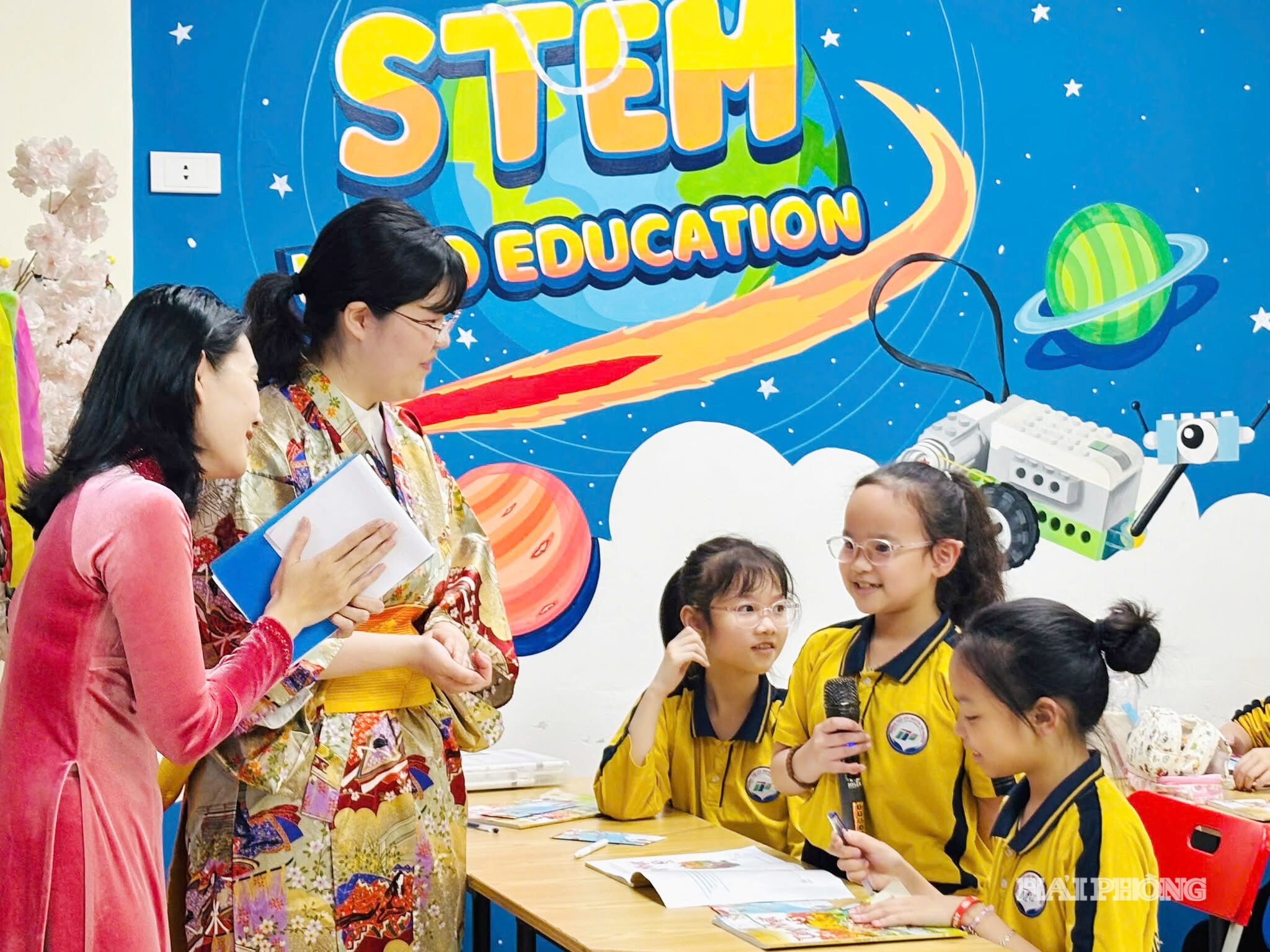
Trinh Thu Huong, Principal of Da Nang Junior High School in Ngo Quyen Ward, said that, as an economic, cultural and social center of the northern region, Hai Phong is increasingly opening its doors to international integration. In particular, with strong investment from South Korea in Hai Phong, teaching and learning Korean has become an urgent need, not only helping students broaden their cultural knowledge but also creating additional career opportunities. Proficiency in multiple foreign languages is not only a skill but also a key for students to confidently integrate internationally and gradually become global citizens, Huong added.
According to Do Duy Hung, Deputy Director of the Department of Education and Training, in the coming period, the education sector will continue to facilitate educational institutions' expansion and improvement of the quality of foreign language teaching in line with practical needs. At the same time, foreign language teaching will be linked to digital transformation, vocational education and labor market needs. The goal is to gradually develop a generation of students with foreign language proficiency, cultural understanding and confidence in communication. This will contribute to improving the quality of the workforce and create a foundation for Hai Phong to proactively seize opportunities and develop during a period of deep international integration.
BUI HANH