

Urban agriculture creates a ‘green belt' for Hai Phong City
Urban agriculture not only increases production value and farmers’ incomes, but also creates a ‘green belt’, contributing to sustainable urban development.
An inevitable trend
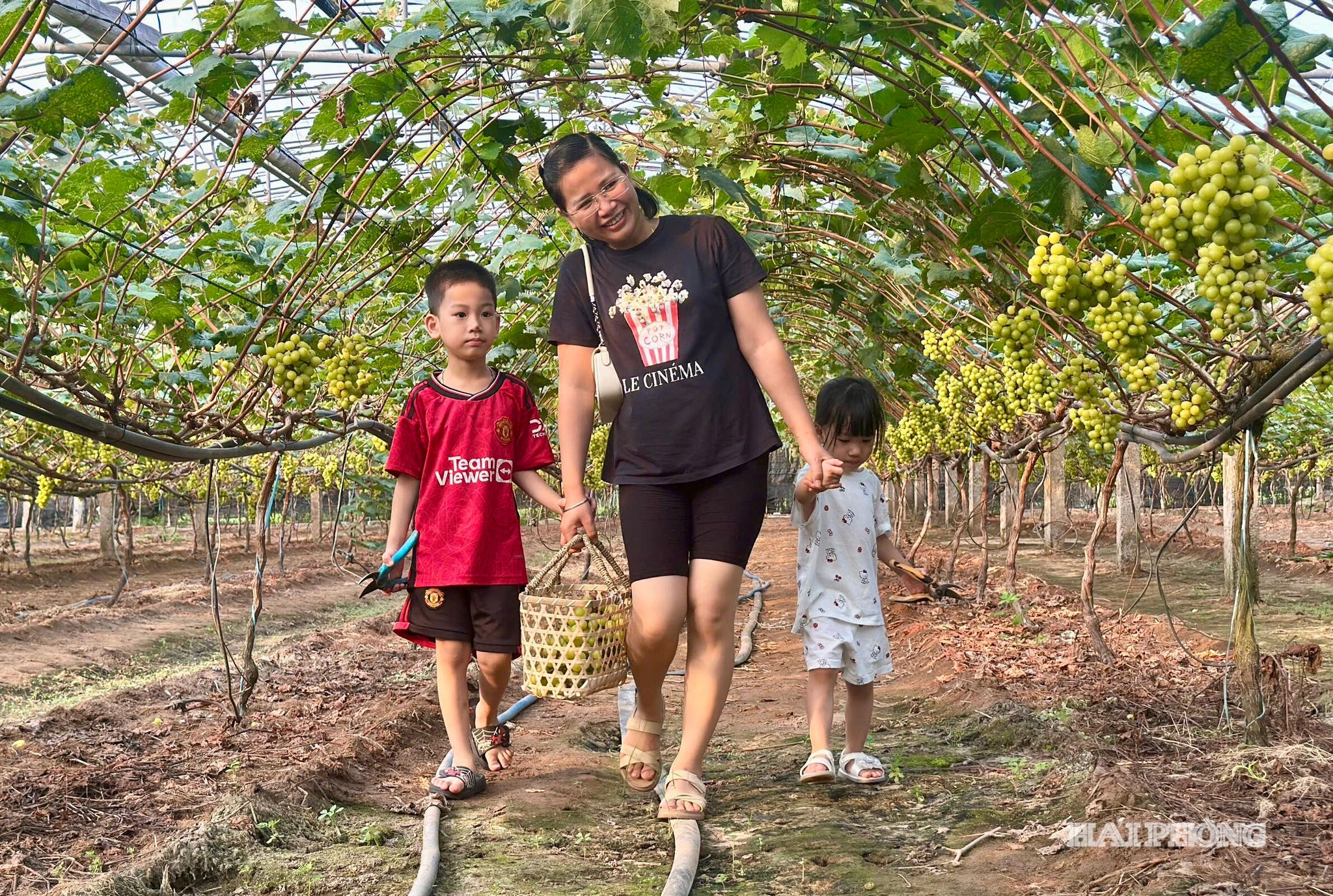
A thriving garden of Korean grapes owned by Mr. Nguyen Van Chien’s family in Ngoc Tri residential quarter, Ai Quoc Ward, has become an attractive destination for many visitors.
In addition to producing high-value agricultural products, Mr. Chien has increased his profits through experiential activities. His success is the result of a process of studying, understanding and promptly adapting his agricultural production model.
Ai Quoc Ward is a suburban area undergoing rapid industrialization and modernization. This has disrupted the irrigation infrastructure planned to serve agricultural production, rendering traditional farming practices unsuitable for the new production conditions.
Several years ago, Mr. Chien’s family switched from rice cultivation to flower growing. In recent years, he has applied high technology to grow grapes in greenhouses and net houses.
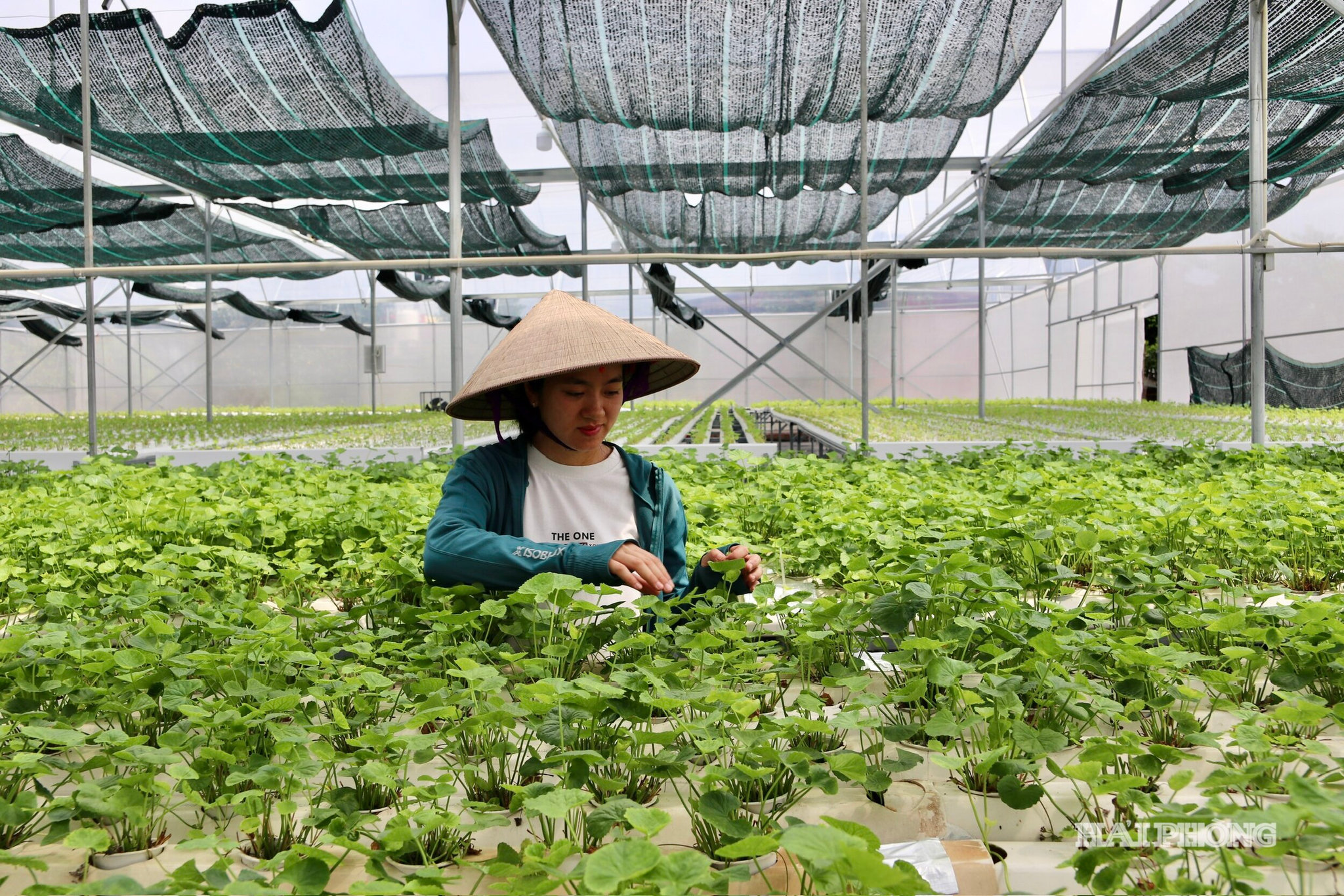
Hoa May Xanh Cooperative in An Duong Ward has also quickly kept pace with the development of modern agriculture by transforming its production model.
Since 2019, the cooperative has established a market reputation for high-tech flower cultivation. It currently has nearly 20 hectares under flower production, generating profits of more than VND 500 million a year. The cooperative is orienting its development towards ecological agriculture, linking agricultural production with experiential tourism.
Urban agriculture is an inevitable development direction for Hai Phong’s urban fringe areas. On the one hand, it helps prevent the agricultural sector from being “left behind” amid the development of industry and services. On the other, it helps reduce environmental pollution, promote the sustainable management of natural resources and mitigate the negative impacts of urbanization.
Development orientation
The agricultural land available in urban and suburban areas across Hai Phong is relatively limited. For urban agriculture to generate high economic value, it requires systematic planning, particularly the comprehensive application of science and technology.
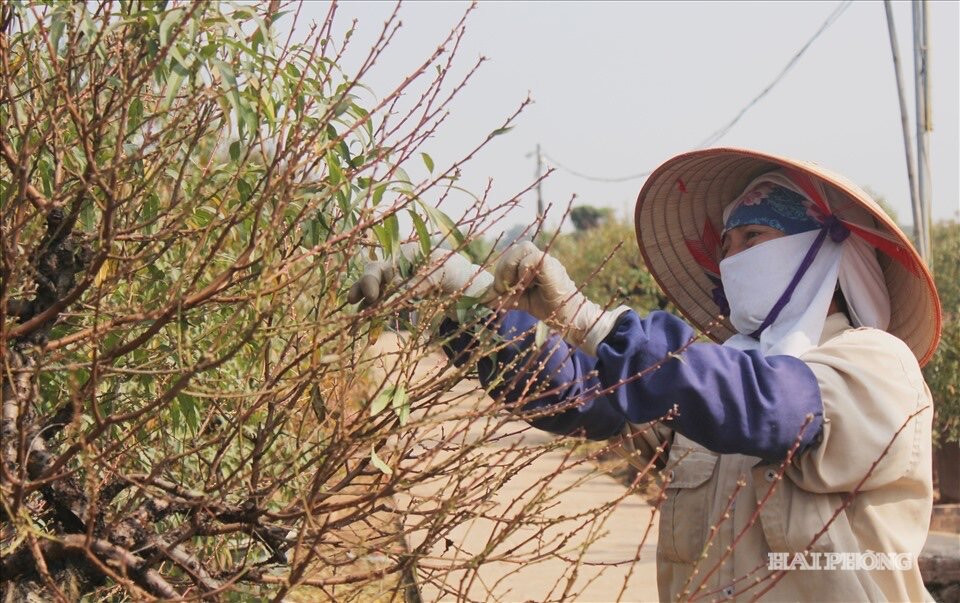
With its long-established flower and ornamental plant cultivation areas, Tan Hung Ward has mapped out a development orientation for the local agricultural sector.
Alongside trade and services, the ward has identified agriculture as a solid pillar of the local economy. It is therefore orienting agricultural production towards large-scale commodity production and high technology application.
Urban agriculture will create a ‘green belt’, helping establish a more balanced urban landscape. It also offers the city an opportunity to restructure its agricultural sector in a modern and sustainable direction, thereby improving production efficiency and providing farmers with stable incomes.
The Hai Phong agricultural sector has requires localities undergoing rapid urban development to base their agricultural development orientations on actual conditions. This would enable them to make effective use of agricultural land while creating green spaces for the city.
Hai Phong News