

Technology paves way for green agriculture
Technology is steadily transforming agriculture. Greenhouses, net houses, automated irrigation systems, AI, drones, and other advanced solutions are becoming increasingly common on farms and in the fields.
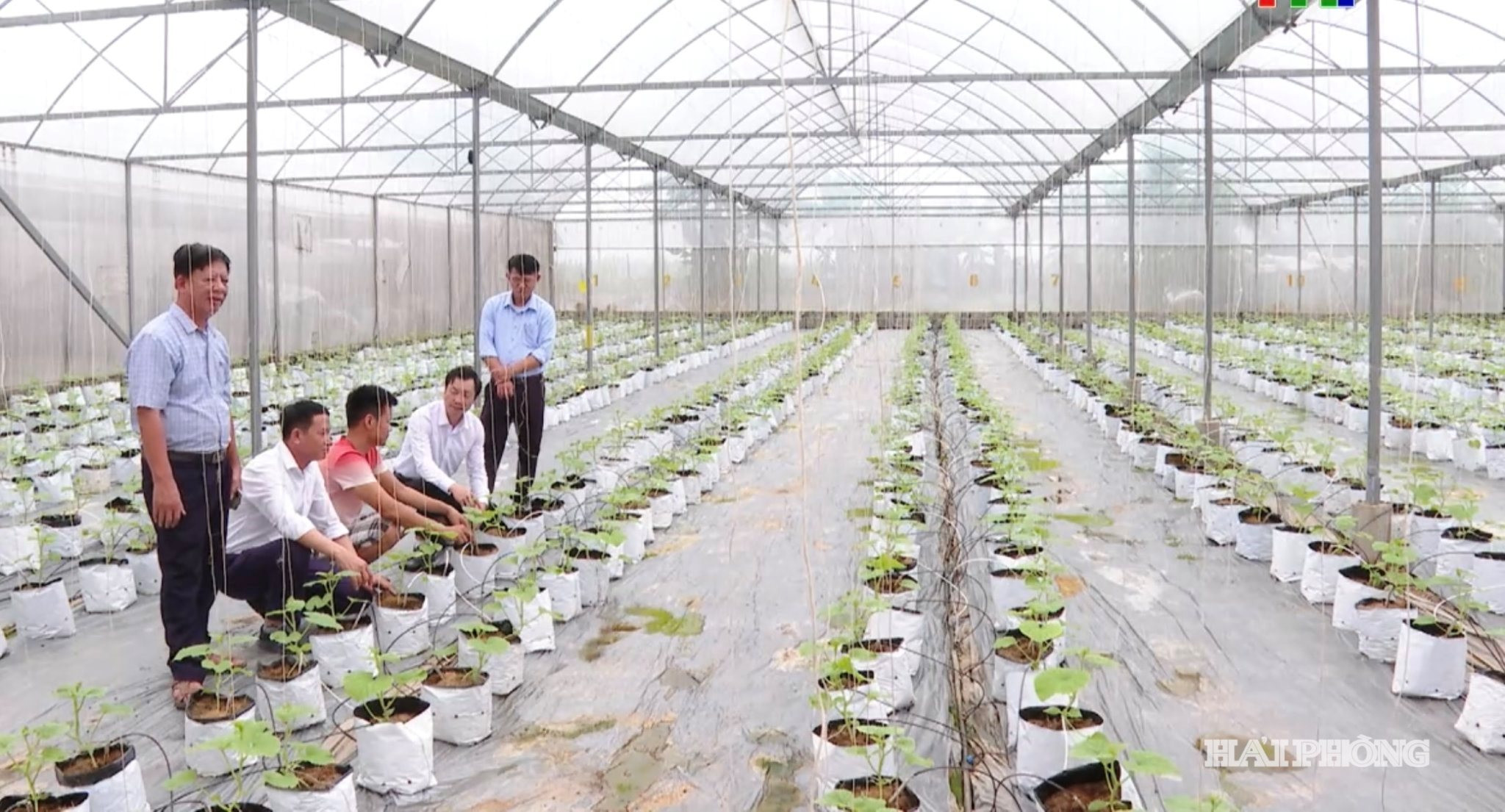
Hai Phong has a large and diverse agricultural sector, with nearly 80,000 hectares of rice fields, more than 35,000 hectares of vegetables, 27,890 hectares of fruit trees, over 9,300 hectares of lychee orchards, and thousands of hectares of other crops. The city is also home to around 650 OCOP products rated three stars or higher. These advantages provide a strong foundation for the formation of concentrated commodity production areas linked to processing and markets.
Technology is gradually reshaping agricultural production. Greenhouses, net houses, automated irrigation, IoT, AI, GIS, drones, and environmental monitoring systems are being applied more widely across farms and in the fields.
According to the city Steering Committee for Science and Technology Development, Innovation, and Digital Transformation, more than 330 production, processing, and trading establishments in agriculture have been digitized, with nearly 800 user accounts.
The city has almost 500 growing area codes covering more than 2,990 hectares, including 267 designated for export. This shows that data is becoming an increasingly important component of agricultural competitiveness.
For lychee production alone, Hai Phong has nearly 200 export growing area codes and 16 preliminary processing and packing facilities, enabling the fruit to access demanding markets such as the United States, Japan, Australia, and the European Union. Technology and data are therefore directly supporting market expansion.
In cultivation, the city has around 140 hectares of greenhouses and net houses producing melons, vegetables, flowers, and seedlings. Better control of irrigation, temperature, pests, and growing seasons has enabled some models to generate annual values of VND 1 – 3 billion per hectare, several times higher than traditional farming methods.
To ensure technology genuinely improves productivity, reduces costs, strengthens quality control, and expands markets, the agricultural sector needs to prioritize technologies that address specific problems and deliver measurable results. These include water-saving irrigation, environmental monitoring, pest forecasting, drones, product traceability, digital production records, and post-harvest preservation.
Hai Phong has already established key foundations, including an agricultural database, growing area codes, and digital information on production facilities. The next step is to gradually build digital profiles for growing areas and products, enabling them to verify their origin, production processes, and green credentials.
In the long term, the city needs to reorganize farmland, promote land consolidation, and develop large-scale commodity production areas supported by technological infrastructure. The goal is to create greater value from every hectare while conserving natural resources and reducing labor.
Meanwhile, markets are placing increasing emphasis on carbon emissions and green standards. Reliable data will help agricultural products demonstrate both quality and sustainability. This direction is aligned with Resolution No. 08-NQ/TU of the City Party Committee on Hai Phong’s green transition for the 2026 – 2030 period, with a vision to 2050, which aims to expand GAP, organic, and other advanced farming standards while promoting high-tech aquaculture, circular economy, and emission reduction.
Achieving these goals will require more than supportive policies and infrastructure. Businesses need to be involved from the outset in defining standards, output, specifications, costs, and markets. Cooperatives are responsible for organizing production under unified processes, while farmers remain the central drivers of the transition. Through close collaboration among all stakeholders, technology can become a genuine catalyst for building a sustainable agricultural sector for the city.
VAN NGA