

Witnesses to time
The collection of cannons at the Hai Phong Museum is an invaluable historical witness, showcasing the pinnacle of metal casting and the forward-thinking military knowledge of ancestors.
Legacy of casting techniques
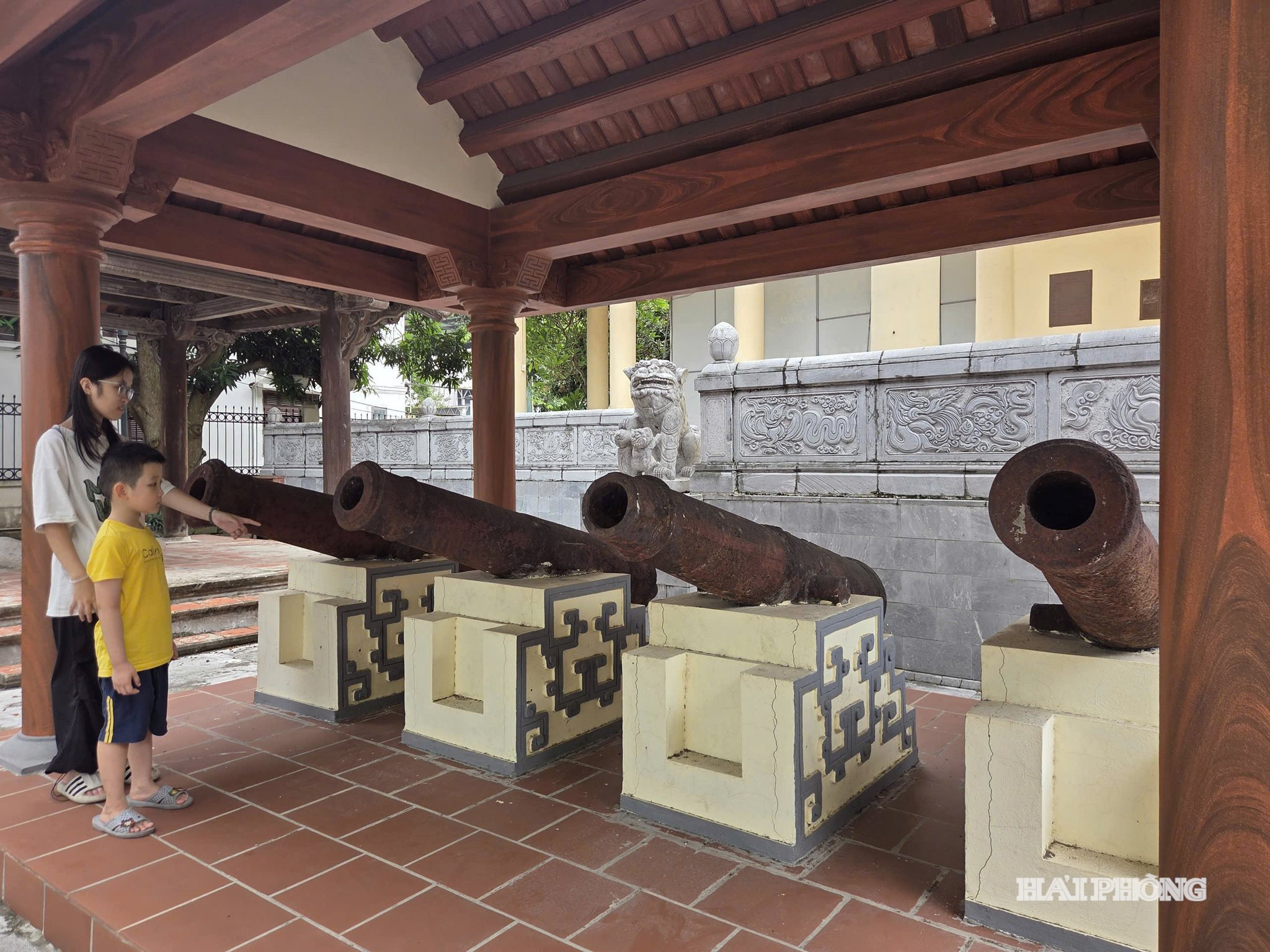
In the exhibition space of the Hai Phong Museum at 11 Hong Quang Street, 15 cannons stand silently like sentinels across time. Few people know that this unique collection was once associated with the ancient Xu Dong region, now part of western Hai Phong, and was discovered by chance during excavation and extraction activities at three different sites.
Discussing the technical value and historical context of the collection, Tang Ba Hoanh, former Director of the Hai Duong Provincial Museum (now the Hai Phong Museum), said: “The Nguyen-Dynasty cannons found in the area not only reflect significant advances in traditional metal casting but also demonstrate the selective adoption of Western military knowledge. Our ancestors adapted the dimensions and barrel structures to suit the riverine and coastal terrain of western Hai Phong, creating weapons that were both powerful and maneuverable in combat.”
A close look at the collection reveals considerable diversity in both design and size. The largest cannon is 2.7 m long, with a muzzle diameter of 21 cm, giving it the imposing appearance of a heavy artillery piece used for fortress defense. By contrast, the smallest is only 84 cm long, with a muzzle diameter of 8.5 cm, making it compact and highly mobile.
The cannons feature a cylindrical shape that gradually tapers toward the muzzle. Along the barrels, skilled craftsmen cast raised bands that both reinforced the structure against the pressure generated when gunpowder was fired and created a balanced, dignified appearance.
The sophisticated combination of combat functionality and aesthetic design transformed each cannon into a work of art in cast metal.
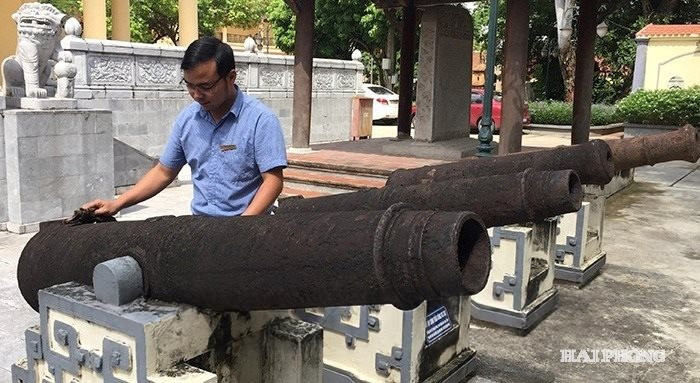
Initial assessments indicate that the collection dates from the Later Le period in the 18th century through the Nguyen Dynasty in the 19th century, demonstrating the continuity of Vietnamese weapons-manufacturing technology for defensive purposes.
Connecting the past with the present
After spending centuries buried deep in the earth and riverbeds and enduring the harsh effects of time and warfare, the cannons retained their rugged, battle-worn character when brought to the Hai Phong Museum. Every mark left by time on their surfaces seems to whisper stories of the nation's courage and spirit of self-reliance during the early days of resistance against French colonial forces.
Beyond their military and historical significance, the collection of antique cannons now serves as an emotional bridge connecting today's generations with the glorious past of their ancestors. The variety of types, ranging from fixed artillery positioned on fortifications to field guns mounted on warships, reflects a systematic approach to national defense and a proactive readiness to respond to threats of invasion from the northern frontier to the sea.
Today, each cannon stands as a page of history cast in metal. The Hai Phong Museum not only preserves these rare artifacts but is also working to turn each cannon into a “storyteller.” Through thematic exhibitions and interactive technology, the museum is inspiring national pride and helping younger generations understand that behind these layers of metal lie the intelligence, sweat and sacrifices of countless previous generations.
THU HUONG