
Shaping new stature for Hai Phong
The Hai Phong Master Plan to 2050, with a vision to 2075, opens up opportunities to reorganize development space and create new growth drivers for the city in a new development phase.
On August 6, the Standing Committee of the Hai Phong Party Committee discussed and gave opinions on the City Master Plan to 2050, with a vision to 2075.
Concluding the meeting, Secretary of the City Party Committee Le Ngoc Chau required that the plan continue to be reviewed and updated in line with new policies from Central bodies; fully leverage the city's potential and advantages; and carefully assess climate change impacts, population size, human resources and investment phasing before finalizing the dossier for appraisal by the Ministry of Construction.
The requirement shows that the city is not settling for a plan that merely meets immediate needs. Instead, it needs to lay a development foundation for the decades ahead.
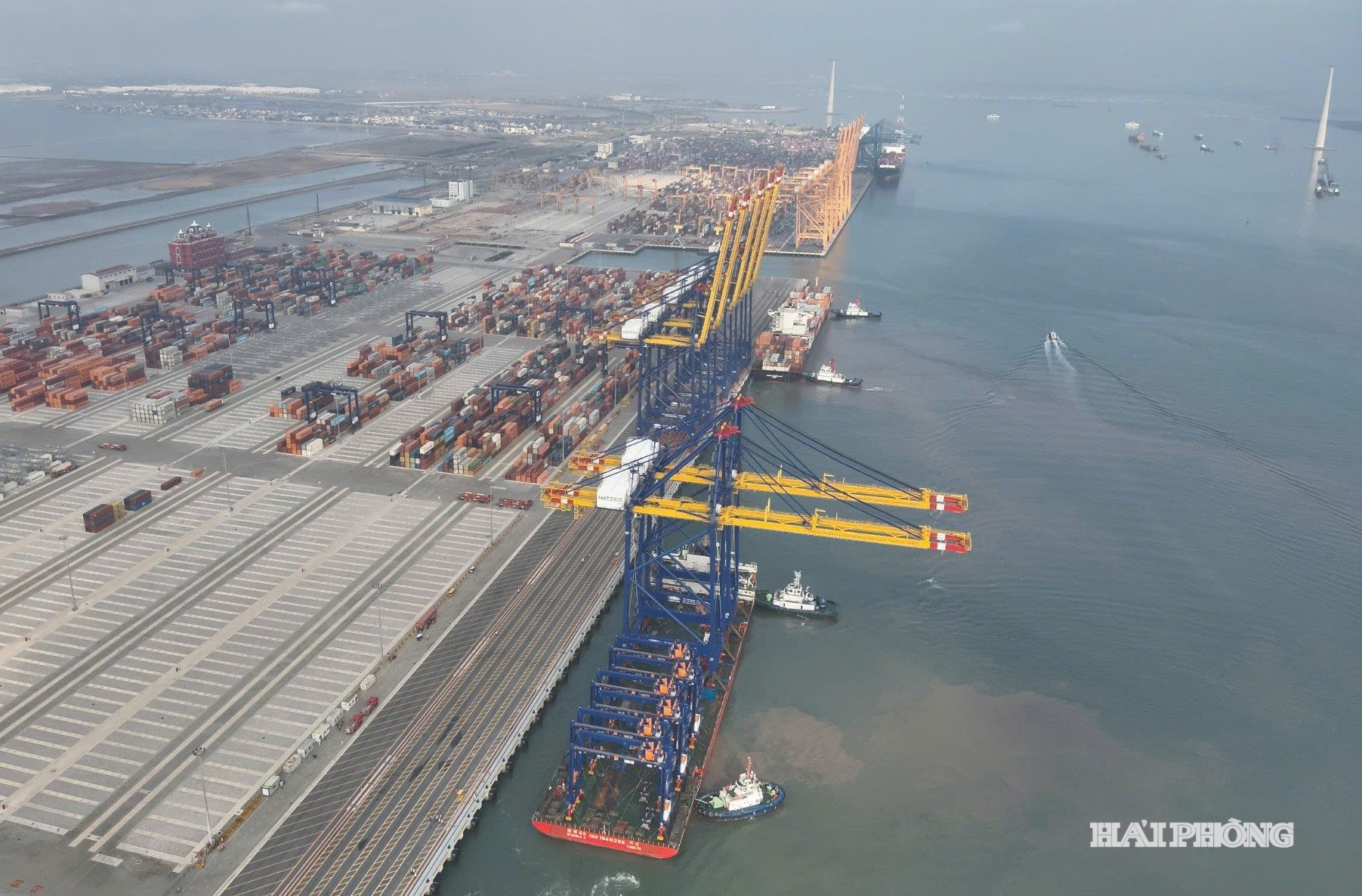
Previously, planning mainly addressed development issues in individual areas or sectors. Now, it must reorganize development space across the entire city. The proposed structure of “2 centers - 3 dynamic corridors - 3 TOD zones - 4 economic zones - 5 landscape corridors” clearly reflects this approach. Each center and development corridor is designed as part of an interconnected system of seaports, logistics, transport infrastructure and new growth poles.
This shift is in line with Hai Phong's development requirements in the new period. A city with a population of nearly 4.7 million cannot continue to develop through fragmented or localized planning. The plan must strengthen links among different areas, between coastal and inland areas, and among industry, services, agriculture and ecological spaces. With a clearly defined development structure, investment resources can be allocated more effectively, infrastructure can deliver greater value, and land resources can be utilized to their full potential.
Updating the plan in line with new resolutions of Central bodies will also ensure that the City Master Plan is aligned with national development orientations, particularly the goal of turning Vietnam into a strong maritime nation and renewing the country's growth model.
The goal of turning Hai Phong into a modern port city with industry and services on an Asian scale by the mid-21st century, and ultimately a globally competitive maritime megacity by 2075, is highly ambitious. To realize it, the city needs more than large-scale projects. First and foremost, it needs a planning scheme that is far-sighted, feasible and capable of guiding the development process.
The August 6 meeting of the Standing Committee of the Hai Phong Party Committee showed that the city is taking a cautious approach to a decision with long-term significance.
A carefully prepared plan will not only create new development space but also strengthen investor confidence, provide a basis for mobilizing resources, and guide the entire political system in implementation. That is the greatest value of the Hai Phong Master Plan in its new phase of development.
HAI MINH