
Hai Phong advances green transition
Directive No. 16-CT/TU marks a new step forward in household solid waste sorting at source, helping foster waste separation habits, advance Hai Phong's green transition and support sustainable development.
From a campaign to a sustained responsibility
The latest figures from the Hai Phong Department of Agriculture and Environment shows that household solid waste collection and treatment rates have reached about 95% in urban areas and around 90% in rural areas. Approximately 24% of household waste is recycled, reused or processed into organic fertilizer.
However, the proportion of waste sorted at source remains low. Illegal dumping and open burning persist in some areas, while the city's waste collection, transfer and treatment system remains fragmented.
As Hai Phong accelerates implementation of Resolution No. 08-NQ/TU of the first Hai Phong Party Committee on the city's green transition for the 2026-2030 period, with a vision to 2050, the issuance of Directive No. 16-CT/TU by the Standing Committee of the City Party Committee is seen as a timely move to address longstanding bottlenecks in waste management.
Without sorting waste at source, efficient collection, recycling and treatment using modern technologies will remain difficult, while increasing pressure on waste treatment facilities.
A key provision of the directive requires Party committees and authorities at all levels to make household solid waste sorting at source a regular priority task.
The approach underscores the city's determination to shift waste sorting from a voluntary campaign to a routine responsibility across the political system.
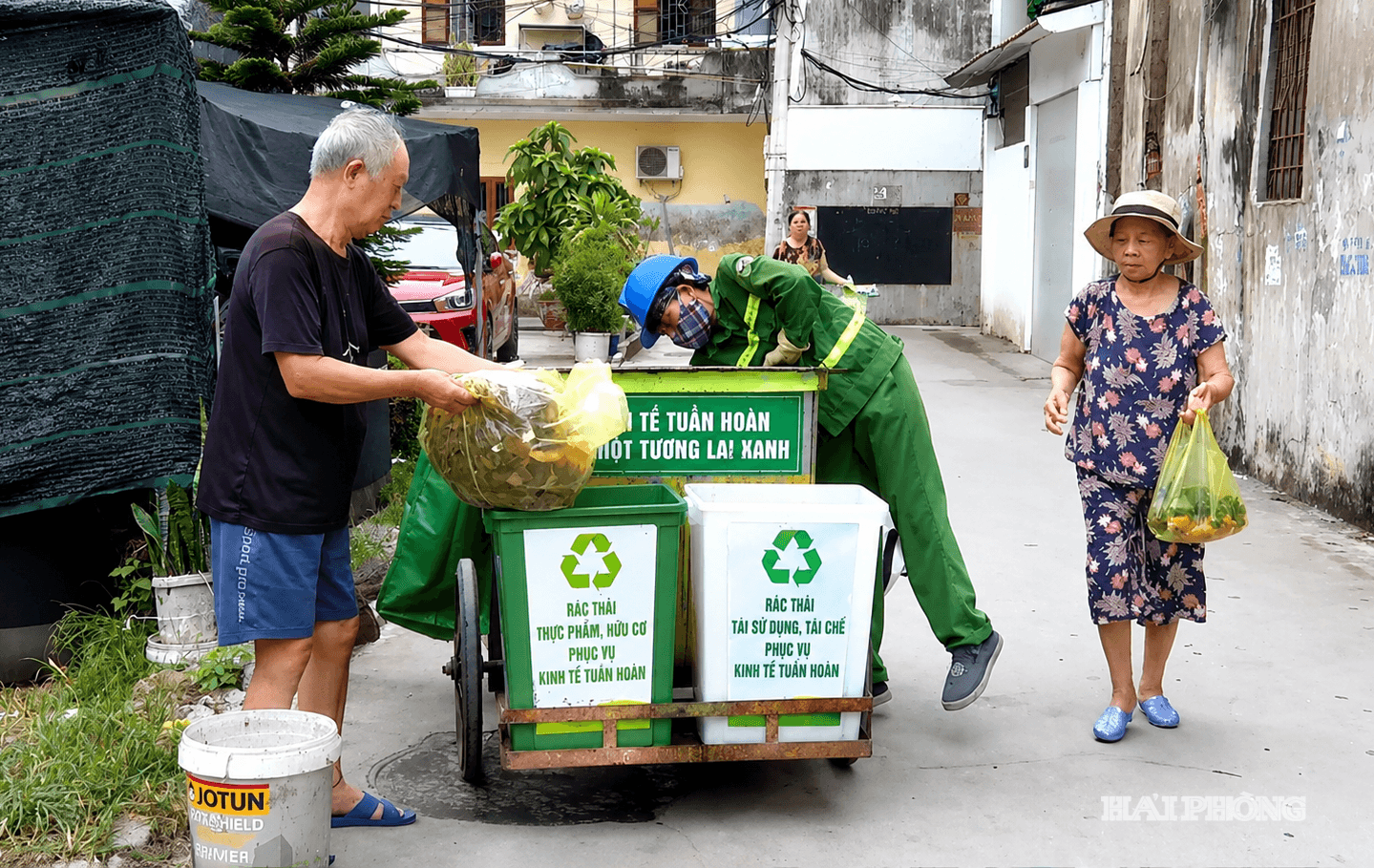
Tran Thi Teo, a resident of Residential Group 9 in Le Chan Ward, said her family initially found waste sorting time-consuming. After repeated public awareness campaigns and practical guidance on how to separate waste, her household, along with most other families in the neighborhood, came to regard it as a necessary daily practice.
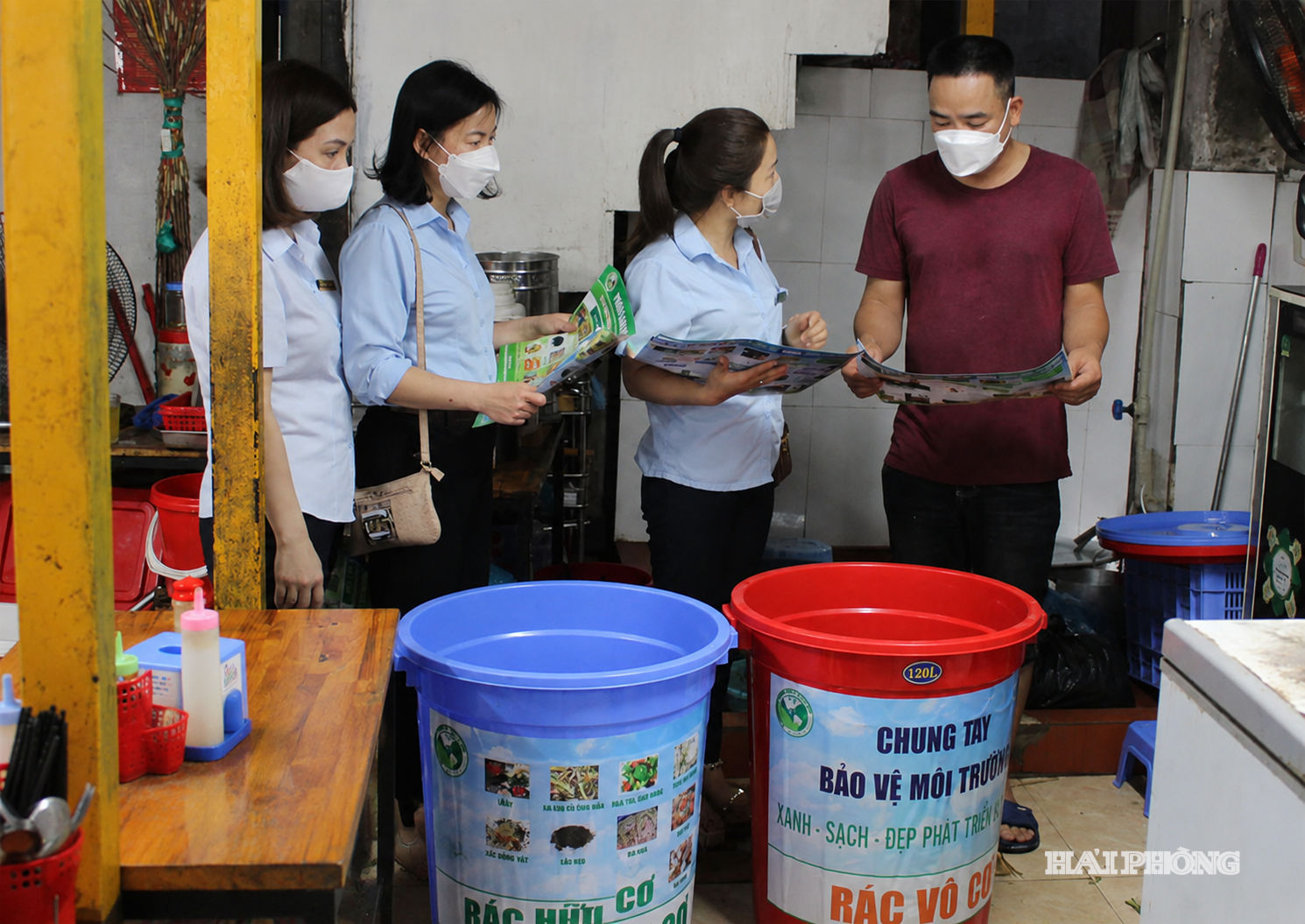
This shift in public awareness provides the foundation for the directive's effective implementation. Regardless of how advanced treatment technologies become, recycling and reuse cannot be fully effective if waste is mixed together instead of being sorted at the source.
Developing integrated infrastructure for effective waste sorting
Alongside raising public awareness, Directive No. 16-CT/TU issued by the Standing Committee of the Hai Phong Party Committee calls for faster investment in waste collection, transfer and treatment infrastructure, while gradually bringing modern waste treatment plants into operation to reduce landfill disposal and increase recycling and reuse.
Specifically, the directive sets a target of putting two advanced waste treatment plants into operation by 2027, laying the foundation for a centralized treatment system capable of handling nearly all household solid waste generated across the city.
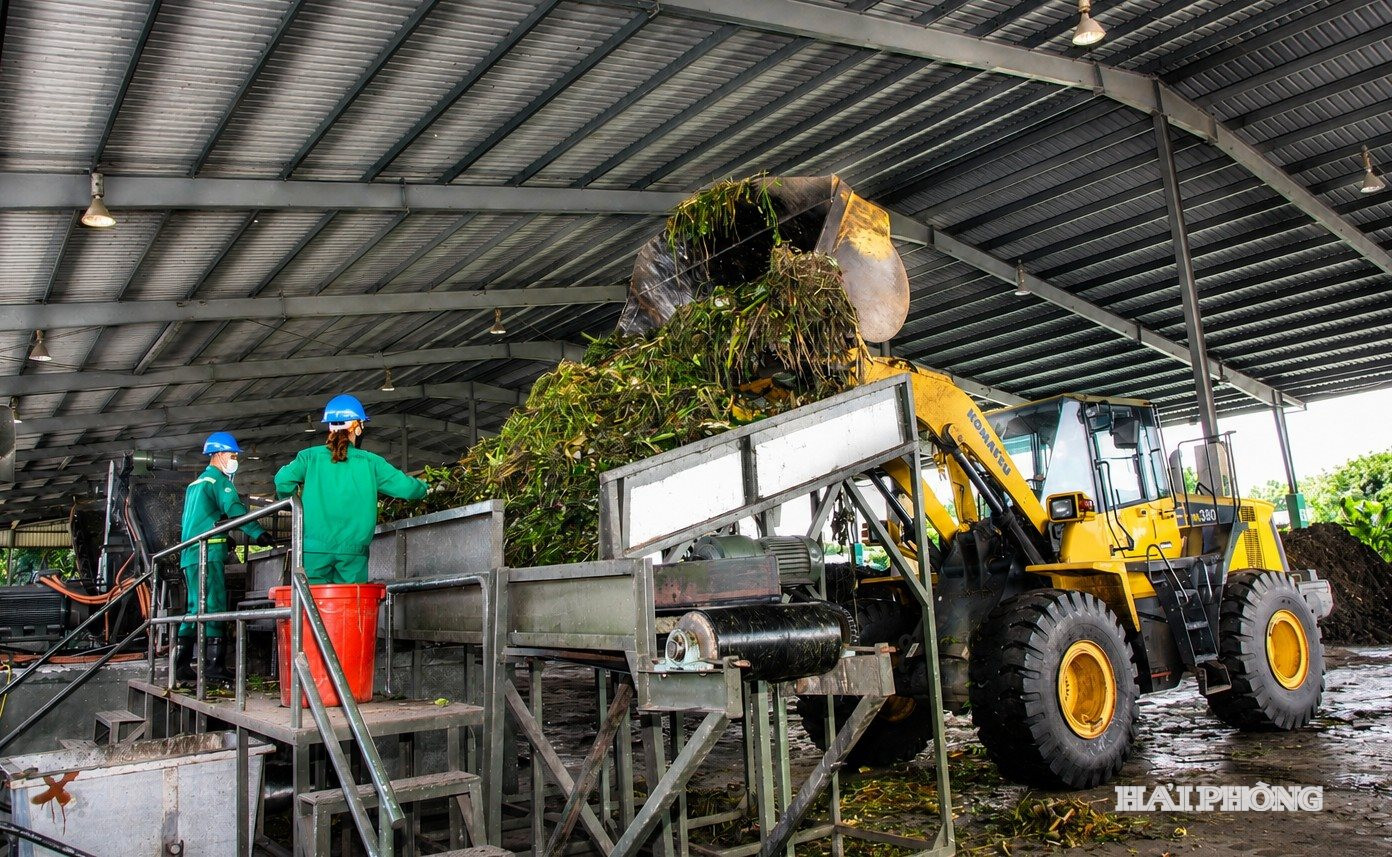
The directive also prioritizes synchronized investment in collection, storage, transfer and transportation systems for sorted waste, while promoting the application of digital technologies in waste management and the development of a database for monitoring purposes. These measures are regarded as essential to ensuring that waste sorting at source delivers tangible results.
Following the issuance of Directive No. 16-CT/TU, the Hai Phong Department of Agriculture and Environment conducted field surveys on the generation and treatment of organic waste, assessing the feasibility of household- and community-scale organic waste treatment models in the communes of Thuong Hong, Thanh Mien, Dai Son and Nam Sach. The surveys will support the development of waste treatment models tailored to local conditions before they are expanded citywide.
At the same time, Hai Phong Urban Environment One Member Co., Ltd. briefed its officials, Party members and employees on the directive and reviewed its waste collection, transportation and treatment procedures to meet the new requirements.
Experience in Ngo Quyen Ward shows that waste sorting at source can become part of residents' daily routines when local authorities, businesses and the community work together.
More than 88% of households in the ward now participate in waste sorting at source, significantly reducing the volume of mixed waste requiring treatment.
The experience in Ngo Quyen Ward shows that waste sorting at source succeeds only when three conditions are met: residents change their habits, local authorities strengthen public outreach and oversight, and waste collection companies ensure waste is collected, transported and treated in line with required procedures.
Hai Phong News