

More routes, greater appeal
The launch of new flights to Ho Chi Minh city and Phu Quoc is strengthening Hai Phong's connectivity with the localities, creating fresh momentum for tourism and economic development.
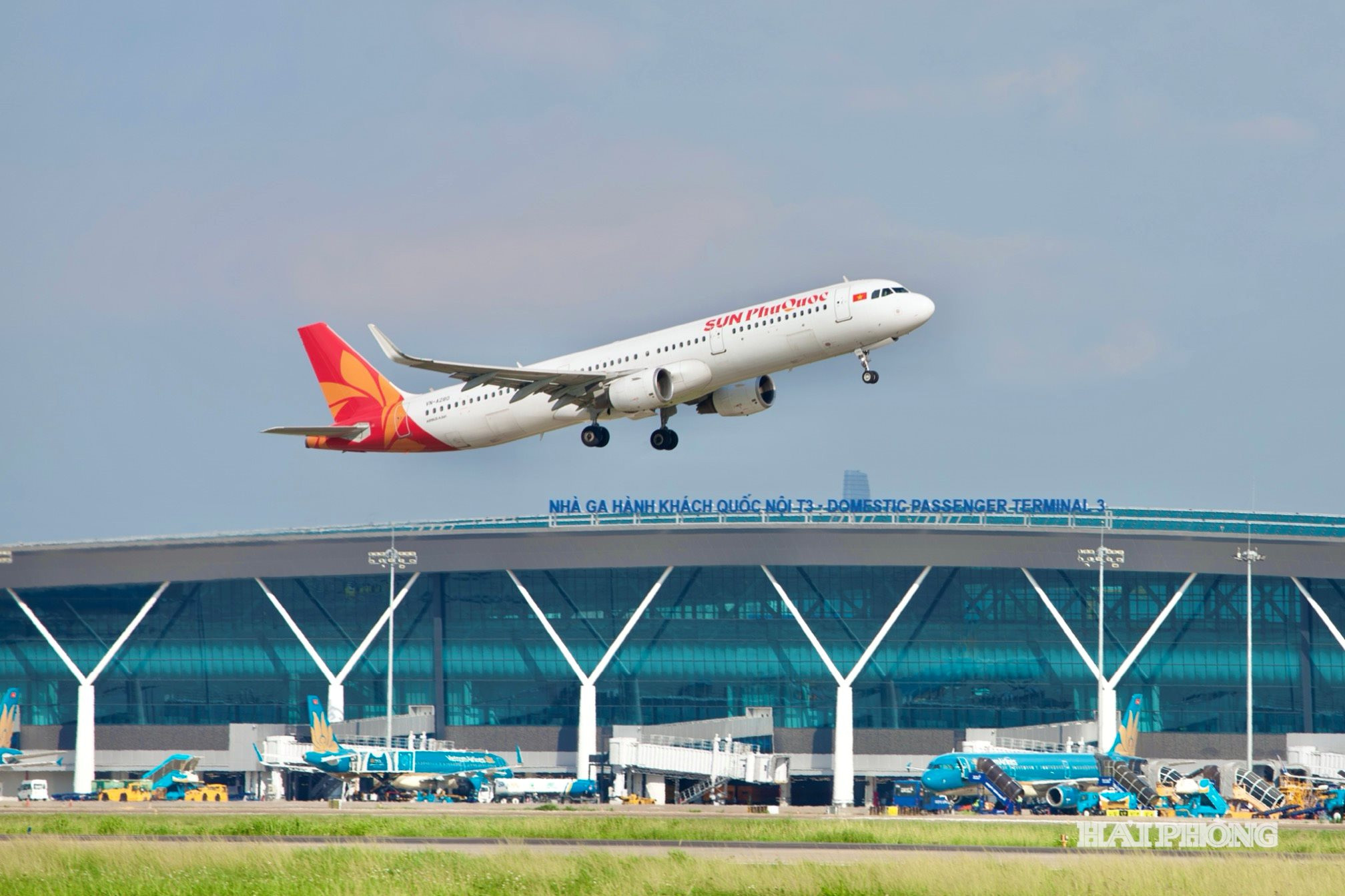
The launch of Sun PhuQuoc Airways' two new routes linking Hai Phong with Ho Chi Minh city and Phu Quoc in late July 2026 offers travelers more choices. More importantly, it further demonstrates Hai Phong's growing appeal to airlines and creates new development opportunities for the city's tourism.
Airlines carefully assess every new route before launching operations. Their investment decisions are based not only on immediate travel demand but also on confidence in a market's long-term growth potential. The increasing number of airlines choosing Cat Bi International Airport to expand their networks shows that Hai Phong is emerging as a new growth pole in northern Vietnam, with strong advantages in economy, industry, logistics, and tourism.
That confidence has not come by chance. In the first six months of 2026, Hai Phong's economy maintained strong growth momentum. Behind that performance lies substantial demand for modern transportation connectivity.
Economic experts have noted that when a locality enters a period of rapid growth, aviation is no longer simply a means of travel but becomes essential infrastructure for attracting investment, expanding markets, and enhancing competitiveness.
This is particularly true for Hai Phong, which serves as an international seaport hub, northern Vietnam's largest gateway for imports and exports, and is striving to become the country's high-tech industrial center.
While economic growth generates passenger demand, tourism is one of the sectors that benefits most directly from new air routes. Hai Phong enjoys exceptional advantages, including the Cat Ba Archipelago, part of the UNESCO World Heritage Site of Ha Long Bay – Cat Ba Archipelago, along with Do Son tourist area, numerous festivals, historical sites, and distinctive cultural attractions.
The two new Sun PhuQuoc Airways routes therefore do more than shorten travel distances; they also create new development opportunities. The Hai Phong – Ho Chi Minh city route connects the country's two major economic centers, making travel more convenient for business travelers, entrepreneurs, experts, and tourists.
Meanwhile, the Hai Phong – Phu Quoc route helps establish stronger links between two of Vietnam's leading coastal and island tourism destinations, enabling travel companies to develop interregional tour packages, diversify tourism products, and expand their customer base.
Shortly after ticket sales opened, the two routes recorded more than 5,000 bookings, reflecting strong market demand for connectivity.
However, air routes alone are only part of the equation. The key to encouraging visitors to return lies in the quality of the destination itself. A flight may bring tourists to Hai Phong more quickly, but whether they choose to come back depends on well-preserved landscapes, a safe tourism environment, professional services, attractive tourism products, and the hospitality of local people. This is why the city is simultaneously promoting digital transformation in tourism, strengthening passenger transport management, ensuring food safety, protecting the environment, and building the image of a civilized and modern destination.
Today, the runways at Cat Bi are more than places where aircraft take off and land. They are gateways for new visitor flows, new investment, and new development opportunities. As aviation infrastructure continues to expand, tourism products become more diverse, and service quality continues to improve, Hai Phong will have an even stronger foundation to realize its ambition of becoming an international marine tourism center, worthy of its role as a dynamic growth pole of Vietnam.
NGUYEN CUONG