
FDI drives economic growth
Amid mounting pressures on traditional growth drivers, the foreign direct investment (FDI) sector continues to play a vital role in driving the economic growth of Hai Phong.
FDI continues to contribute to growth
In the first six months of 2026, despite continued global economic uncertainties, global trade being affected by geopolitical tensions, tariff policies introduced by several major economies, and rising logistics costs, Hai Phong maintained one of the highest economic growth rates in the country. The city’s Gross Regional Domestic Product (GRDP) increased by 11.33% compared with the same period last year, ranking first among Vietnam’s seven centrally governed cities, third nationwide, and second in the Red River Delta.
This achievement came after one year of operating under the two-tier local government model and implementing synchronized socio-economic development measures. Alongside public investment, industrial production, trade, services, and logistics, the FDI sector continued to be one of the key drivers of economic growth.
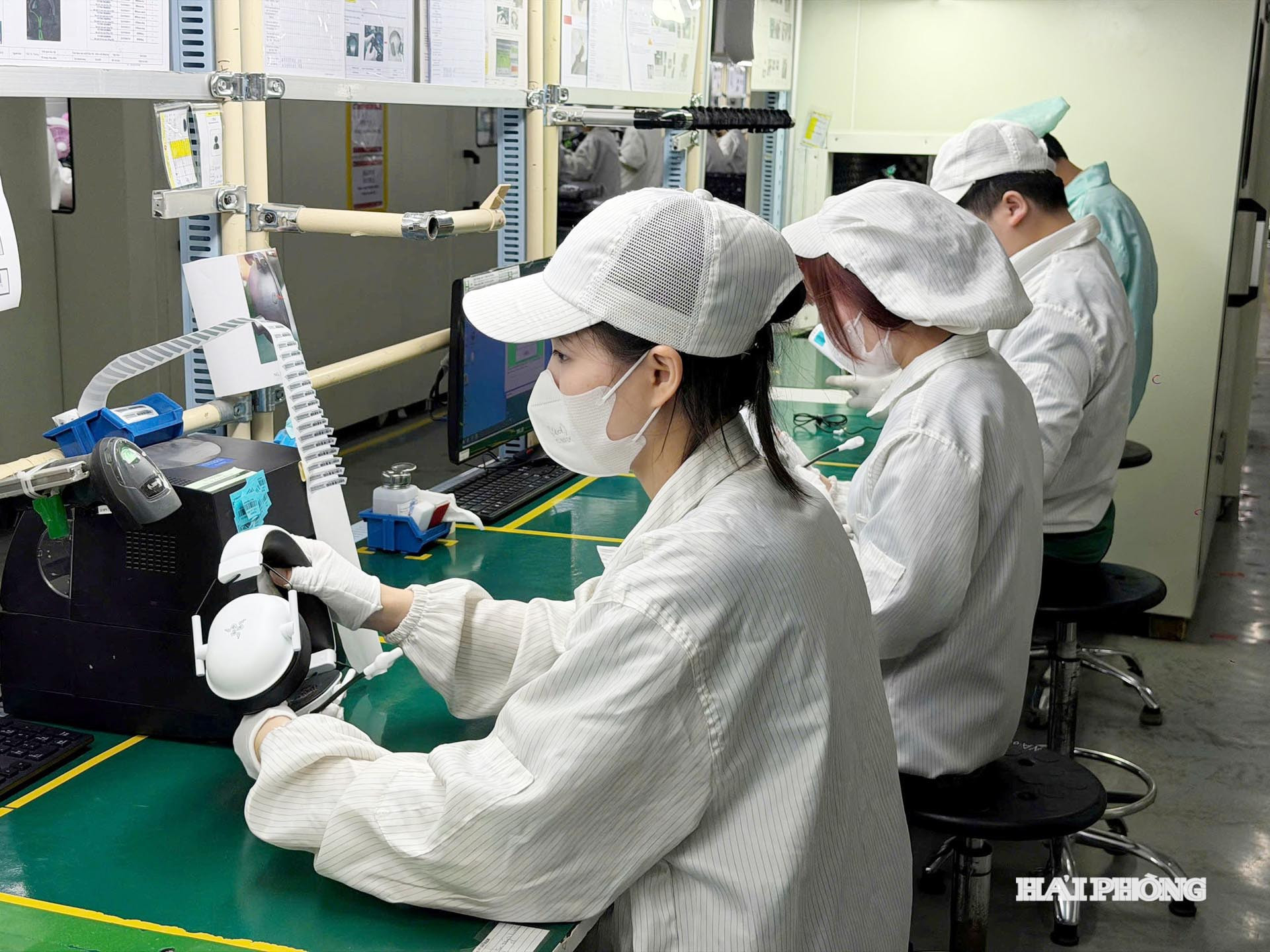
According to the city’s Statistics Office, total realized investment in the first six months of the year increased by 13.97% year-on-year. Investment from the FDI sector alone rose by 22.21%, the highest among the three economic sectors, with the majority flowing into manufacturing and processing, electronics, and high-tech industries—areas that make significant contributions to industrial growth and exports.
According to Mr. Moon Byeong Hoon, General Director of LG Electronics Vietnam Hai Phong Co., Ltd., Hai Phong’s strategic location, increasingly well-developed infrastructure, and strong support from the city government are key factors encouraging companies within LG Group’s supply chain to continue expanding their investments in the city.
As of June 25, Hai Phong had attracted more than USD 3.13 billion in FDI, up 76.7% compared with the same period in 2025. Of the total, industrial parks and economic zones accounted for 92.4% of newly attracted investment. Cumulatively, the city is home to 1,853 valid FDI projects with a total registered capital of approximately USD 54 billion, maintaining its position among Vietnam’s leading localities in attracting foreign investment.
These results demonstrate that Hai Phong continues to maintain an attractive investment environment. More importantly, FDI inflows are concentrated in the city’s key manufacturing industries, industrial parks, economic zones, and export-oriented activities, providing a solid foundation for achieving its 2026 growth targets.
Creating room for a new development phase
Although GRDP increased by 11.33%, the Industrial Production Index (IIP) and all four economic sectors recorded growth below target, creating pressure on the city’s goal of achieving GRDP growth of at least 13% in 2026 and maintaining strong average growth throughout the 2026–2030 period.
To accomplish these objectives, in addition to maximizing the effectiveness of public investment, promoting industrial production, exports, trade, services, and accelerating key projects, Hai Phong needs to continue generating growth momentum from non-budget investment, particularly high-quality FDI.
Recently, the Standing Committee of the Hai Phong Party Committee approved the investment policy for the LG Innotek Hai Phong Semiconductor Package Substrate Manufacturing Plant at Nam Dinh Vu Industrial Park (Zone 2), located within the Hai Phong Free Trade Zone in the Dinh Vu–Cat Hai Economic Zone, with a total investment of approximately USD 1 billion. The project will manufacture semiconductor package substrates—a high-value-added, technology-intensive product that aligns with the city’s strategy to develop its electronics and semiconductor industries.
The continued expansion by a long-established investor in Hai Phong reflects investors’ confidence in the city’s investment environment. Beyond contributing additional capital to industrial development, the project is expected to lay the groundwork for new supply chains, attract supporting industries, and increase the share of high-tech sectors.
Notably, in July 2026, the city is expected to announce the Prime Minister’s decisions on the Hai Phong Specialized Economic Zone, the Southern Coastal Economic Zone, and the Hai Phong Free Trade Zone. These developments will provide a foundation for expanding the city’s development space while creating more favorable mechanisms for attracting high value-added investment projects.
According to Mr. Bruno Jaspaert, General Director of DEEP C Industrial Zones and Chairman of the European Chamber of Commerce in Vietnam (EuroCham), Hai Phong possesses significant advantages for developing a next-generation free trade zone thanks to its strategic location, deep-water seaport system, integrated transport infrastructure, and increasingly deep integration into global supply chains. If developed in accordance with standards harmonized with European Union regulations, Hai Phong will gain further advantages in attracting high-tech, green industry, and logistics projects.
Mr. Pham Van Thep, Member of the Standing Committee of the Hai Phong Party Committee and Head of the Hai Phong Economic Zone Authority, stated that the city aims to attract between USD 3.6 billion and USD 4 billion in FDI in 2026. Priority will be given to projects in high technology, electronics, semiconductors, environmentally friendly industries, and projects capable of participating deeply in global value chains while strengthening linkages with domestic enterprises.
In addition to maintaining investment promotion in traditional markets such as South Korea, Japan, Singapore, China, and Taiwan (China), the Hai Phong Economic Zone Authority will expand investment promotion activities in the United States and Europe. It will also continue administrative reforms, implement "green channel" and "one-stop-shop" mechanisms, and proactively resolve difficulties faced by businesses.
These measures are expected to create additional growth momentum, helping Hai Phong achieve its 2026 development goals and maintain strong economic growth in the years ahead.
Le Hiep