

Robots supporting administrative reform
Intelligent robots equipped with artificial intelligence (AI), currently being piloted in Hai Phong, are already proving effective in assisting citizens and easing the workload of administrative officials.
“A special assistant”
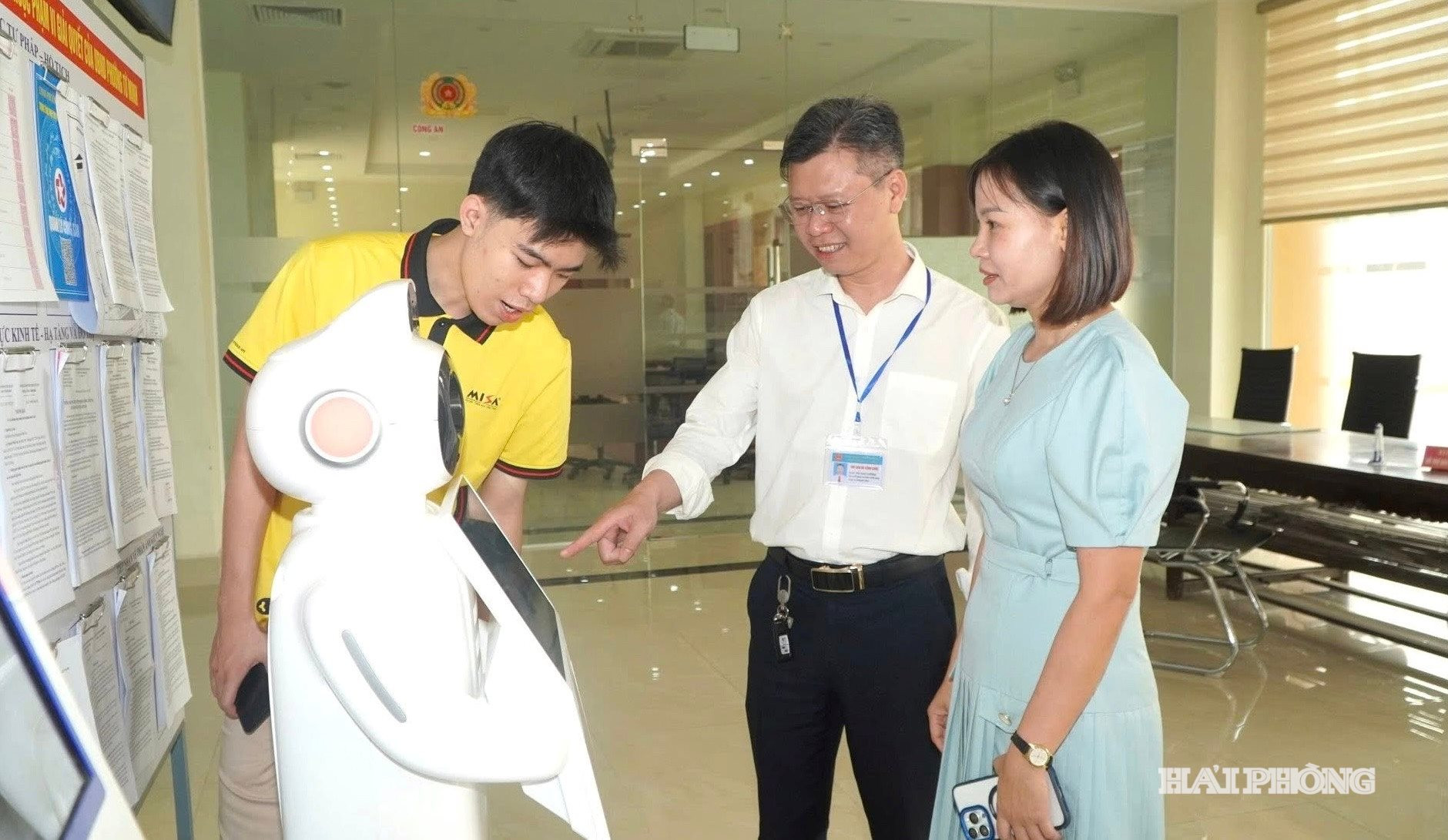
Last May, the Vinh Thinh Commune Public Administrative Service Center began piloting a smart robot to support the handling of administrative procedures. The initiative is regarded as a new step in the locality’s digital transformation process.
Vinh Thinh Commune was established through the merger of three communes and has a population of more than 26,000. The commune’s Public Administrative Service Center currently has six officials and public employees responsible for receiving applications from residents across various administrative fields. To improve service efficiency, the commune has introduced an automated queue management system, information lookup services, and a pilot smart robot integrated with approximately 1,000 questions and answers on commune-level administrative procedures.
According to Ms. Doan Minh Hue, Deputy Director of the Vinh Thinh Commune Public Administrative Service Center, the center receives around 1,300 applications each month, with more than 99% processed on time. The adoption of additional technological solutions has helped staff improve processing efficiency while making it easier for residents to access information.
“The smart robot is one of the tools helping the center gradually transform the way public services are delivered. Most importantly, technology should serve the people better by reducing waiting times and enhancing openness and transparency in the handling of administrative procedures,” Ms. Hue said.
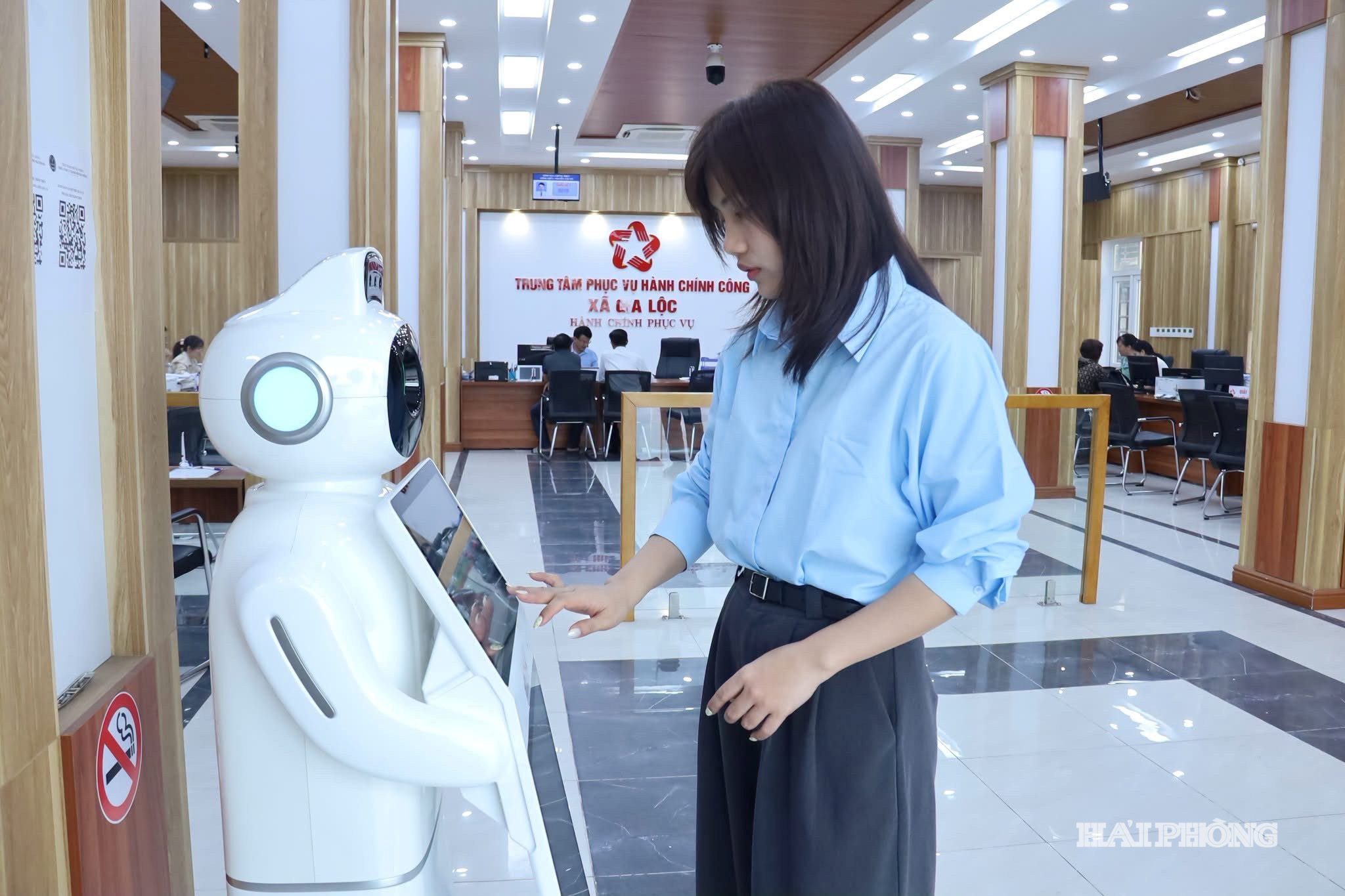
At the Gia Loc Commune Public Administrative Service Center, a humanoid reception robot stationed in the entrance hall has attracted the attention of many residents visiting the center to complete administrative procedures. Besides serving as a showcase of technological innovation, the robot is equipped with a range of practical features, including recognizing visitors, greeting them, directing them to the appropriate service counter, answering basic questions by voice, and assisting with administrative procedure inquiries.
Notably, the robot can also receive citizens’ feedback and recommendations and forward them to the relevant departments for handling. Ms. Nguyen Ha Phuong, a resident of Gia Loc Commune, said she was initially surprised when the robot guided her.
“When I first saw the robot standing at the entrance, I thought it was simply a technology display. But when I asked about the paperwork, it responded quite quickly and told me which counter I needed to visit. For older people who are not yet familiar with online public services, having another guidance channel like this is very convenient,” Ms. Phuong said.
According to Mr. Pham Van Tai, Deputy Director of the Gia Loc Commune Public Administrative Service Center, the introduction of the robot is not intended to replace human staff but rather to provide support, allowing officials to spend less time on initial guidance and more time handling specialized administrative work.
“Previously, during peak hours when many residents came to the center, officials had to repeatedly guide each person to the correct counter, explain the required documents, and outline the procedures. The robot can assist with these basic tasks, enabling residents to be more proactive from the moment they enter the center,” Mr. Tai said.
Toward modern governance
Practical implementation in several localities across the city has shown that public administration robots are expected to become “digital assistants,” helping residents access information more quickly and conveniently. Wards and communes such as Tu Minh, Thach Khoi, Ai Quoc, Vinh Thinh, Chan Hung, and Lac Phuong have launched pilot projects applying AI and public administration robots to support residents in completing administrative procedures.
However, as the robots are still in the pilot phase, they have certain limitations. According to Ms. Tran Thi Thu Trang, Deputy Director of the Tan Hung Ward Public Administrative Service Center, the robots are currently capable mainly of answering basic questions, such as guiding users through administrative procedures and explaining the required documents for each type of application. They are not yet able to fully assist with situations that arise during the application process or respond adequately to case-specific questions requiring detailed analysis.
Therefore, to ensure that public administration robots go beyond simply providing information, local authorities need to continue investing in and improving their data repositories, regularly updating them with real-life scenarios, expanding the database of questions and answers, and enhancing the system’s interactive capabilities. At the same time, mechanisms should be established to evaluate the effectiveness of the robots through feedback from both residents and the officials responsible for operating them, allowing for continuous improvements.
According to Mr. Vu Dai Thang, Deputy Director of the Department of Science and Technology, artificial intelligence is becoming a breakthrough tool and an indispensable part of the development strategy of every organization, business, and locality. Digital transformation and the application of AI have become urgent requirements for state administration at the grassroots level.
The practical application of technological solutions not only helps reduce workloads and improve the productivity of officials and civil servants but also enhances the quality of public services for citizens and organizations. Artificial intelligence will serve as an effective tool for automating administrative processes, shortening the time required to process administrative procedures, and advancing the development of a modern, professional, and service-oriented public administration.
Based on these initial experiences, the model of robots supporting administrative procedures is opening up a new approach to building digital government, contributing to a grassroots administrative system that is increasingly modern, citizen-centered, and more effective in serving the public.
Ha Vy