

Hai Phong proactively responds to Storm No. 1
Hai Phong has proactively implemented comprehensive measures to respond to Storm No. 1, making every effort to minimize damage to lives and property caused by heavy rain and strong winds.
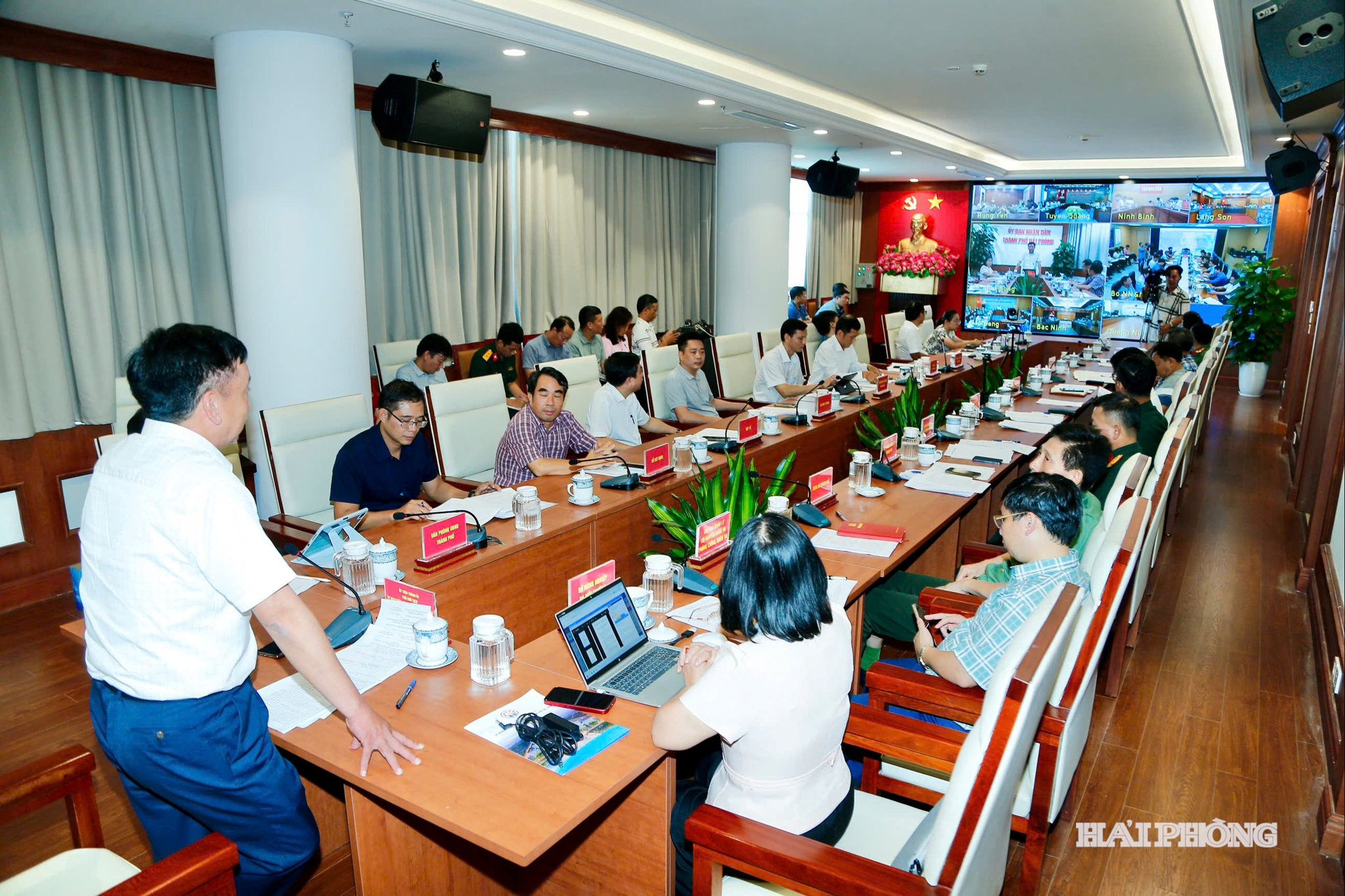
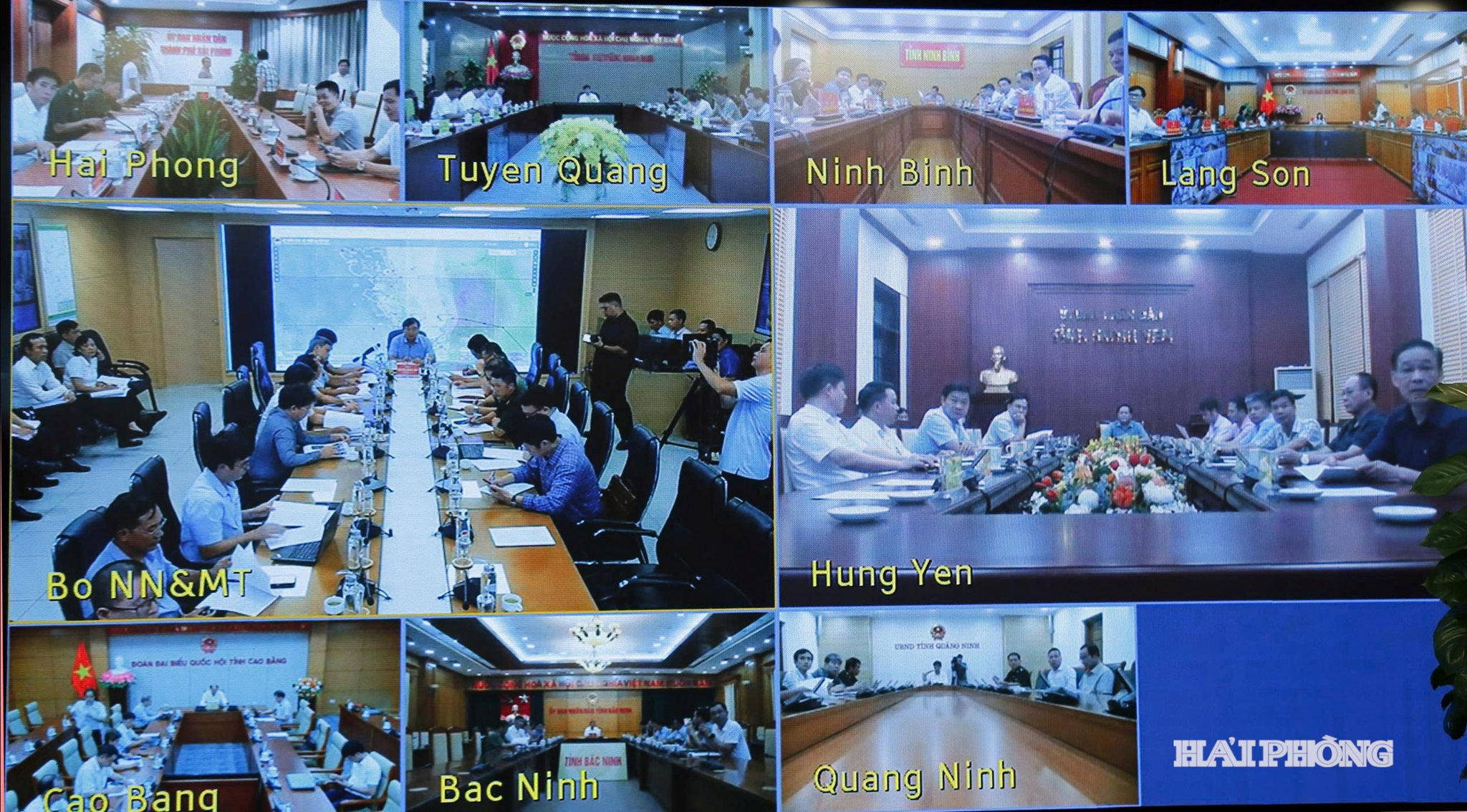
On the afternoon of July 3, the Ministry of Agriculture and Environment held an online meeting with the localities of Hai Phong, Quang Ninh, Tuyen Quang, Ninh Binh, Lang Son, Hung Yen, Bac Ninh, and Cao Bang to coordinate response measures for Storm No. 1 (Typhoon Maysak) and post-storm flooding.
The meeting was chaired by Mr. Nguyen Hoang Hiep, Deputy Minister of Agriculture and Environment, and attended by leaders of several central ministries, agencies, and sectors.
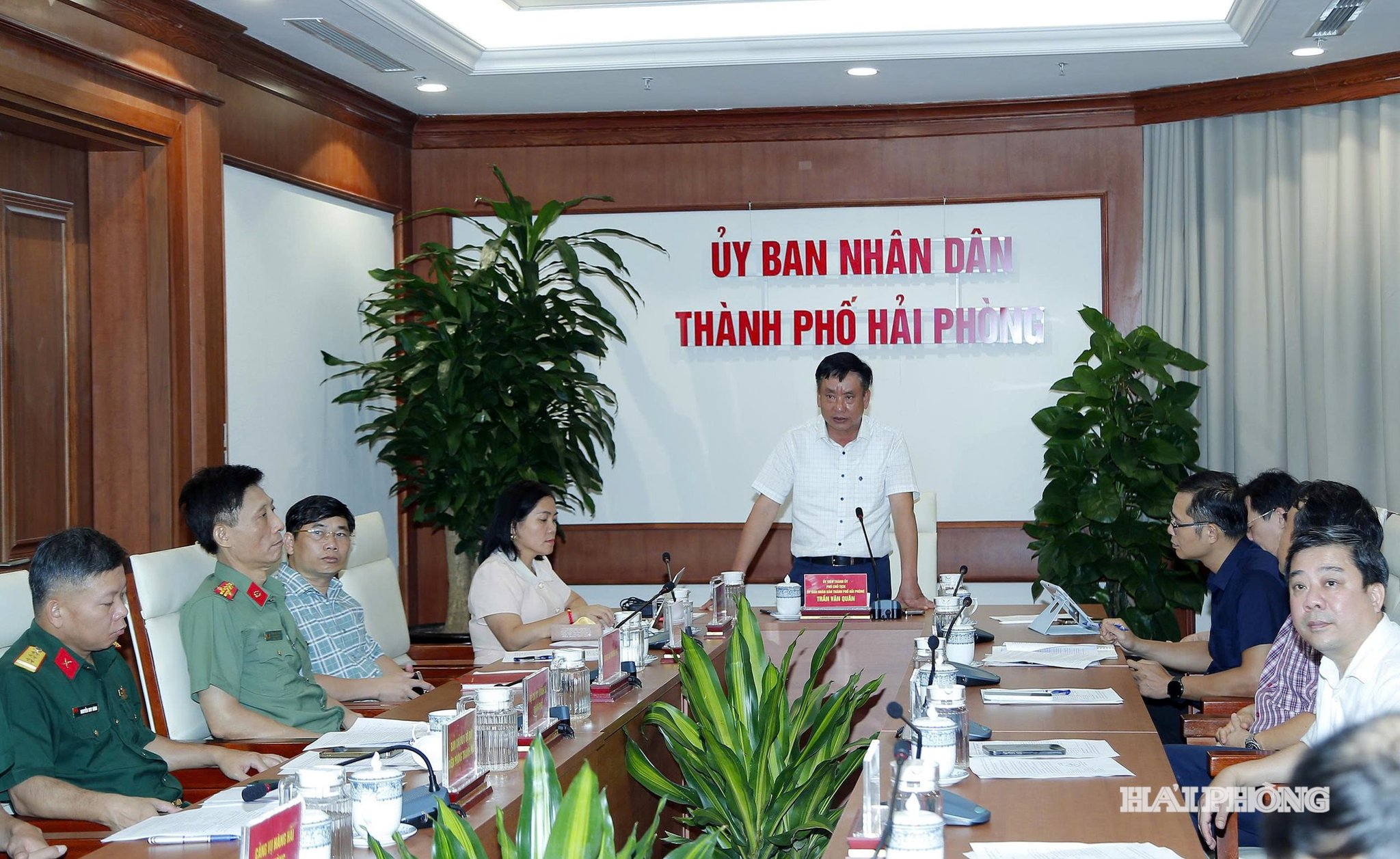
At the Hai Phong venue, Mr. Tran Van Quan, Member of the Hai Phong Party Committee and Vice Chairman of the Hai Phong People's Committee, attended the meeting. Also present were leaders of the Department of Agriculture and Environment, the Hai Phong City Public Security, the Hai Phong Military Command, and other relevant agencies.
During the meeting, participants were briefed on the storm's developments, forecasts for the next 24–72 hours, and recommendations from relevant authorities on timely emergency response measures. Localities also discussed their response scenarios for Storm No. 1 based on local conditions.
Speaking at the meeting, Vice Chairman Tran Van Quan said that Hai Phong had issued several official dispatches in response to the tropical depression. On the morning of July 3, the Chairman of the Hai Phong People's Committee issued Official Dispatch No. 05, calling for urgent preparations against Storm No. 1. The Department of Agriculture and Environment also issued Official Letter No. 7923 seeking comments on a draft notice regarding certain activities in estuarine and coastal areas.
As of 10:00 a.m. on July 3, the Hai Phong Border Guard Command had coordinated the inspection and notification of more than 1,600 fishing vessels carrying over 4,400 workers, all of whom had safely returned to shore or reached storm shelters. No vessels remained out of contact.
By the evening of July 3, authorities aimed to ensure that 100% of vessels mobilized for evacuation would return to shore and take shelter safely from the storm. Based on data collected from localities, tourists on Cat Ba Island had already been arranged safe accommodation. In the Do Son area, more than 500 tourists (nearly 50% of whom are foreign visitors) were assisted with lodging, while authorities intensified communication to discourage all sea-based recreational activities. Prepared response plans have been developed in a detailed, systematic, and ready-to-implement manner, ensuring uninterrupted communication.
In his directive remarks at the conference, Mr. Nguyen Hoang Hiep, Deputy Minister of Agriculture and Environment, emphasized that Storm No. 1 is directly affecting the coastal area from Quang Ninh to Ninh Binh. Although this is an early-season storm with relatively moderate wind speeds, it may move inland and cause heavy rainfall and widespread thunderstorms and tornadoes. Therefore, localities must not be subjective or complacent and should strengthen public communication so that residents can proactively take preventive measures.
As the storm coincides with the weekend and directly impacts major tourist destinations, strict enforcement of a sea ban until the storm fully passes is required, along with timely support for tourists.
Agencies and units under the Ministry of Agriculture and Environment are required to closely monitor developments, regularly provide updates, widely disseminate information to the public, and ensure timely evacuation from dangerous, landslide-prone areas, minimizing casualties.
Local authorities must strictly manage maritime activities, firmly prohibit people and vessels from operating in hazardous zones, and review evacuation plans for areas at risk of storms, floods, landslides, and inundation.
The Deputy Minister also requested that localities prepare sufficient manpower, equipment, and supplies to promptly carry out rescue and relief operations, ensuring forces and resources are mobilized according to established scenarios under the principle of the “four on-the-spot” approach. The highest priority is to ensure public safety, minimize property damage, and quickly stabilize livelihoods and restore production after the storm.
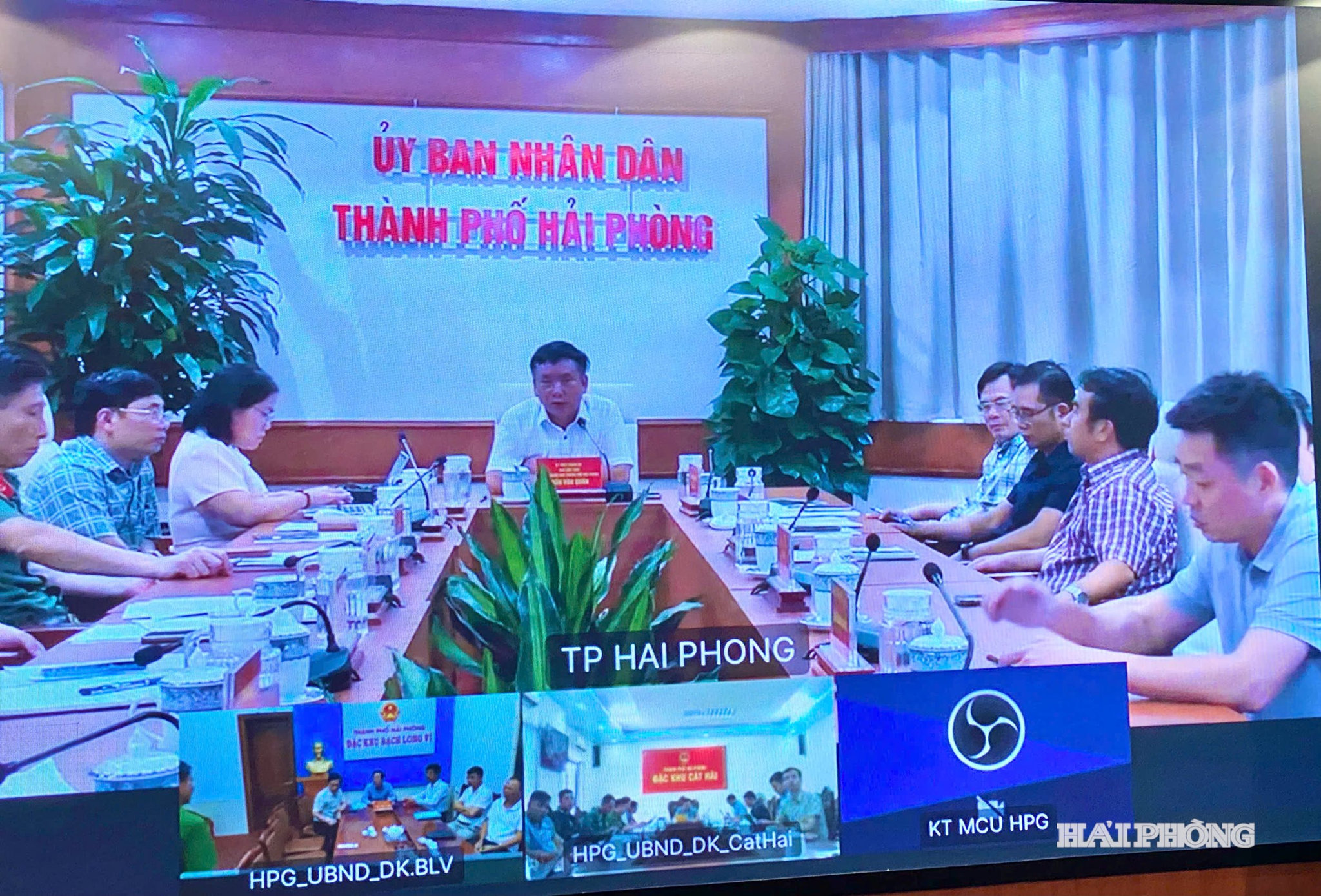
Immediately after the meeting with the Ministry of Agriculture and Environment, Mr. Tran Van Quan, Vice Chairman of the Hai Phong People's Committee, held an online meeting with Bach Long Vy Special Zone and Cat Hai Special Zone to direct a thorough review and strongly urge localities to strictly implement urgent measures in response to Storm No. 1.
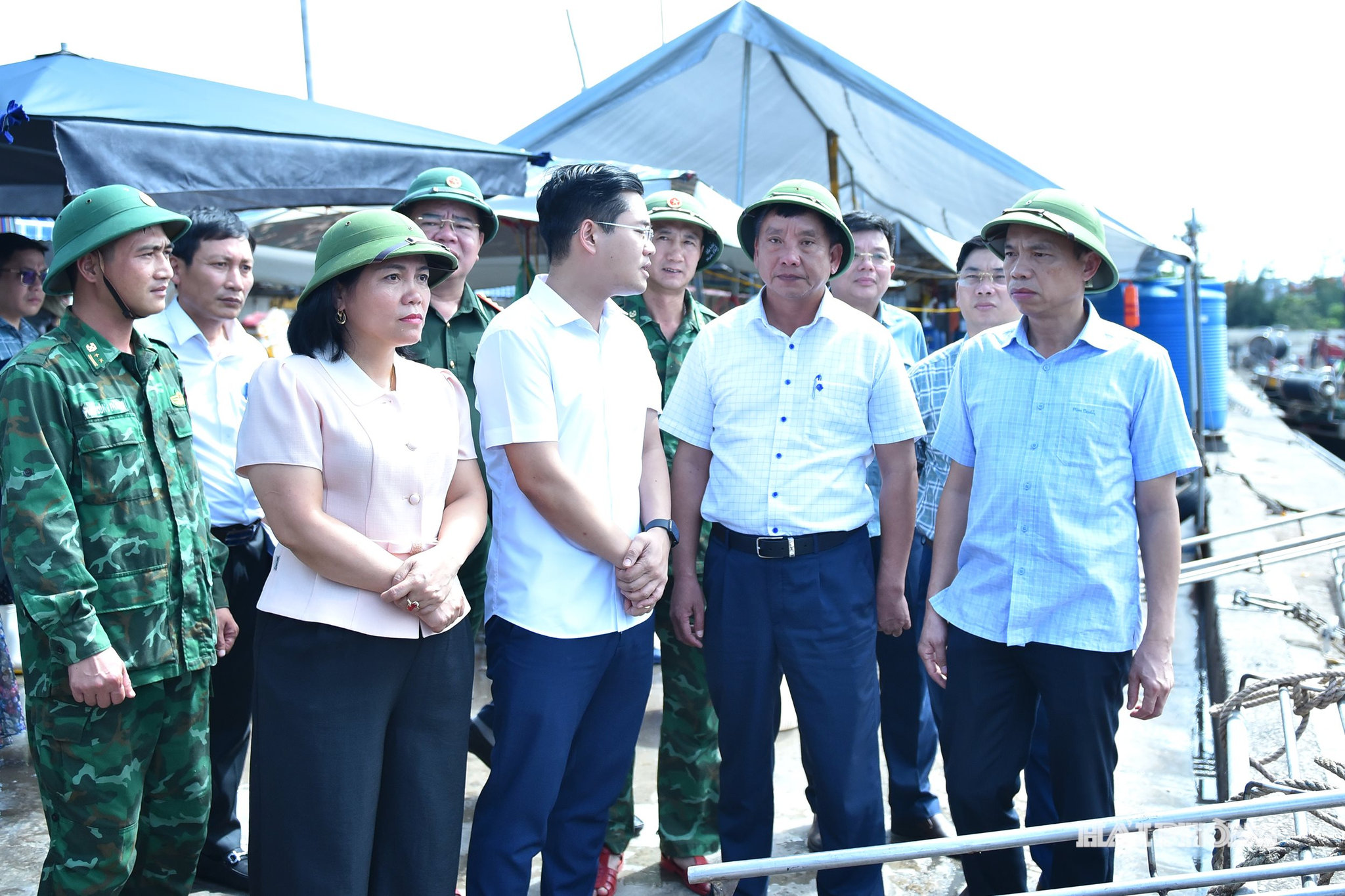
On the afternoon of July 3, Mr. Tran Van Quan, Vice Chairman of the Hai Phong People's Committee, inspected storm preparedness and response measures for Storm No. 1 (Maysak) in Do Son Ward and Kien Hai Commune.
The delegation included leaders of the Department of Agriculture and Environment, the Hai Phong Border Guard Command, the Water Resources Management and Disaster Prevention Sub-Department, as well as local authorities.
During on-site inspections at Ngoc Hai Fishing Port, Area 2 Beach (Do Son Ward), Hong Canal (Nam Do Son Ward), and Quan Chanh Fishing Wharf (Kien Hai Commune), Vice Chairman Tran Van Quan requested that localities and relevant units strictly avoid any complacency, continue closely monitoring storm developments, tighten control over fishing vessels, ensure the safety of dike systems, coastal tourism areas, and aquaculture zones, and remain ready to implement evacuation plans when necessary.
He also emphasized strengthening public communication, maintaining 24/7 duty shifts, and preparing sufficient manpower, equipment, and materials to respond promptly to any situation, minimizing damage caused by the storm.
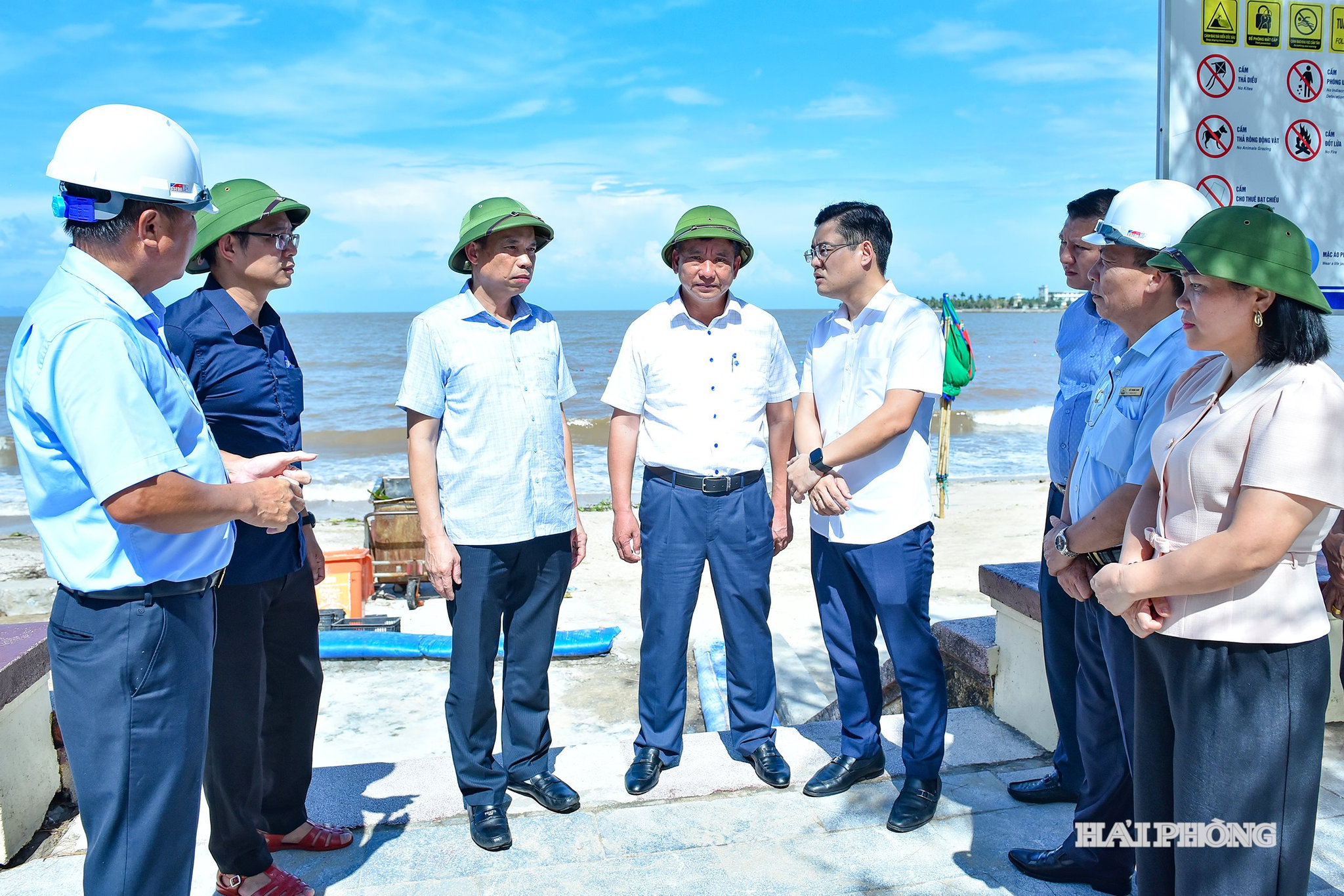
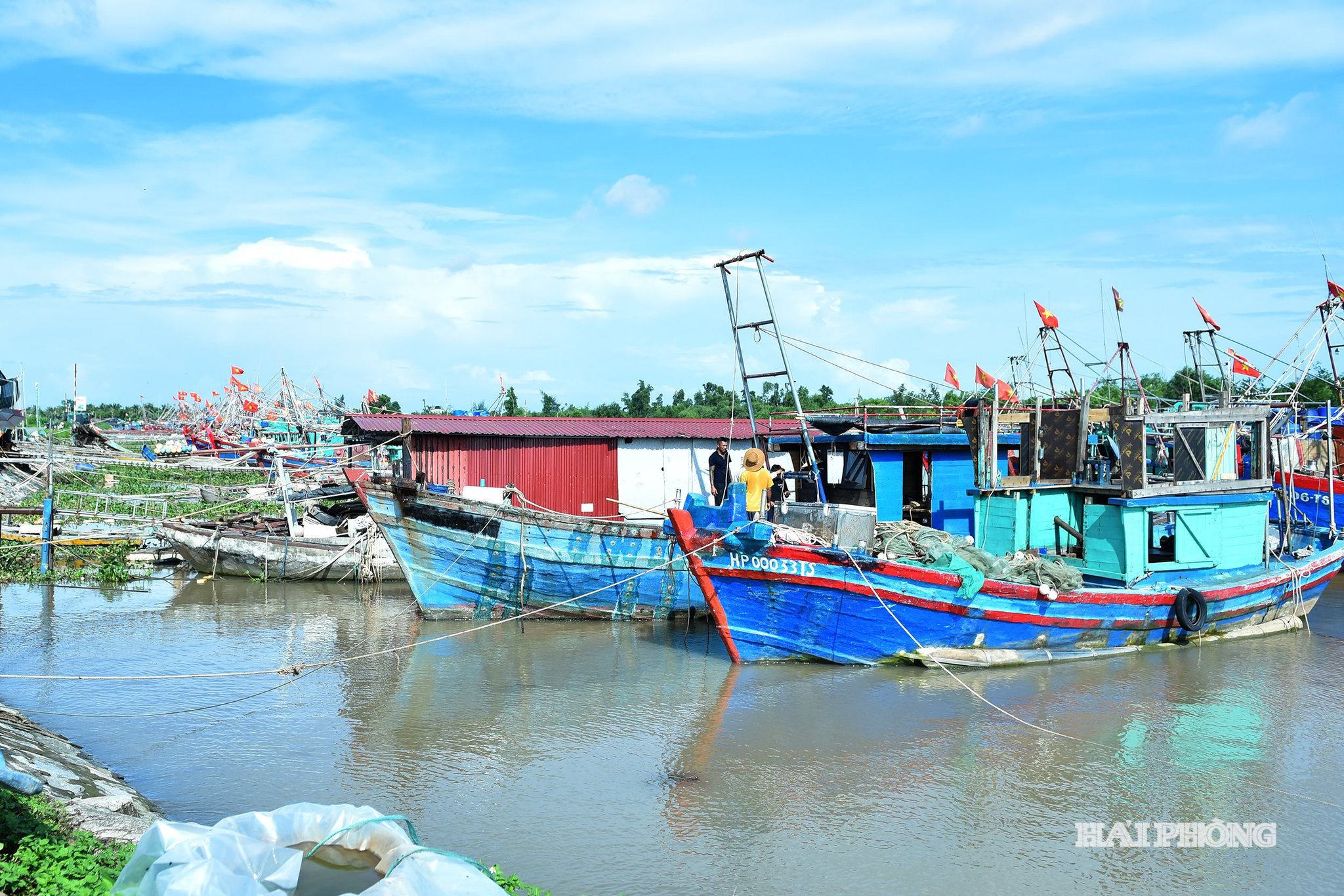
By the afternoon of July 3, there were 70 vessels with 301 workers in Do Son Ward. Of these, 63 vessels had safely docked, while 7 vessels carrying 22 workers were still operating at sea and had maintained communication.
In addition, 81 vessels from other localities were anchored in the area with 294 workers onboard. Functional forces coordinated to conduct vessel counting and called on all boats to proactively seek safe shelter from the storm.
The locality has also prepared personnel, equipment, and supplies under the “4 on-site” principle, with a mobilization capacity of 1,071 personnel. The disaster prevention and control stockpile has been reinforced with hundreds of life jackets, life buoys, temporary shelters, generators, rescue vehicles, and other essential equipment for emergency response.
Following the inspection, Do Son Ward developed an evacuation plan for 324 households with 942 residents living in high-risk areas, low-lying zones, structurally unsafe housing, and coastal areas when required.
A total of 594 tourists staying in the area, including 110 international visitors, have had evacuation plans prepared. Accommodation facilities have been instructed to regularly update information and ensure safety as the storm approaches.
Kien Hai Commune has established three disaster response command clusters; mobilized 271 members of the rapid response disaster prevention team; and coordinated with 26 equipment owners, including excavators, trucks, and passenger vehicles, to support emergency response when necessary.
Disaster prevention materials and equipment have also been fully prepared, including 2,000 sandbags, 120 life jackets, 20 life buoys, 100 steel cages, and various specialized tools. The commune has coordinated supplies of approximately 1,000 m³ of sand, 2,000 bamboo poles, and ensured essential provisions including 10 tons of rice, 1,000 cartons of instant noodles, 1,600 20-liter water containers, 300 gas cylinders, along with medical equipment for response operations.
The People’s Committee of Kien Hai Commune has conducted five public broadcasts via the local radio system, electronic information portal, and fanpage to update storm developments and guide residents in proactive prevention.
After review, the locality identified a vulnerable dike section along Sea Dyke II at Km8+400–Km8+525 in Nam Hai Village. An evacuation plan has been developed for 36 households with 122 residents living in low-lying and coastal areas outside the dyke to be relocated to safe shelters when necessary.
Regarding fisheries activities, the area currently has 128 fishing vessels with 268 workers, including 110 local vessels with 232 workers. By 18:00 on July 3, 89 vessels with 183 workers had safely anchored. All operating vessels remain in communication, and no vessels are in dangerous zones or out of contact.
.jpg)
In response to Storm No. 1 (Maysak), the Civil Defense Command of Hai Phong City has announced a ban on tourist boats and fishing vessels going offshore; all tourism, recreational activities at sea and islands; as well as fishing, aquaculture, and other maritime activities in estuarine, coastal, and offshore areas from 16:00 on July 3.
The Border Guard Command and coastal wards, communes, and special zones regularly notify and call on vessels at sea, as well as workers on aquaculture cages and watch huts, to return to safe shelters by all possible means. These arrangements must be completed before 19:00 on July 3 to avoid collisions and sinking at anchorage areas.
Authorities strictly prohibit vessels already in shelters from resuming operations in dangerous weather conditions; coercive measures will be applied if necessary.
The Border Guard Command also directed coastal and island posts to carry out flare signals to call vessels back to shelter, and prepared plans to mobilize available ships and boats for search and rescue operations when required.
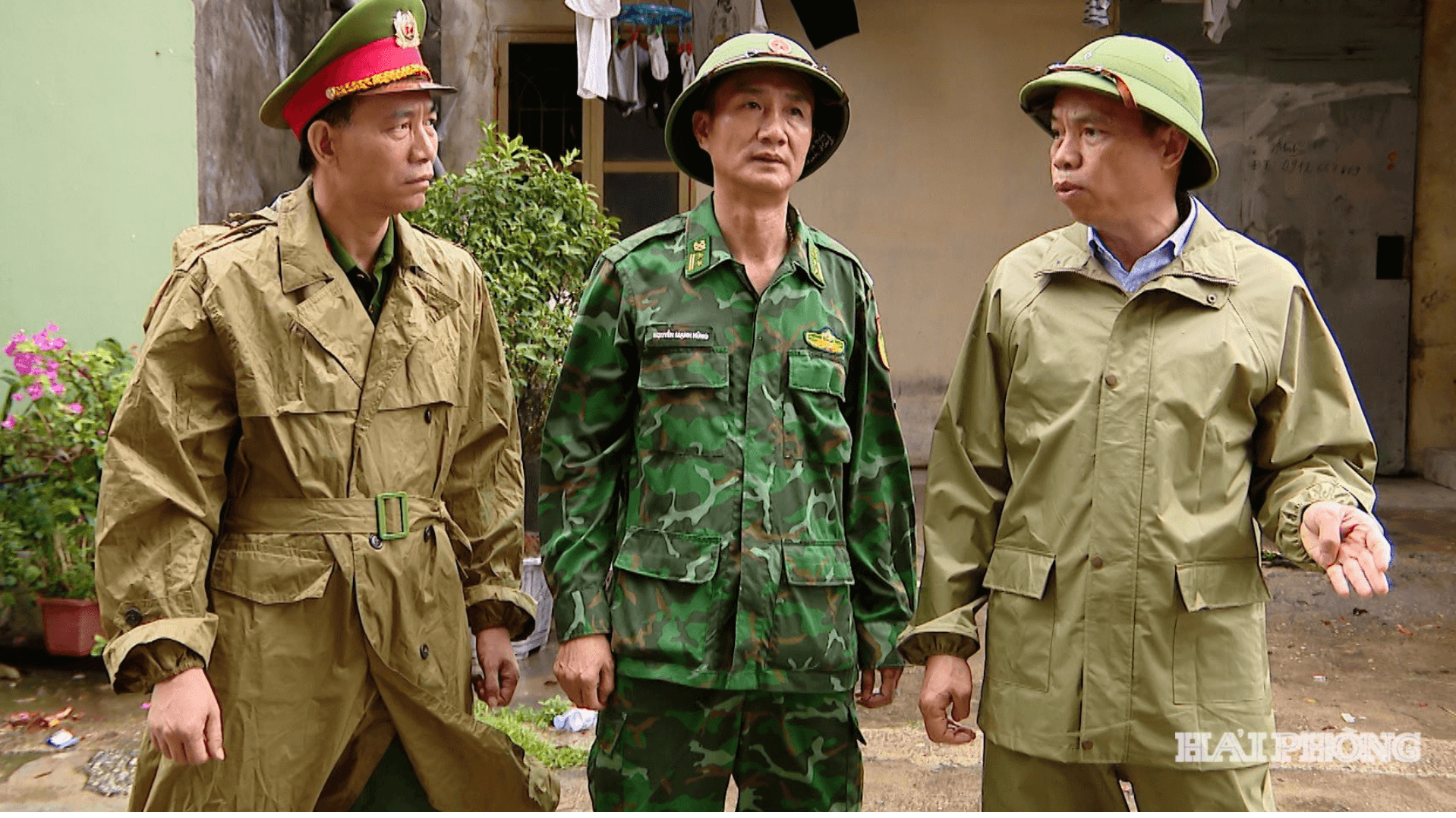
The Chairman of the Hai Phong City People’s Committee has issued Official Dispatch No. 05, requesting all departments, agencies, local authorities, and relevant units to urgently implement measures to respond to Storm No. 1.
The dispatch emphasizes that, in order to proactively respond to Storm No. 1 and ensure the safety of people’s lives while minimizing damage to both public and private property, the Chairperson requires leaders of communes, wards, special zones, and city departments to absolutely avoid negligence or complacency.
They must continuously monitor and update storm developments, focus leadership and direction with the highest level of urgency and proactivity, anticipate worst-case scenarios, avoid passivity or surprise, and place the safety of human life above all else, while also minimizing property damage.
The city continues to implement the directives issued in Official Dispatch No. 04 dated July 1, 2026, and strengthens communication and public awareness efforts to guide residents in storm preparedness, heavy rain, flooding, and protection of lives and property.
Authorities are instructed to safeguard houses, warehouses, factories, offices, schools, healthcare facilities, dike systems, reservoirs, infrastructure, and production activities—especially in agriculture and aquaculture.
Search and rescue forces and equipment must be fully prepared for emergency response situations.
Department heads and local leaders will be held accountable to the City Chairman if negligence in leadership or implementation causes damage to life or property.
Local authorities are required to review evacuation plans and proactively relocate residents from low-lying areas, landslide-prone zones, and unsafe housing before the storm makes landfall, prioritizing vulnerable groups such as the elderly, children, students, and other at-risk populations.
Coastal localities must continue inspecting maritime activities, counting all vessels, aquaculture cages, and watch huts, and ensure all are brought to safe shelter.
It is strictly prohibited for anyone to remain on vessels, aquaculture cages, or offshore huts during storm conditions, particularly in cases of thunderstorms, lightning, or strong winds, with deadlines set before July 4 (and earlier for Bach Long Vi special zone).
Tourists and accommodation facilities must be promptly informed of storm developments, and absolutely no one is allowed to access coastal areas during landfall.
Mountainous areas must inspect and secure mines, reservoirs, hydropower and irrigation facilities, especially small or vulnerable structures, while maintaining on-site personnel for operation and emergency response.
Traffic control must be ensured at flooded crossings, submerged roads, and landslide-prone areas; authorities must strictly prevent passage when unsafe and ensure quick restoration of key transport routes.
The Border Guard Command must continue tracking and notifying vessel owners to move to safe shelter, strictly manage fishing, tourism, and transport vessels, organize safe anchorage, and reinforce aquaculture facilities.
It is strictly forbidden for people to remain on fishing vessels, tourist boats, cages, or offshore structures during strong winds or storm landfall, especially tourists at sea and on islands.
The Department of Agriculture and Environment is tasked with continuously updating storm information, coordinating with central agencies, and advising timely response measures; monitoring dikes, reservoirs, and agricultural production safety; and reporting results to the City People’s Committee and the Ministry of Agriculture and Environment.
The Department of Construction must coordinate traffic safety, control inland waterways, suspend transport when necessary, ensure drainage in urban areas, and inspect unsafe apartment buildings for possible evacuation.
The Department of Culture, Sports and Tourism is responsible for inspecting tourism and heritage sites for storm preparedness.
Hai Phong Economic Zone Authority must direct storm preparedness in industrial zones.
The Port Authority of Hai Phong and northern maritime agencies must ensure safe anchorage, regulate vessel operations, and require port operators to lower container stacks and secure cranes to prevent damage in severe weather conditions.
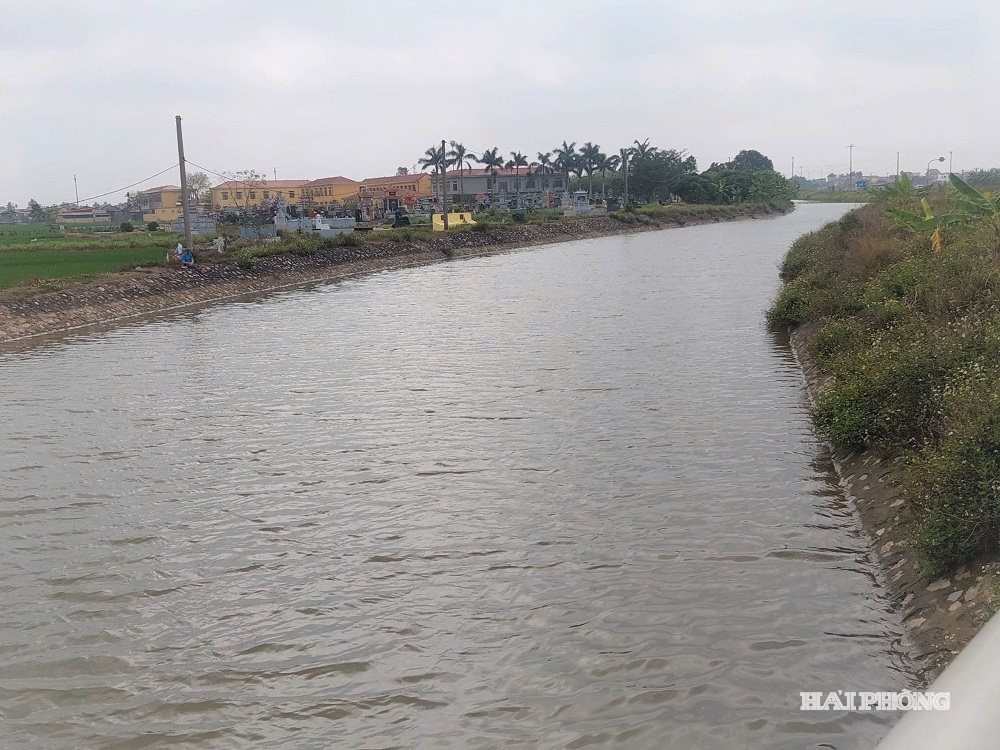
According to irrigation management companies operating in Hai Phong City, in order to proactively implement measures to respond to Storm No. 1 (Maysak), from July 1 to present, relevant units have actively operated sluice gate systems under dikes and drainage pumping stations to reduce buffer water levels in canals and irrigation channels into rivers.
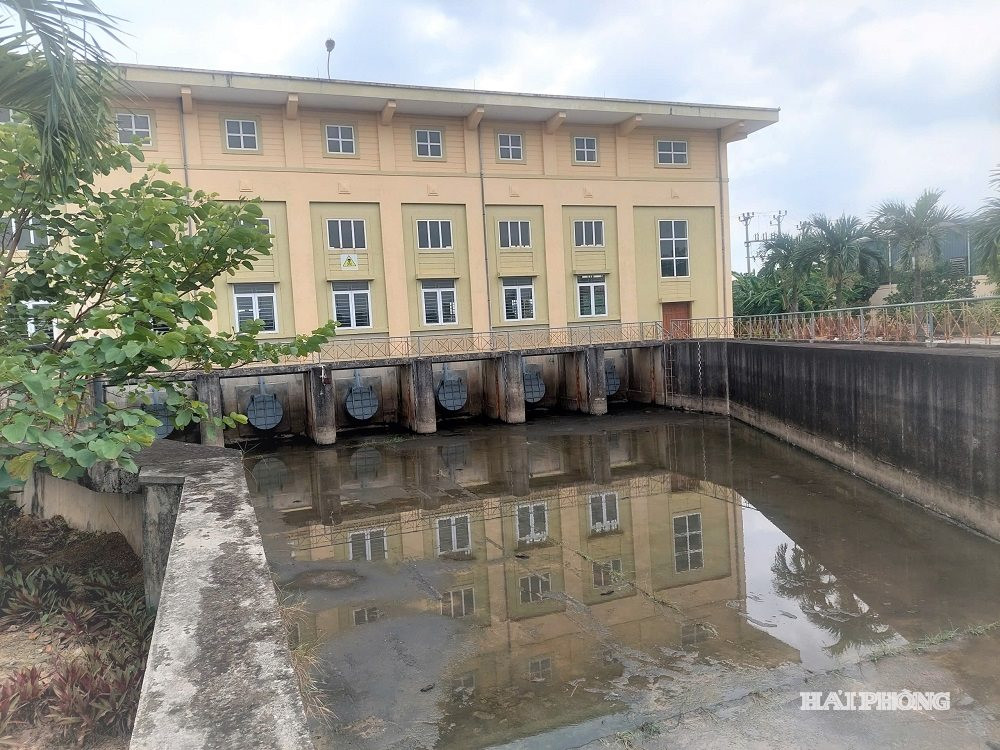
Accordingly, in six irrigation systems, including Hai Duong, Da Do, Tien Lang, Vinh Bao, An Hai, and Thuy Nguyen, all sluice gates under dikes have been continuously operated, taking advantage of low tide conditions to discharge water into rivers.
Some companies have also opened spillways of reservoirs and conducted trial operations of drainage pumping stations such as Ba Nu, Thanh Thuy B, Ngoc Diem, Thanh Cuong, Do Phan, Cap Tu, Thai Duong, Thuc Khang, and Hoang Lau, in order to be ready to support drainage from canal systems into rivers during heavy rainfall.
As of 14:00 on July 3, water levels in canal systems across the city had been lowered. In particular, the An Kim Hai system recorded an average water level of +0.75 m, Chanh Duong Canal at +0.7 m, Trung Thuy Nong Tien Lang Canal at +0.8 m, and the Da Do irrigation system ranging from +0.45 to +0.5 m.
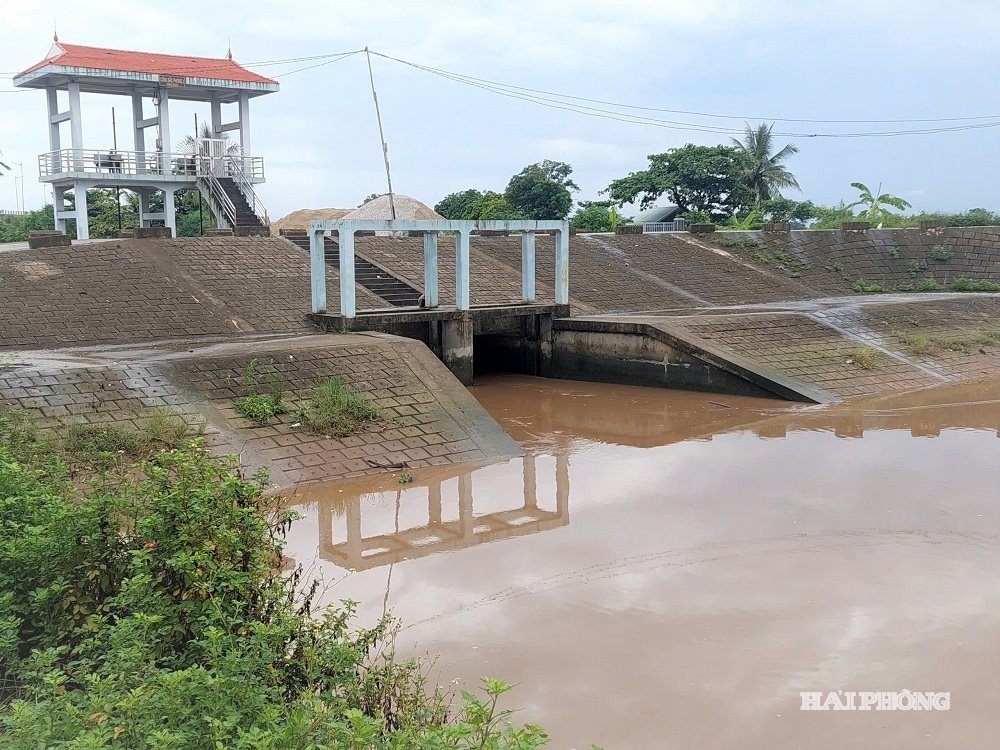
In addition to proactively draining buffer water within the canal system, irrigation companies are coordinating with local authorities to strengthen inspections of irrigation works, dike systems, reservoirs, and dams in order to promptly detect early incidents caused by rain and storms, and to proactively implement flood prevention measures.
In the coming days, irrigation companies across the area will continue coordinating with dike management units and local authorities to inspect dikes, embankments, sluice gates, and key vulnerable points; maintain regular patrols and guard duties along dikes, especially at critical locations, to promptly detect and address issues following the “four on-the-spot” principle, ensuring absolute safety for the city’s dike and irrigation infrastructure.
At the same time, specific areas at risk of flooding during heavy rain have been identified; plans for pre-drainage of buffer water in areas forecast to face heavy rainfall risks are in place, and irrigation works are ready to be operated to serve drainage for production and daily life.
Units have also assigned and arranged additional leadership, staff, and workers to be on duty 24/7 in order to promptly monitor developments of storms and heavy rainfall. Investors of dyke and irrigation works under construction in the city are required to immediately implement safety measures and prepare water diversion plans for construction areas.
According to the Department of Agriculture and Environment, the city’s dyke and irrigation systems remain safe at present.
The dyke system in the city consists of 43 dyke routes with a total length of 789.245 km, including 58.225 km of sea dykes, 126.968 km of estuary dykes, and 604.052 km of river dykes. There are 47 key vulnerable locations in the dyke system (3 dyke sections, 37 culvert points, 5 embankment sections, 1 seepage point, and 1 eroded bank).
Among these 47 vulnerable locations, 2 are at city level (Duong A Culvert at K43+743 on the right bank of the Thai Binh dyke in Chi Minh commune, and Ngo Culvert at K8+060 on the left bank of the Van Uc dyke in An Quang commune). The remaining 45 commune-level critical points have had protection plans developed and approved by local authorities in accordance with the “four on-the-spot” principle.
Hai Phong News