

Du Hang pagoda – Timeless tranquility in the heart of the Port City
Nestled in the heart of Hai Phong, Du Hang Pagoda quietly preserves the serene charm of an ancient temple with a history spanning more than a thousand years.
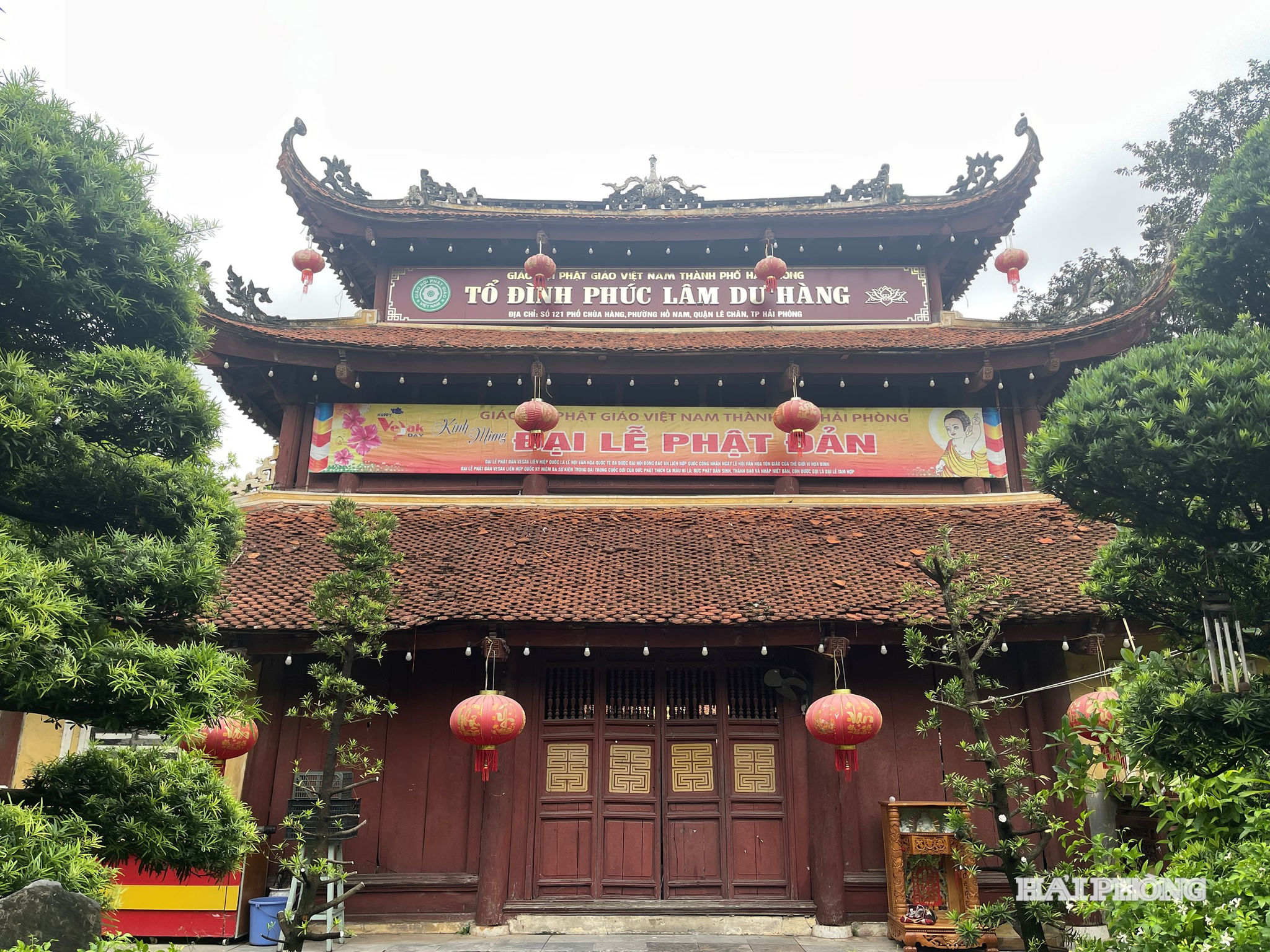
A thousand-year-old pagoda
Located on Du Hang Street in Le Chan Ward, Du Hang Pagoda (also known as Phuc Lam Tu) has long been one of Hai Phong's most renowned and oldest Buddhist temples. In contrast to the bustling streets surrounding it, visitors are greeted by a tranquil atmosphere as soon as they pass through the three-entrance gate, where ancient trees, the gentle tolling of temple bells, and weathered tiled roofs create a timeless sense of serenity.
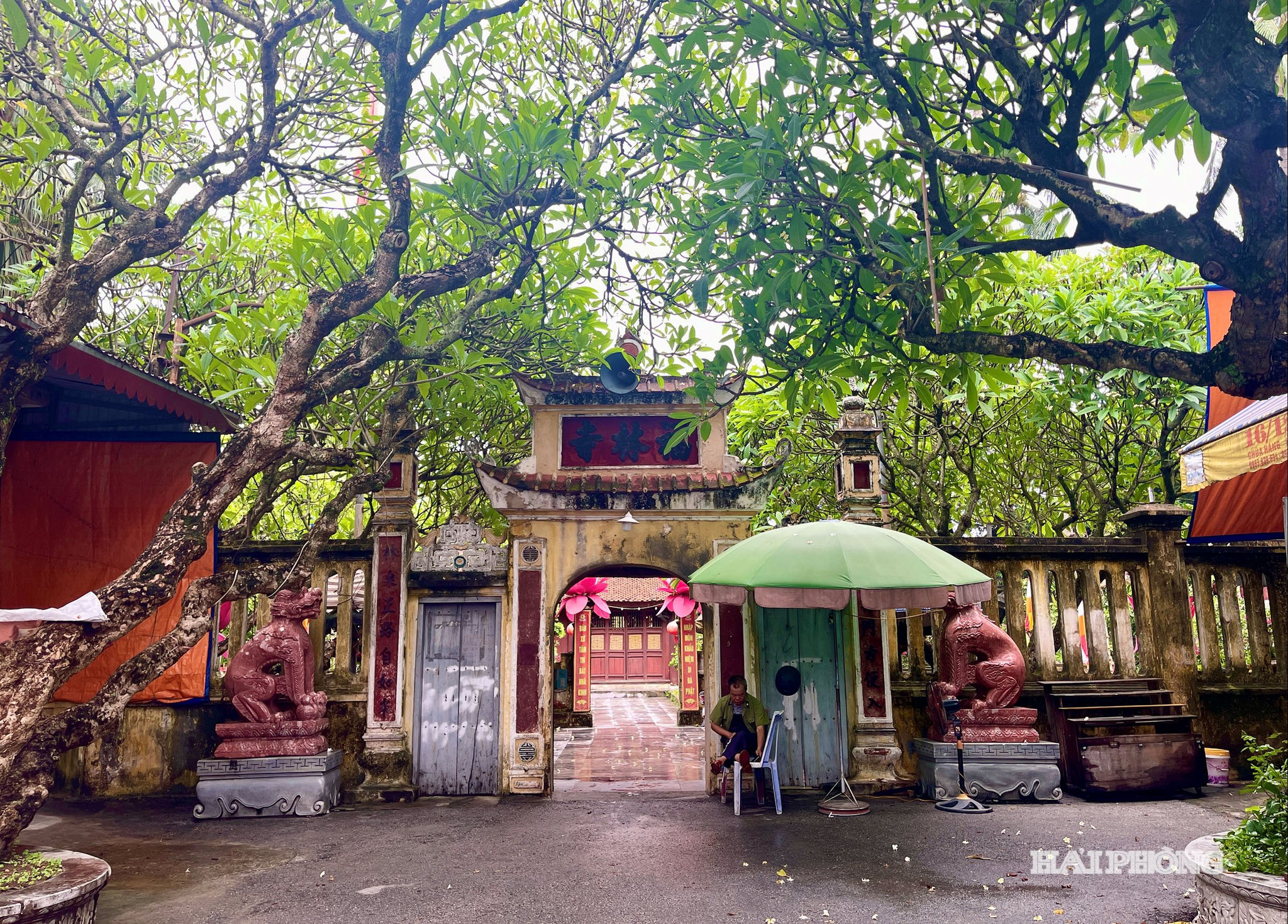
According to historical records, Du Hang Pagoda dates back to the Early Le Dynasty, around the late 10th and early 11th centuries. Legend has it that toward the end of the reign of Emperor Le Dai Hanh, a revered Buddhist monk came to the area to spread Buddhist teachings, laying the foundation for the establishment of the pagoda. During the Tran Dynasty, the temple developed close ties with the Truc Lam Yen Tu Zen School, founded by King-Monk Tran Nhan Tong. Since then, it has continued to observe ceremonies commemorating the patriarchs of the Truc Lam Zen tradition.
Having endured numerous historical upheavals, the pagoda has undergone several major restorations. In 1672, during the reign of Emperor Le Gia Tong, Venerable Nguyen Dinh Sach led efforts to expand the temple grounds and construct a bell tower, the Patriarch Hall, monks' quarters, and several other structures. Further restoration works in the late 19th and early 20th centuries helped shape the appearance of the ancient pagoda as visitors see it today.
After more than a millennium, Du Hang Pagoda has retained its ancient charm amid the modern urban landscape. Its layered tiled roofs, wooden beams, horizontal lacquered boards, and intricate carvings create a solemn yet welcoming atmosphere, making the pagoda a familiar destination for both local residents and visitors to Hai Phong.
Historical legacy and cultural value
Du Hang Pagoda was built in the traditional Dinh-shaped architectural layout. At its center stands a spacious seven-bay Main Hall, while the front features a three-entrance gate and a three-tiered bell tower with gracefully curved roofs. Flanking the main complex are the Patriarch Hall, monks' quarters, the rear worship hall, and other auxiliary structures, forming a harmonious and imposing ensemble that preserves the elegant characteristics of traditional Vietnamese Buddhist architecture.
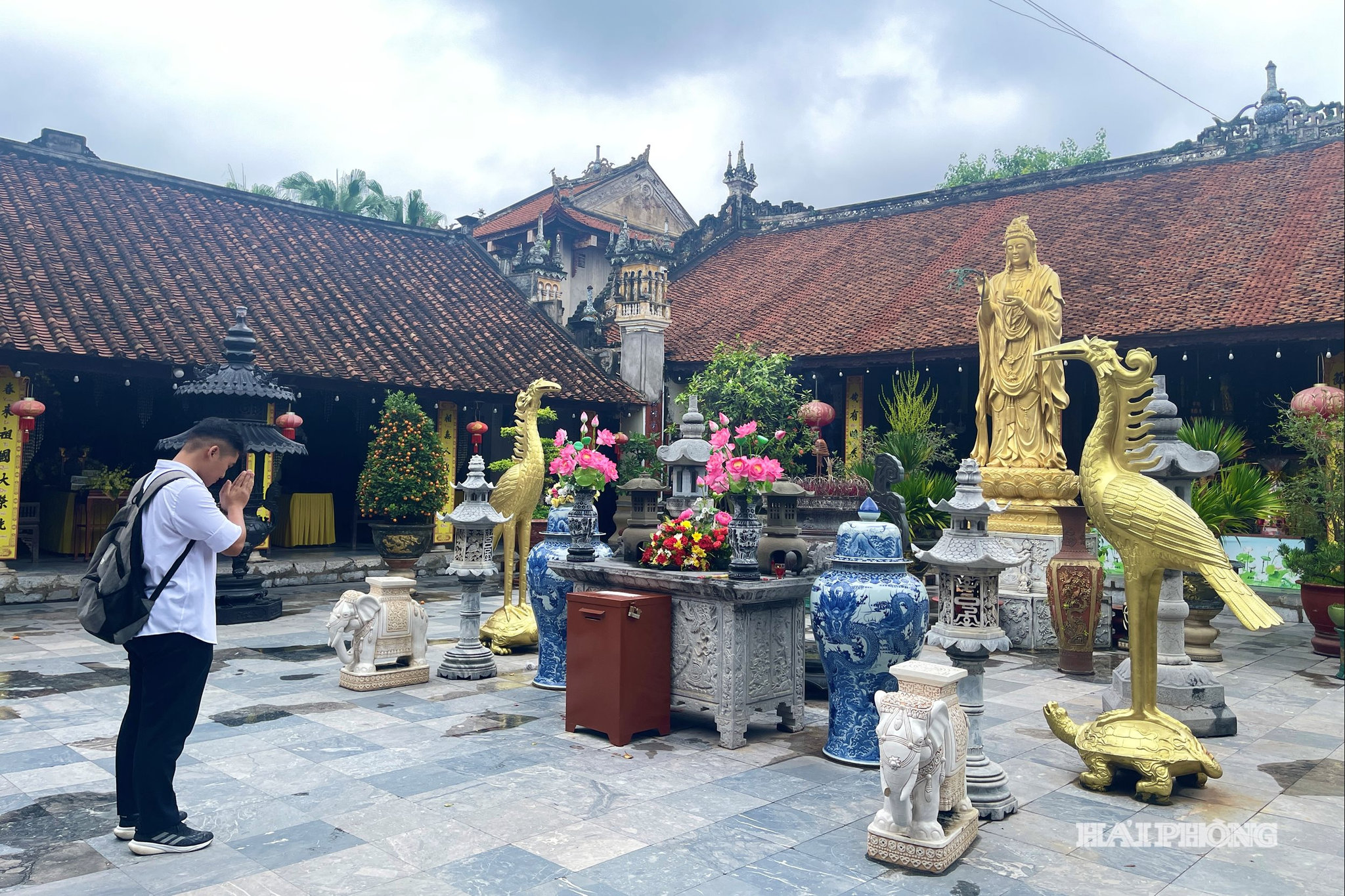
Inside the Main Hall, many ancient Buddhist statues have been preserved in almost their original condition. The statues of the Three Buddhas of the Three Times, the Nine-Dragon Throne, the Shakyamuni Triad, the Amitabha Triad, together with the statues of the Dharma Protectors and the Ten Kings of the Underworld, are all of significant artistic value. The horizontal lacquered boards, parallel sentences, and intricately carved altar canopies, adorned with dragons, clouds, and floral motifs, showcase the remarkable craftsmanship of Vietnamese artisans of the past.
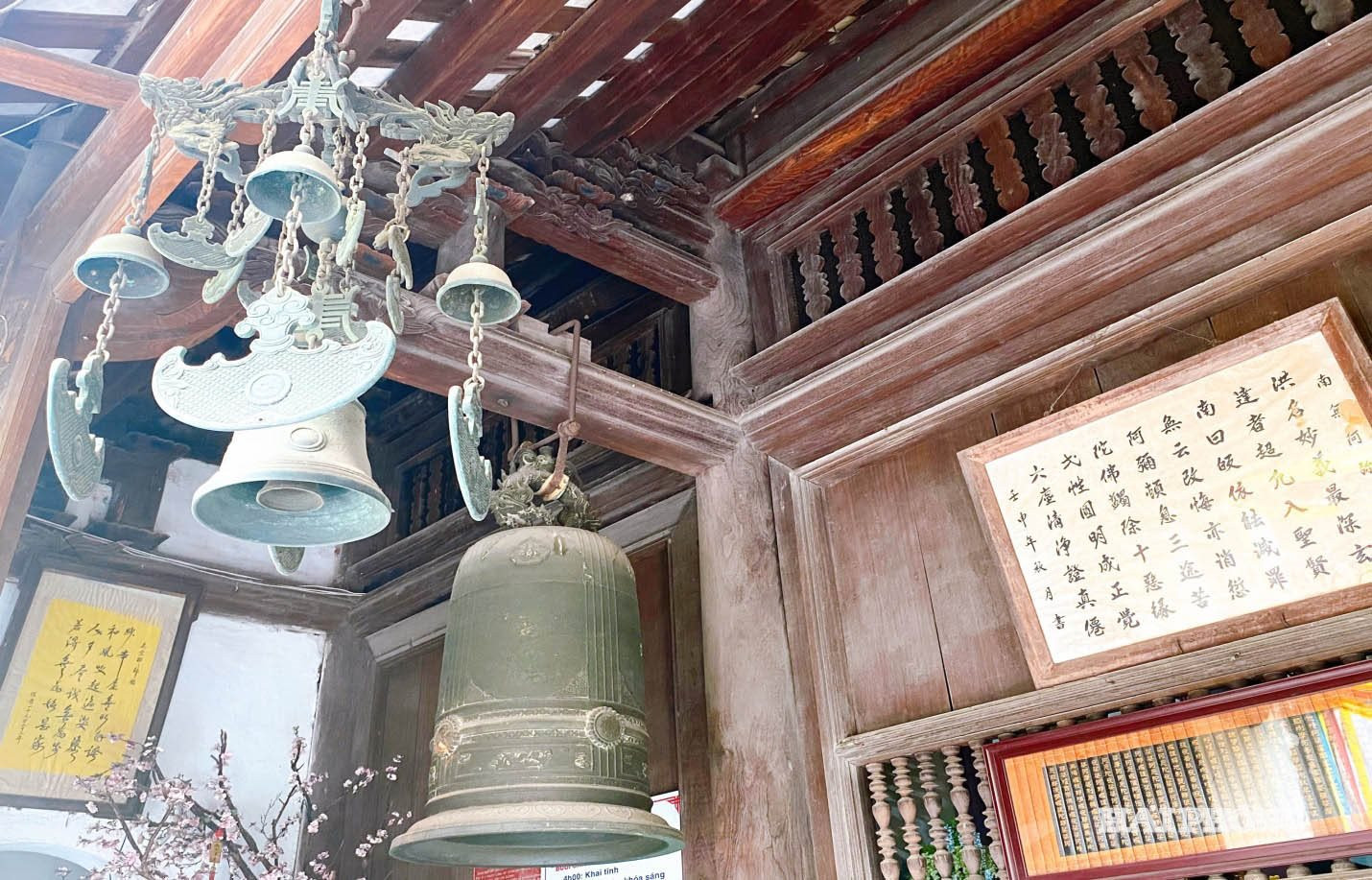
One of the highlights of Du Hang Pagoda is its bell tower, which houses a large bronze bell inscribed with the words "Phuc Lam Tu Chung" ("The Bell of Phuc Lam Pagoda"). Whenever the bell tolls, the bustling rhythm of the city seems to fade away, filling the surroundings with a profound sense of serenity and peace.
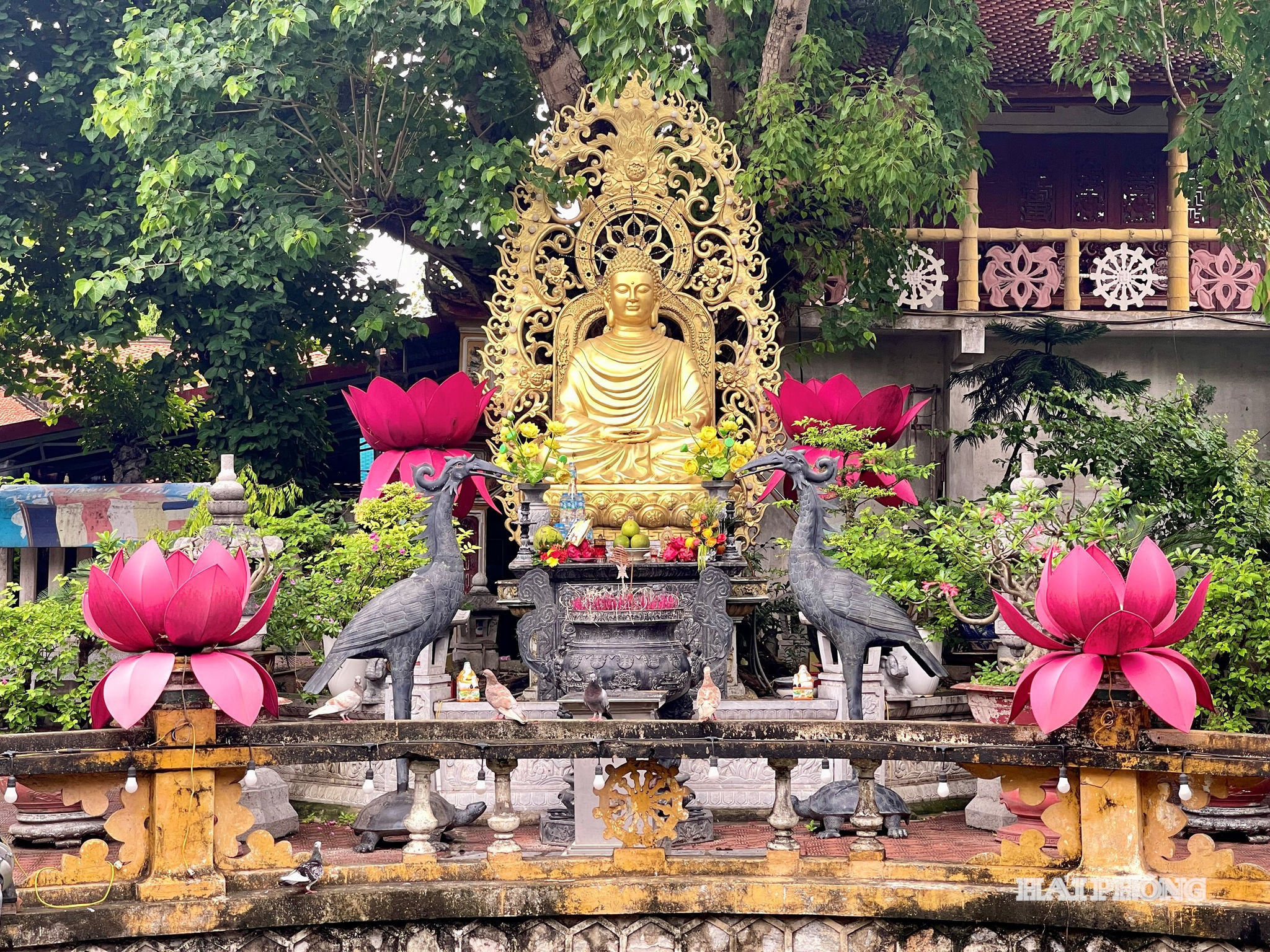
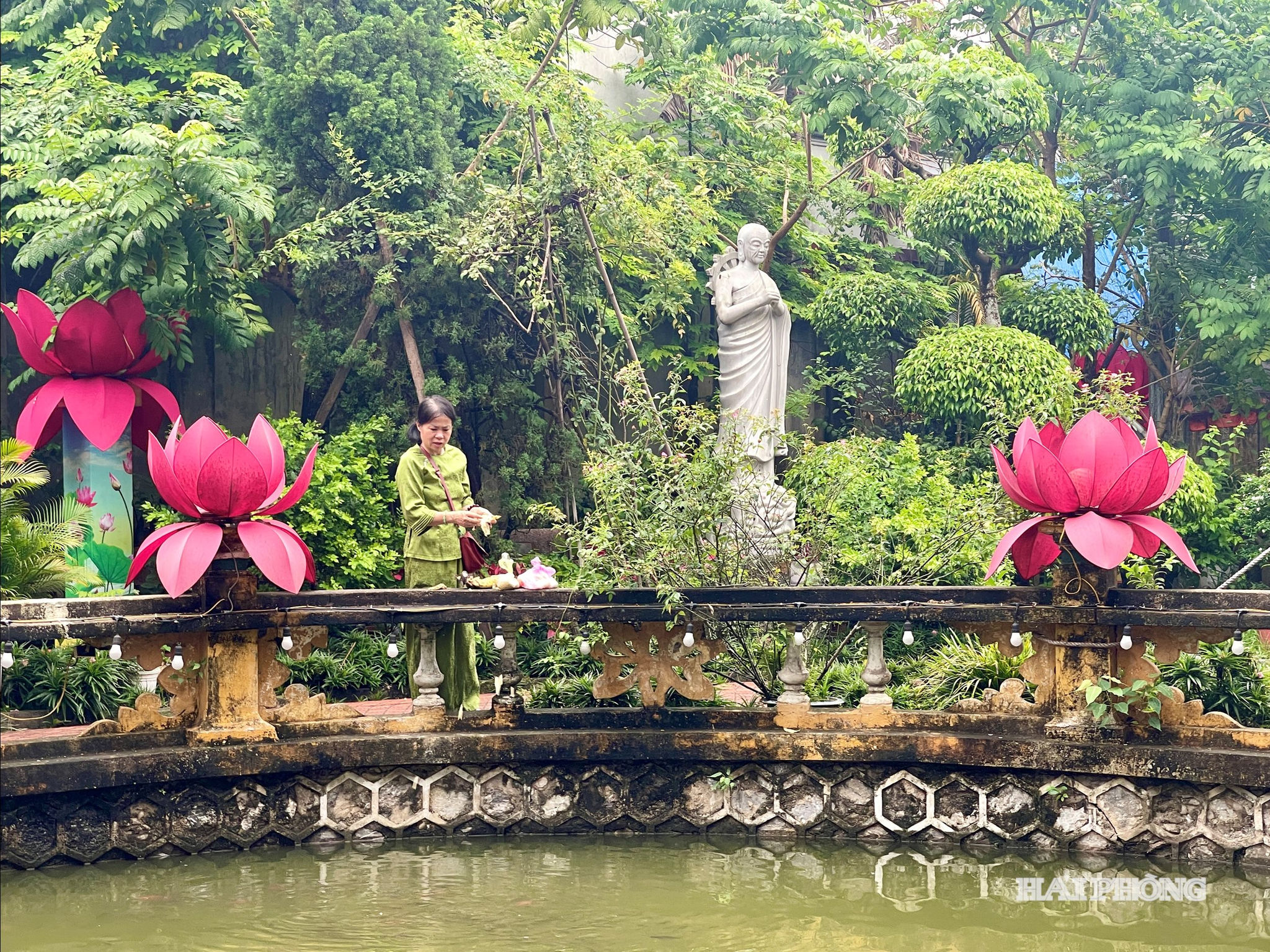
Behind the Main Hall lies the stupa garden, where the memorial stupas of many eminent monks and successive abbots are preserved. Adjacent to it is a statue garden with a tranquil pond, a statue of Shakyamuni Buddha in meditation beneath a Bodhi tree, a statue of Maitreya Buddha, and white stone statues of the Buddha's disciples. The harmonious blend of lush greenery, water features, and traditional architecture creates a peaceful setting, making it an ideal place for visitors to unwind and find tranquility amid the pressures of daily life.
In addition to its architectural heritage, the pagoda preserves numerous valuable artifacts, including bronze bells, stone chimes, bronze incense burners, stone ritual objects, ceramic worship items, and, notably, a copy of the Dirgha Agama Sutra, an important source for the study of the history of Vietnamese Buddhism. These treasured relics stand as enduring testimony to the efforts of generations of monks, nuns, and Buddhist followers to preserve the nation's religious and cultural heritage.
More than just a place of worship, Du Hang Pagoda has been closely associated with many important events in Vietnam's history. In 1926, it hosted a memorial ceremony for patriot Phan Chu Trinh, attended by large numbers of monks, nuns, students, intellectuals, and residents of Hai Phong. Following the August Revolution of 1945, the pagoda became the venue for the inauguration of the Hai Phong National Salvation Buddhist Sangha Association and hosted numerous meetings of revolutionary organizations in preparation for the visit of President Ho Chi Minh to the city.
Throughout the years of resistance, the pagoda opened its doors to shelter revolutionary cadres and provide food and clothing for the resistance forces. Many Buddhist monks also took an active part in the struggle for national independence. In 1986, Du Hang Pagoda was officially recognized as a National Historical and Cultural Relic.
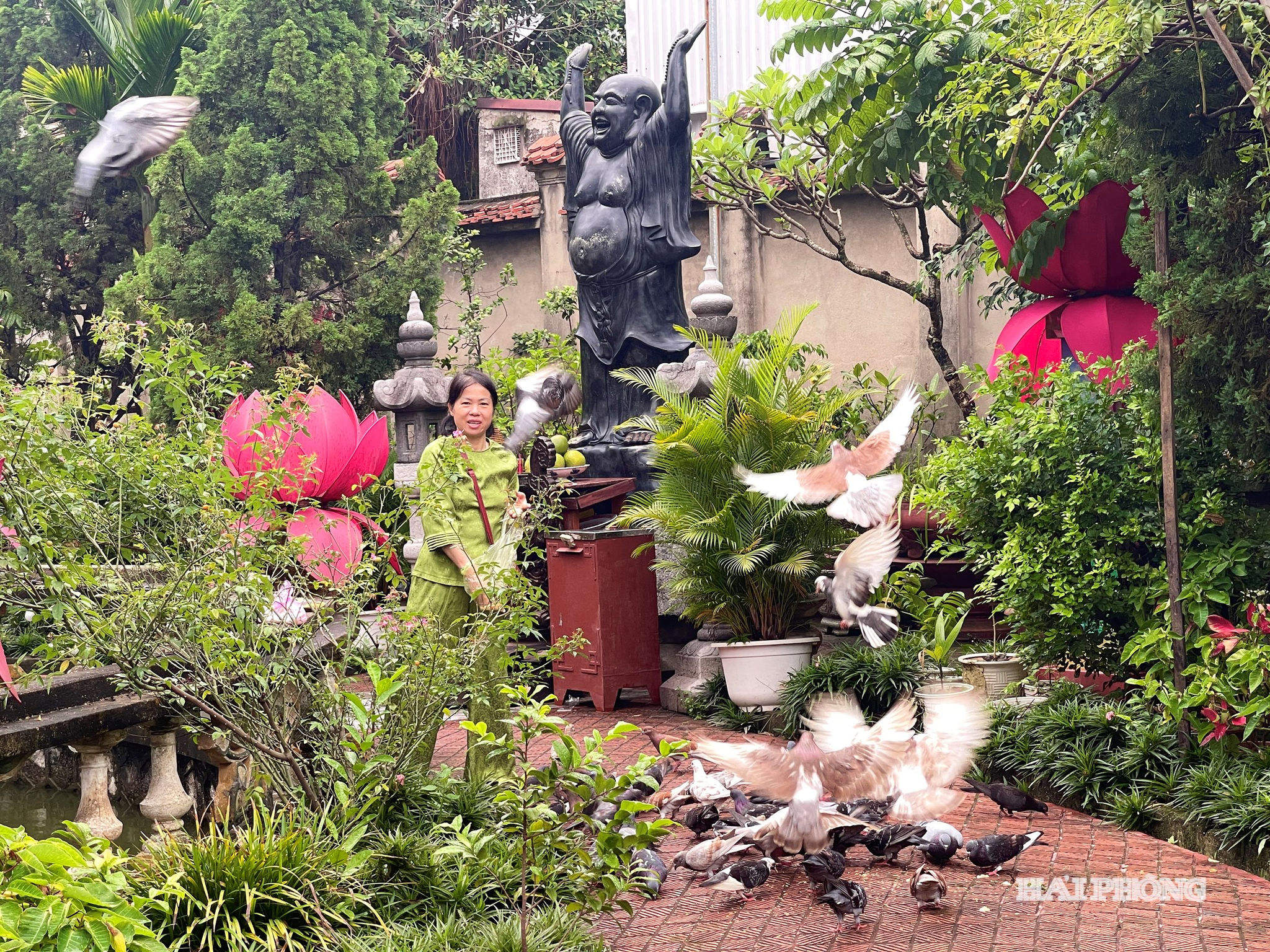
Today, Du Hang Pagoda is not only a spiritual anchor for the people of Hai Phong but also an attractive destination for visitors. Coming here, many people do not only pray for peace and blessings, but also admire architectural and cultural values that have been preserved across centuries.
Amid the rapid development of the Port City, Du Hang Pagoda continues to quietly preserve cultural, historical, and spiritual values accumulated over thousands of years. The pagoda serves as a repository of the memories of Hai Phong’s land and people, allowing every visitor to feel more deeply the cultural richness and depth of the city.
Phuong Linh