
Hai Phong needs a dedicated cruise terminal to unlock its tourism potential
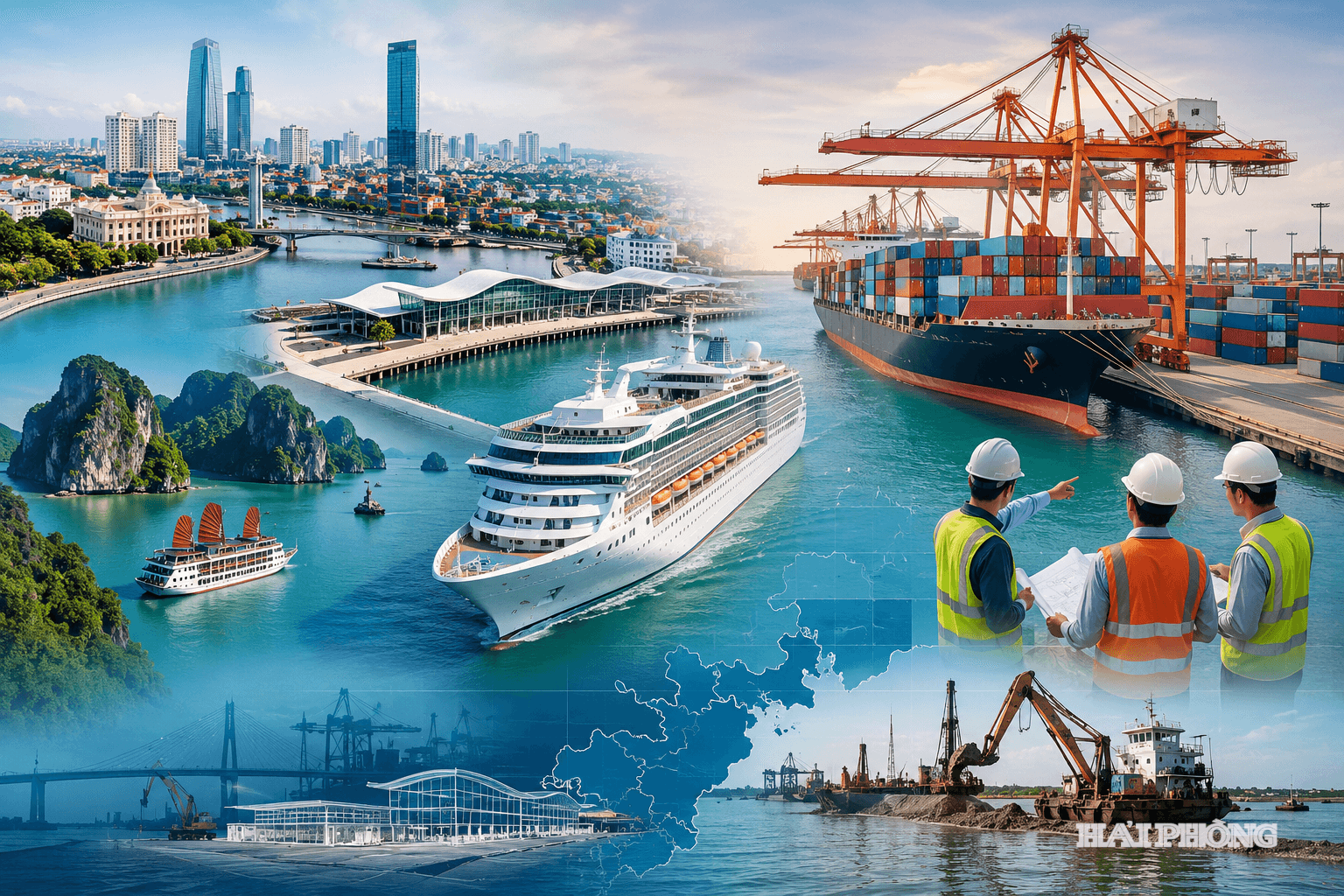
Coastal advantages and its strategic gateway location alone are not enough for Hai Phong to become a leading cruise tourism destination. A dedicated cruise terminal is essential to accommodate the growing number of high-end cruise passengers and unlock the city's full potential.
At the Conference on Promoting Cruise Tourism Products, hosted by the Gia Lai Department of Culture, Sports and Tourism on June 20, the Departments of Culture, Sports and Tourism and Tourism Departments of seven localities—Gia Lai, Hanoi, Hai Phong, Hue, Da Nang, Quang Ninh, and Ho Chi Minh City—signed a memorandum of understanding (MoU) to cooperate in developing cruise tourism products.
Under the agreement, the participating localities will jointly develop inter-regional cruise itineraries, connect maritime routes, and capitalize on each destination's unique strengths. The initiative reflects a new direction for Vietnam's coastal tourism: rather than developing independently, localities will work together to create cruise itineraries capable of competing with regional cruise routes.
The global cruise tourism industry is currently entering a new growth phase. Unlike traditional vacation travelers, cruise passengers typically spend only a short time at each destination but have significantly higher spending power, generating substantial economic value. Although Vietnam boasts more than 3,200 kilometers of coastline and lies along one of the world's busiest international shipping routes, it has largely remained a port of call rather than a true destination on international cruise itineraries.
Against this backdrop, Hai Phong, northern Vietnam's largest maritime gateway, has a significant opportunity to strengthen its position while also facing considerable challenges.
The city enjoys a number of unique advantages. It possesses a modern seaport system with convenient links to Hanoi and the Red River Delta, as well as renowned attractions such as the Cat Ba Archipelago, Lan Ha Bay, Do Son, together with a rich collection of spiritual, historical, architectural, and culinary heritage. From a tourism product perspective, Hai Phong has all the necessary assets to become a key stop on both international cruise itineraries and domestic cruise routes.
However, abundant tourism resources do not automatically translate into a competitive advantage. In northern Vietnam, Quang Ninh has taken the lead with the Ha Long International Cruise Port—Vietnam's first purpose-built international cruise terminal. Strategically located in the heart of the Bai Chay tourism area, the port is capable of accommodating multiple large international cruise ships simultaneously while offering seamless connections to shopping, entertainment, accommodation, and other tourism services, creating a complete visitor experience.
By contrast, Hai Phong has yet to develop a dedicated cruise terminal. International cruise ships currently berth mainly at cargo or multi-purpose ports. As a result, visitors often have to pass through logistics areas filled with containers, tractor-trailers, and cargo-handling operations—an environment that falls short of the expectations associated with premium cruise tourism.
Bridging this gap will not be easy. Unlike Quang Ninh or Quy Nhon, which benefit from naturally deep-water harbors, Hai Phong is located at a river estuary and faces continual sedimentation, requiring substantial investment in dredging and channel maintenance to ensure safe access for large vessels. In 2025, the Hai Phong Port continued implementing dredging and channel expansion projects to maintain its operational capacity.
This also highlights the scale of investment required should the city decide to build a dedicated cruise terminal. Beyond constructing passenger berths and a terminal building, the project would also require synchronized investment in navigation channels, turning basins, transport infrastructure, and supporting tourism services. Such a long-term investment can only deliver sustainable returns if it forms part of a broader regional cruise tourism strategy.
Yet precisely because the challenge is so significant, it demands a long-term vision. The real value of cruise tourism lies not in port fees but in its multiplier effect across the wider tourism economy. Every cruise call generates demand for sightseeing, shopping, dining, cultural performances, and a wide range of other tourism services. If visitors simply come ashore for a few hours before departing, Hai Phong will struggle to fully capitalize on one of the tourism industry's highest-spending visitor segments.
In this context, the newly signed memorandum of understanding carries significance beyond a conventional cooperation agreement. By jointly developing tourism products, linking cruise itineraries, and sharing visitor flows, Hai Phong does not necessarily need to compete directly with Quang Ninh. Instead, the two destinations can complement one another: Quang Ninh can leverage its dedicated cruise terminal and Ha Long Bay, while Hai Phong can distinguish itself through Cat Ba, Lan Ha Bay, its modern port city, and its strategic role as the gateway to the Red River Delta. A compelling cruise itinerary is built on diverse destinations, not on destinations offering the same experiences.
Cruise tourism is ultimately a long-term endeavor that requires both strategic vision and sustained commitment. Regional cooperation has created new opportunities, but to transform those opportunities into lasting competitive advantages, Hai Phong needs to formulate a comprehensive strategy for developing dedicated cruise infrastructure alongside a high-quality tourism service ecosystem. After all, a true "berth" is more than simply a place where ships dock—it is the starting point of memorable experiences that inspire visitors to return to the Port City.
Hai Hau