

Digitalization transforms growing area management
Digital management of growing areas is becoming increasingly important as producers face stricter market requirements and seek to improve the competitiveness of their agricultural products.
Driven by practical needs
In recent years, lychee growers in Hai Phong producing for export have increasingly embraced digital technologies, moving beyond traditional farming methods based largely on experience. Internet-connected smartphones not only help farmers access information on cultivation techniques and pest control but also enable them to manage growing areas through digital platforms and applications.
Pham Van Thach, head of Export Lychee Production Group No. 10 in Thuy Lam Hamlet, Thanh Ha Commune, said export growing areas are subject to strict inspections, close monitoring throughout the production process. Paper-based farm logs are therefore no longer suitable and are gradually being replaced by digital records. Digital record-keeping also improves product traceability, helping build confidence among customers and trading partners.
Most members of the Tan Minh Duc Cooperative in Truong Tan Commune are elderly, but they have adapted quickly to digital technologies.
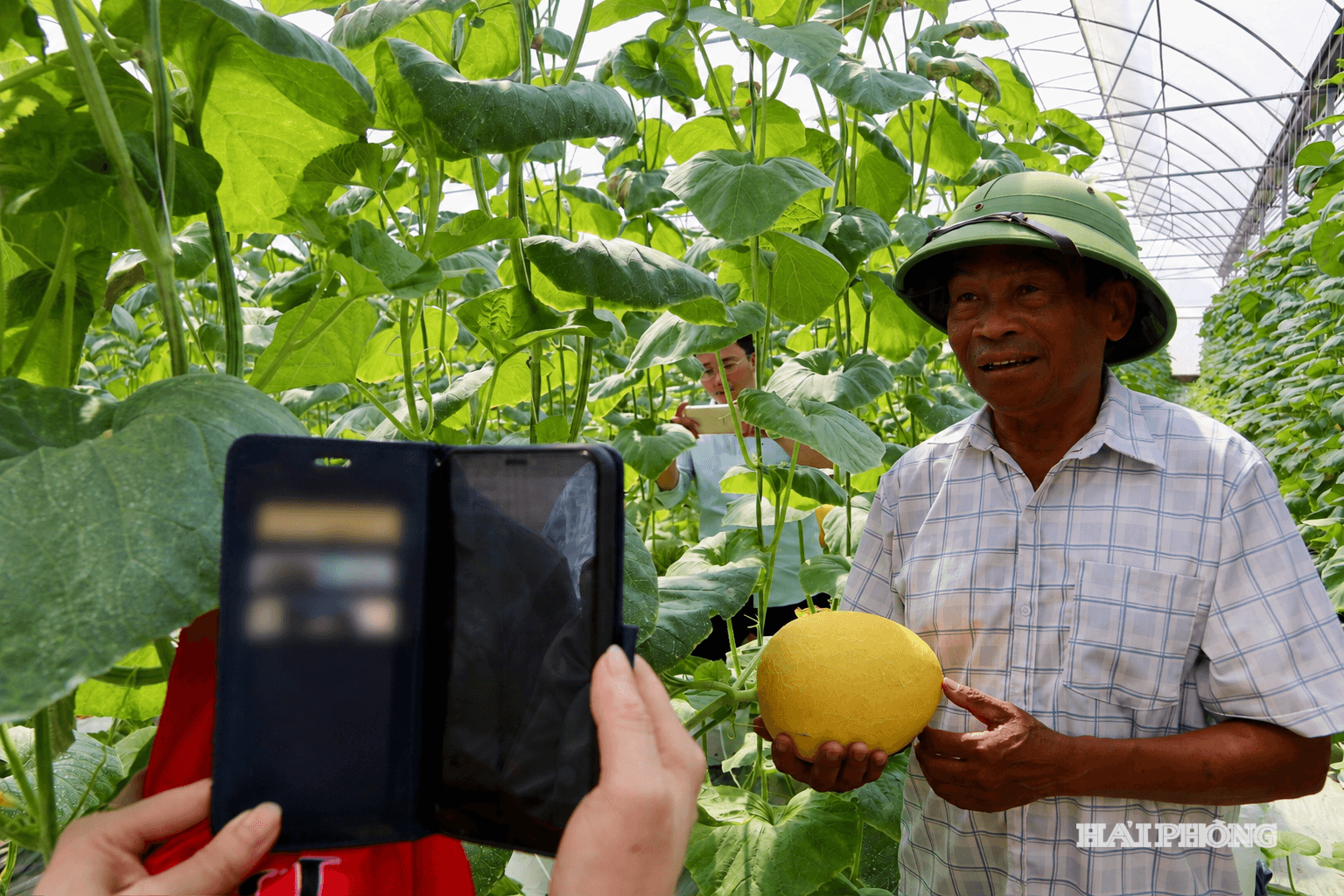
Nguyen Thi Qua, whose family cultivates about 0.86 hectares of greenhouse-grown muskmelons in Nam Cau Hamlet, said high-tech farming has helped her family become more familiar with digital tools. They have invested in an automated drip irrigation system and smart sensors that monitor changes in temperature and humidity inside the greenhouse. Crop growth data are also recorded in electronic farm logs, enabling the system to recommend appropriate cultivation practices.
Building a digital ecosystem for growing areas
Hai Phong has strong potential for agricultural development thanks to its concentrated farming areas, providing a solid foundation for value chain-based agricultural production.
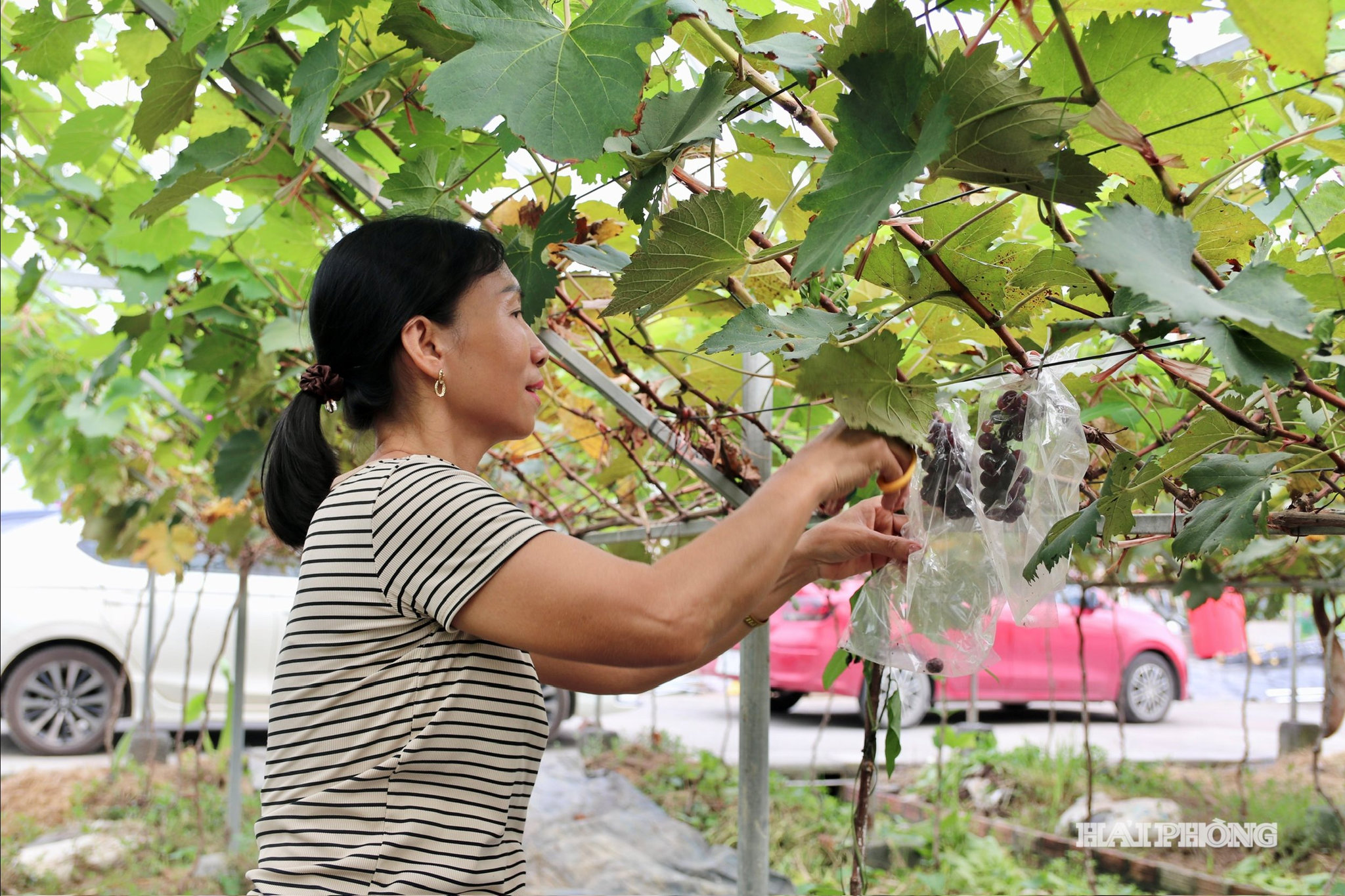
The city has issued 475 growing area codes, including 270 for export markets and 205 for domestic consumption. The management and monitoring of these growing areas are gradually being digitized, strengthening agricultural data connectivity while improving production efficiency and expanding market access.
Pham Thi Xuan, director of the Institute for Sustainable Development and Digital Economy, said Hai Phong has full necessary conditions to build a digital ecosystem for growing areas, supporting the development of digital and smart agriculture. However, she said the city should establish a unified, integrated and interoperable database serving farmers, cooperatives, government agencies, and businesses involved in production, distribution and marketing. Such a system would improve management and enable more effective monitoring of the agricultural value chain from production to consumption.
According to the Center for Innovation and Science and Technology Application under the Hai Phong Department of Science and Technology, the agency is reviewing and digitizing data on growing areas. Priority is being given to developing a centralized database, digital maps of growing areas and electronic farm logs. The data will support production analysis, early warning systems and market assessments, helping guide agricultural development.
Digital technologies not only help reduce the risks associated with seasonal agricultural production and changing market conditions, but also provide a strong foundation for the development of a modern and smarter agricultural sector.
Hai Phong News