
Business support benefits students
Mobilizing investment from businesses in educational facilities and training equipment has become a key driver enabling universities to address emerging challenges and keep pace with rapid technological advancements.
Business partnership with the university
The global maritime industry is undergoing profound changes driven by digital transformation, decarbonization, and the development of green shipping, particularly toward carbon neutrality and the use of alternative energy sources. As a leading institution in maritime education and training, Vietnam Maritime University is continuously striving to improve the quality and effectiveness of its training programs.
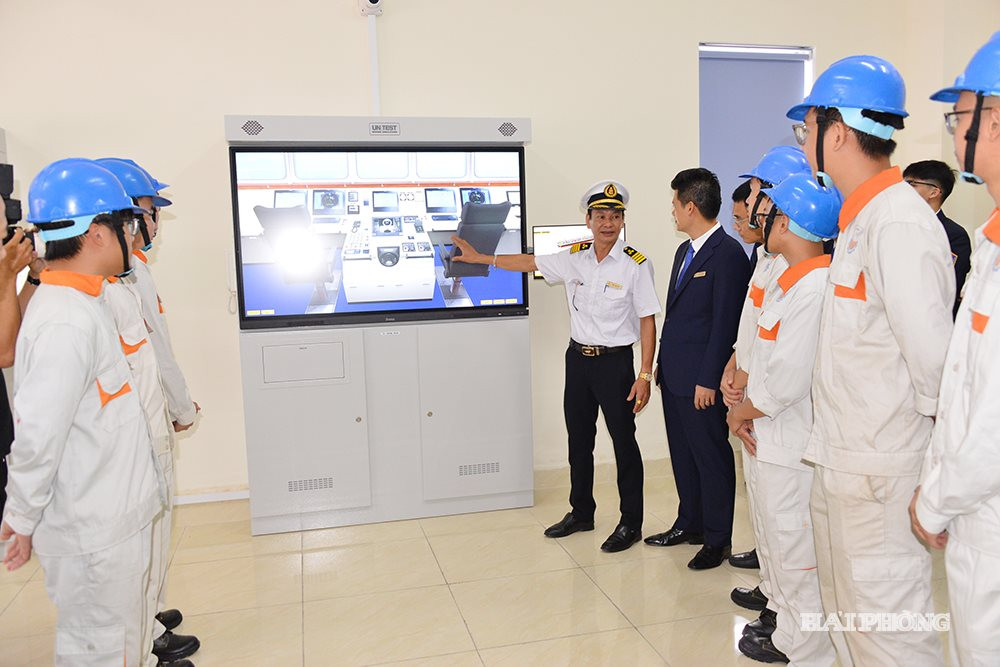
In close cooperation with the university, businesses have provided significant and practical support. Since 2024, following discussions with the university, NS United Kaiun Kaisha identified the need to upgrade the Engine Room Resource Management (ERM) training system to meet the evolving requirements of the modern maritime industry. As a result, the company decided to collaborate with the university to implement this project.
On June 9, the company officially presented the university with a state-of-the-art engine room simulation system. The equipment is capable of simulating advanced propulsion technologies, including LNG-powered engines, dual-fuel engines, and systems developed by leading global manufacturers such as WinGD, MAN, and Wärtsilä. This enables students to experience real operational environments during their studies.
Similarly, leveraging its strengths in technical education, Sao Do University has actively mobilized external resources to give students opportunities to access advanced and modern technologies.
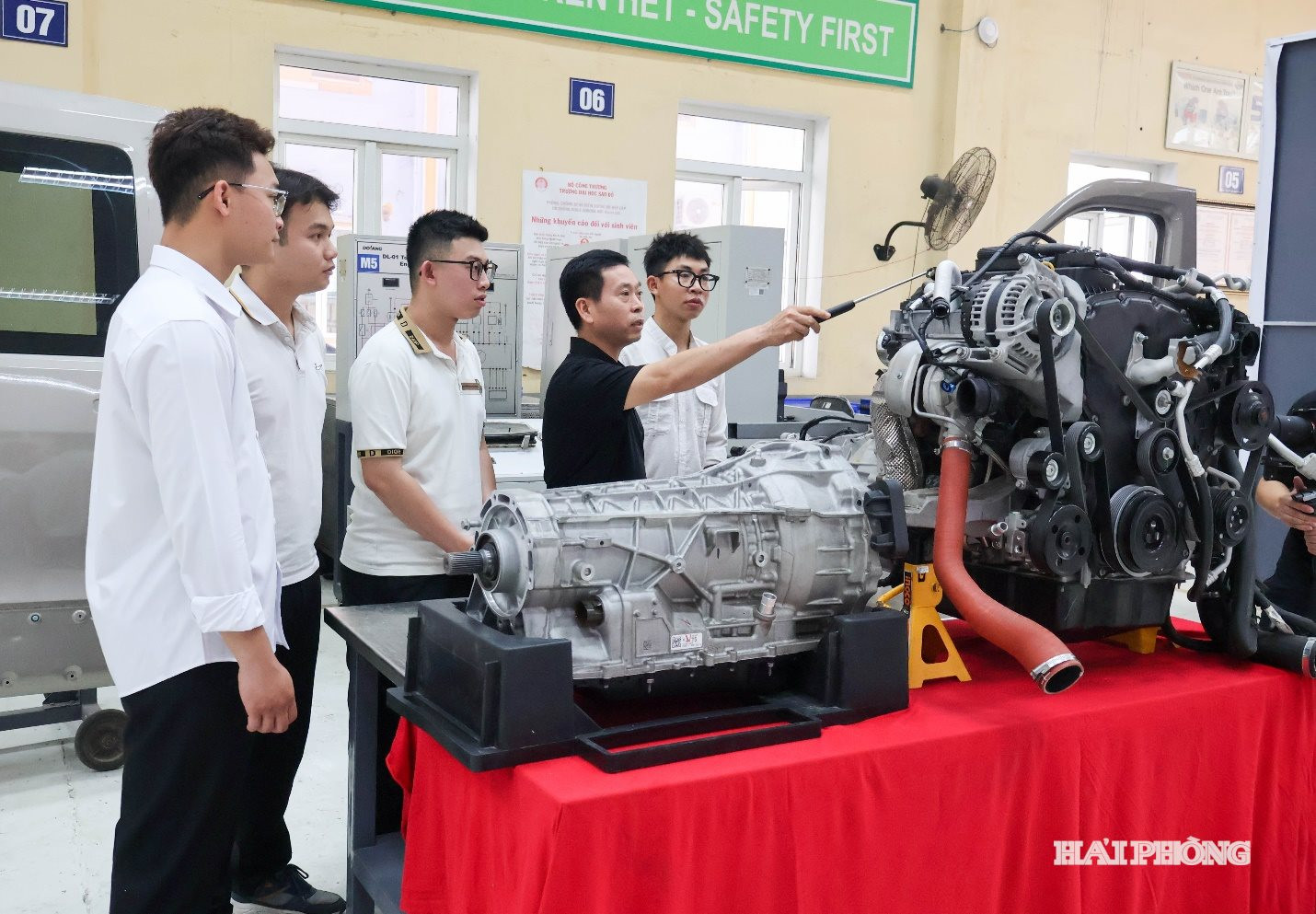
In April 2026, Ford Vietnam Co., Ltd. donated to the university one engine, two gearboxes, and three car doors, which are directly used in practical courses on engines, power transmission, and chassis systems.
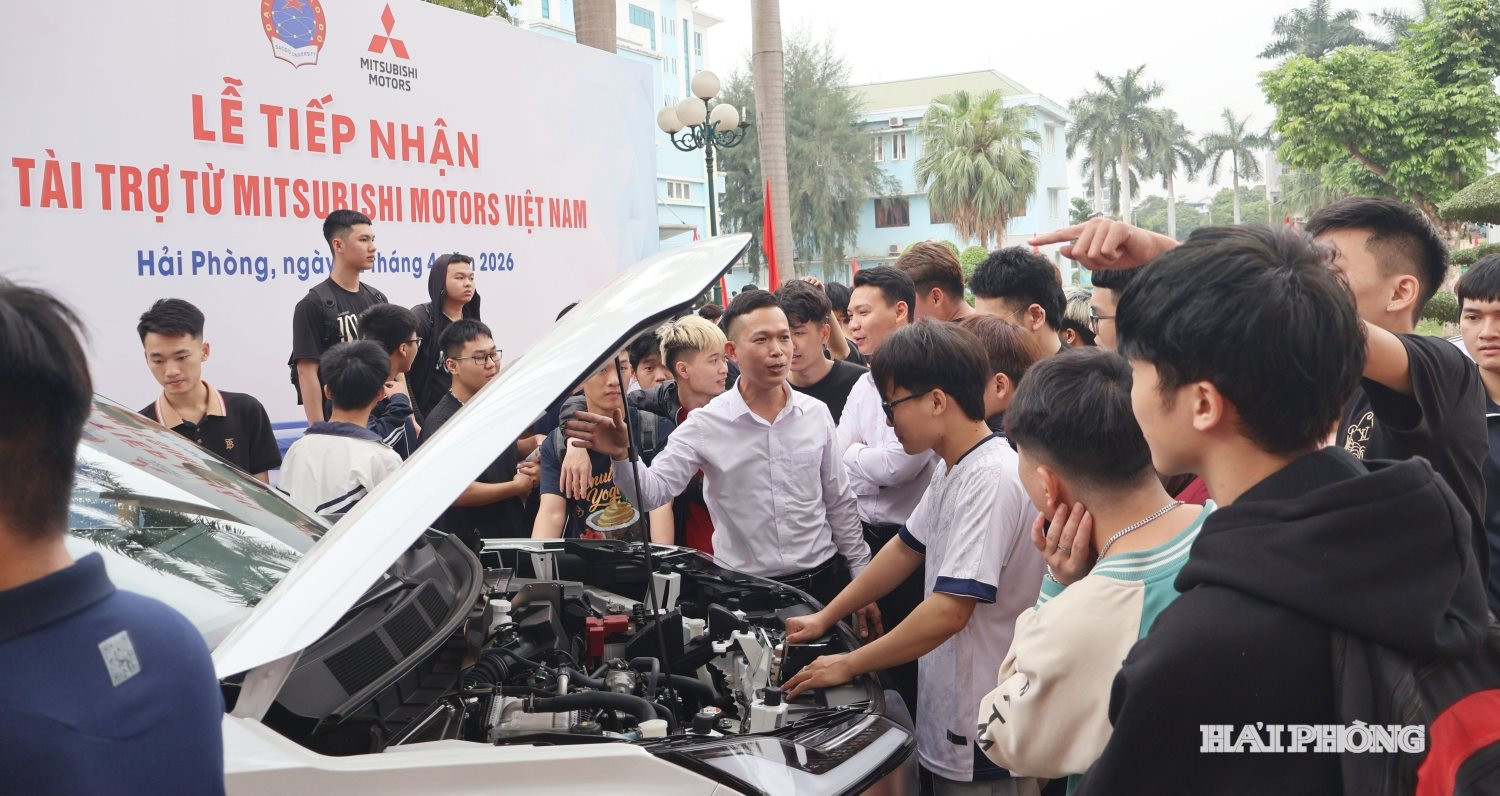
Meanwhile, Mitsubishi Motors Vietnam donated a Mitsubishi Destinator vehicle to support training activities. With its advanced and modern design, the Mitsubishi Destinator allows students to practice dismantling and assembling components and explore the latest automotive technologies. This helps improve hands-on skills, brings students closer to real-world industrial production, and creates a foundation for them to access job positions at enterprises immediately after graduation.
Bridging the gap between training and labor market demands
Meritorious Teacher, PhD Nguyen Thi Kim Nguyen, Rector of Sao Do University, affirmed that equipment donated by organizations and businesses enables students to access modern technologies during their studies. This helps narrow the gap between academic training and labor market needs.
Many graduates are now working at enterprises that cooperate with the university in training activities. This is clear evidence of the effectiveness of university–industry collaboration.
At Hai Duong University, cooperation with enterprises has been implemented in a diverse and comprehensive manner. Businesses not only provide opportunities for students to engage in hands-on practice, internships, and experiential work, but also collaborate with the university in scientific research, technology transfer, and the organization of short-term training and upskilling courses.
In addition, university lecturers are able to deliver certain course content directly at enterprises, while companies participate in curriculum development, teaching, and assessment of learning outcomes to ensure alignment with labor market needs. Both sides also promote the exchange of scientific knowledge, technology, and practical training equipment, contributing to the formation of an integrated training ecosystem closely linked to the labor market and helping students confidently adapt to the working environment after graduation.
In the context of increasingly high demand for workforce quality, the connection between policymakers, educational institutions, and enterprises is considered a key sustainable solution. According to Mr. Inoue Yoshitomo, Director of Brother Industries Vietnam Co., Ltd., universities, colleges, and educational institutions should develop a dual-training model combining classroom learning with on-the-job training at enterprises, extending internship and practical experience periods from three to six months.
At the same time, it is necessary to strengthen foreign language training and soft skills, while also changing the awareness of students and parents according to the “three-on-site” principle: going to the workplace, participating in production, and understanding real-world practices. Alongside this, it is important to modernize equipment, update knowledge, and use software that aligns with enterprise requirements. Businesses also expect the city to soon issue policies that strengthen coordination among stakeholders, aiming to build a sustainable human resource ecosystem for Hai Phong and the country as a whole.
Currently, the system of industrial parks and economic zones is continuously expanding in both scale and quality. By 2030, Hai Phong is expected to have 83 industrial parks, focusing on high technology, green industry, and clean energy. This places significant demands on the workforce in both quantity and quality. Therefore, training institutions need to develop well-structured, forward-looking strategies. The focus should be on comprehensive innovation, from admissions to training organization, particularly the development of high-quality programs closely aligned with the practical needs of businesses and the labor market.
At the same time, it is essential to regularly update information on enterprises’ labor demands and forecast changes in the labor market in order to make comprehensive assessments of both short-term and long-term workforce needs, thereby developing appropriate training and human resource supply plans.
Hoang Xuan