
Hai Phong’s mark on global innovation map
Hai Phong's inclusion in the global rankings published by StartupBlink is clear evidence of the city's breakthroughs in developing its innovation ecosystem and strengthening its innovation capacity.

The result of a decade-long journey
Hai Phong is currently one of only four localities in Vietnam to be included in StartupBlink’s 2026 Global Startup Ecosystem Ranking. Its presence in the ranking is more than symbolic, as StartupBlink is an internationally recognized benchmarking platform that evaluates ecosystems based on multiple criteria, including the number of startups, the quality of support infrastructure, international connectivity, innovation capacity, technology investment, and the commercialization of products and services.
Over the past three consecutive years, Hai Phong has remained among the top-performing localities in Vietnam's Provincial Innovation Index (PII). The city is home to approximately 200 innovative startups, 71 science and technology enterprises, and nearly 9,000 small and medium-sized enterprises that have adopted digital platforms.
Since the beginning of 2026, the city has organized a series of activities related to science and technology, innovation, and digital transformation. From technology forums, investment networking events, and technology transfer initiatives to startup support programs, Hai Phong has demonstrated a strong and coordinated pace of implementation.
Serving as the central coordinating and enabling institution for the local innovation ecosystem, the Hai Phong Innovation and Science & Technology Application Center (ISC) has implemented numerous startup support programs focused on practical business development rather than purely theoretical consulting.
During the 2017–2026 period, ISC supported hundreds of startups and successfully mentored 14 companies in becoming certified science and technology enterprises based on their own intellectual property assets. Among the 45 key startup projects selected for support, 68% remain operational, generating stable revenue and creating employment opportunities.
Another factor contributing to Hai Phong’s growing presence on the global startup map is its strategy of expanding international cooperation. In recent years, the city has actively strengthened ties with technology corporations, research organizations, and international venture capital funds, including Amazon Web Services (AWS), Quest Ventures, and Lotte Ventures.
Notably, in May 2026, the city signed a Memorandum of Understanding with the Korea Institute of Science and Technology (KIST), one of South Korea’s leading multidisciplinary research institutes.
Dr. Sang-Rok Oh, President of KIST, expressed strong confidence in the cooperation potential between the two parties, particularly in environmental technology, advanced materials, smart agriculture, and smart-city technologies. He noted that Hai Phong possesses many advantages that could enable it to become an “open laboratory” for applied innovation models.
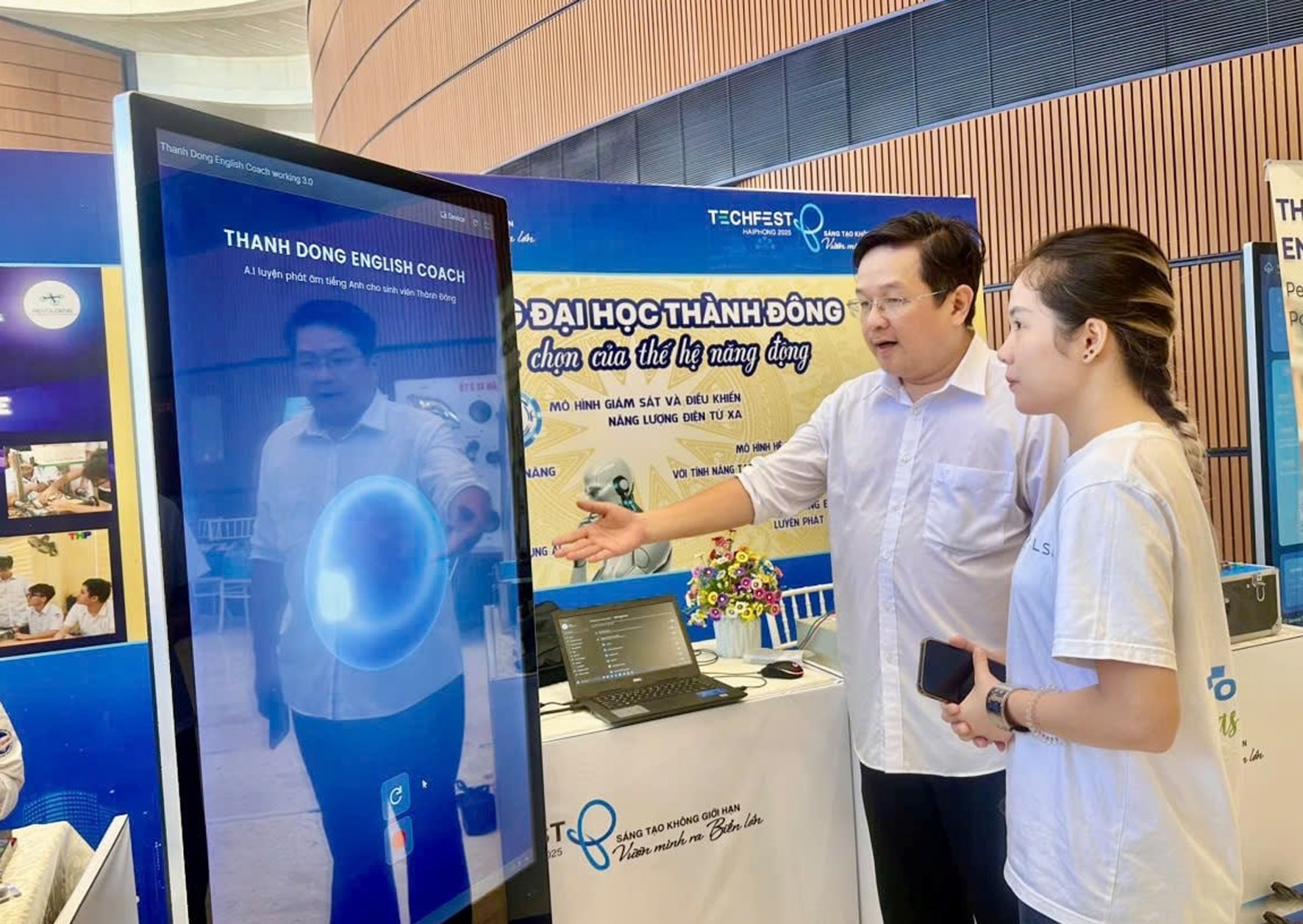
Domestic community-building initiatives have also become increasingly active and professional. Techfest Hai Phong 2025 attracted thousands of participants and served as a major platform for startups, investors, and technology experts to connect and collaborate.
Meanwhile, the weekly “Hai Phong Startup Innovation Café” program has organized 55 sessions, attracting more than 4,000 participants and creating a vibrant space for exchanging ideas, sharing experiences, and exploring collaboration opportunities.
The attractiveness of Hai Phong’s innovation ecosystem in this new era also stems from its institutional advantages.
Through National Assembly Resolution No. 226/2025, Hai Phong is implementing three of the country’s most ambitious policy instruments: Up to five years of corporate and personal income tax exemptions for innovative startup activities, experts, and scientists; the establishment and operation of the Hai Phong Venture Capital Fund; the introduction of a regulatory sandbox mechanism for testing innovative business models and technologies.
According to Mr. Nguyen Cao Thang, Director of the Department of Science and Technology: “This historic achievement did not happen by accident. It reflects years of strategic commitment and a decisive transition from broad-based promotion to tangible outcomes, with technology commercialization as the benchmark for success.”
Aspiration to reach the global top 200
Breaking into the Top 1,000 global startup ecosystems is considered only the beginning of Hai Phong’s long-term innovation strategy. The city’s next goal is to rank among the Top 200 global innovation cities by 2030.
Under Resolution No. 05 of the City Party Committee on developing and implementing selected models of socialism associated with socialist-oriented human development in Hai Phong for the 2026–2030 period and beyond, the concept of an “Innovative City” has been identified as one of the eleven key models to be prioritized.
The city is also pursuing the development of an open innovation ecosystem built upon three pillars: smart infrastructure, progressive institutions, and a highly skilled workforce. Its objectives include maintaining leading positions nationwide in the Provincial Innovation Index (PII) and the Digital Transformation Index (DTI), increasing the proportion of businesses engaged in innovation activities to 30–40%, and boosting the number of patents and innovations generated each year.
At the National Scientific Conference titled “Renewing the National Development Model Based on Science, Technology, Innovation, and Digital Transformation,” held in Hai Phong on May 26, Mr. Le Ngoc Chau, Member of the Party Central Committee, Secretary of the Hai Phong Party Committee, and Head of the city's National Assembly Delegation, emphasized that Hai Phong's ambition extends beyond becoming Vietnam’s leading industrial, seaport, and logistics hub.
He stated that the city is committed to becoming a major growth center driven by knowledge, science and technology, innovation, and digital transformation, while taking a pioneering role in modernizing development models, enhancing governance capacity, and improving the quality of economic growth.
Hong Anh