

Keeping traditional folk games alive
Many schools and organizations in Hai Phong are making efforts to bring traditional folk games back into schools. However, encouraging children to actively participate in these activities remains a challenge.
Generating interest
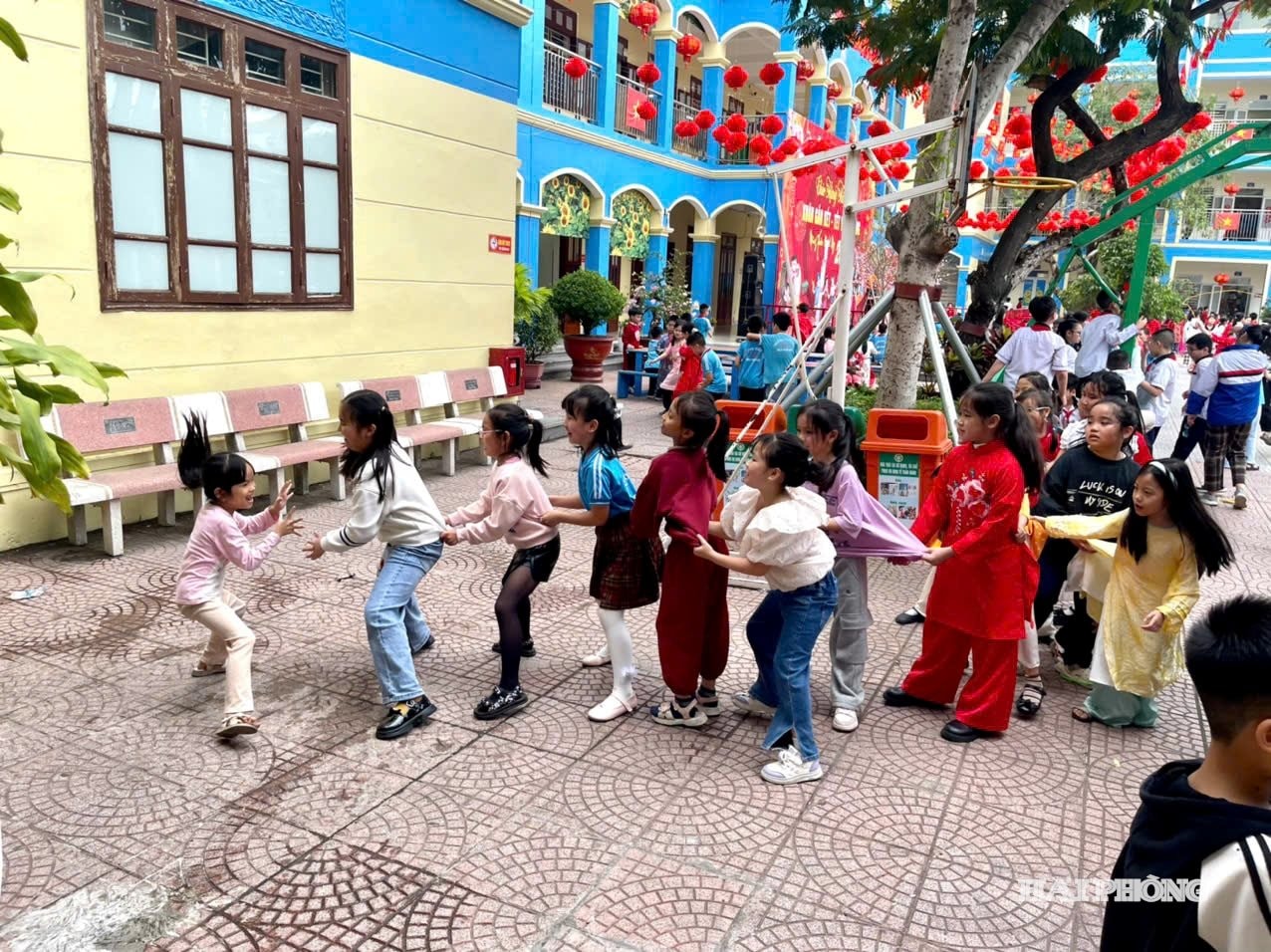
During the summer, welcoming her grandchildren from Hanoi is a great joy for Mrs. Nguyen Thi Tinh, who lives on Dang Hai Street in Hai An Ward. Whenever she has free time, she teaches them to play o an quan, stick-and-ball game and trong nu trong hoa—traditional games that were an important part of the childhood of many generations.
With just a few pebbles, some bamboo sticks, or a small open space, children can enjoy playing together. These games not only bring laughter but also help children develop communication skills, teamwork, and respect for rules. However, Mrs. Tinh has noticed that her grandchildren are usually enthusiastic only when an adult guides them or when many friends join in.
Nguyen Hoang Anh, a student at To Hieu Secondary School in Le Chan Ward, said that he has participated in many traditional folk games during school activities and found them quite enjoyable. Nevertheless, in their free time, he and many of his friends still prefer reading books, watching videos, or using smartphones and computers for entertainment.
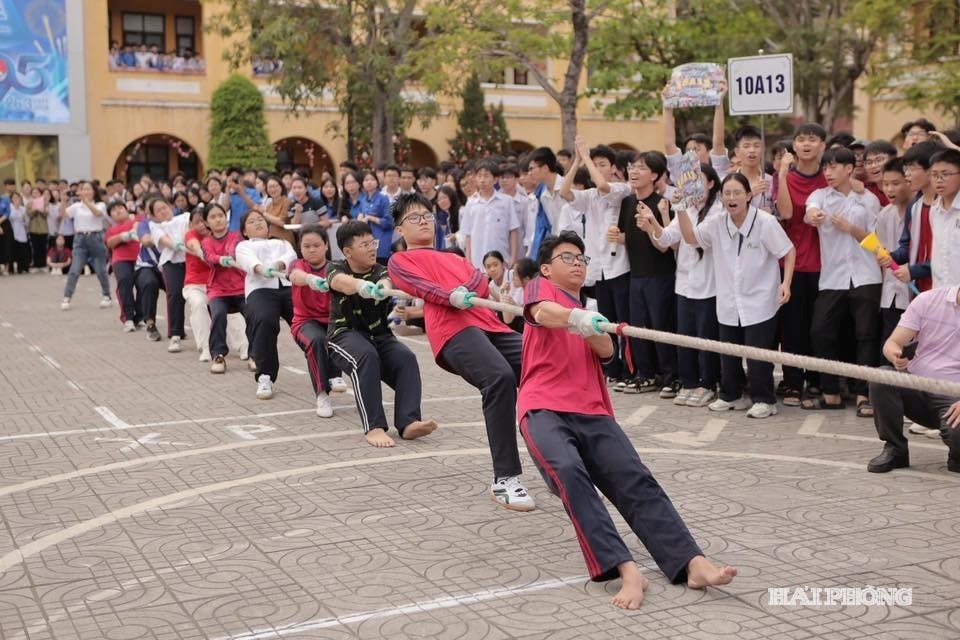
To preserve traditional cultural values, many schools have incorporated folk games into extracurricular activities, cultural festivals, and experiential learning programs. Games such as tug of war, sack racing, and blindfolded catch are often popular among students and attract large numbers of participants.
At Thai Phien High School, the “Phone-Free Recess” initiative has been introduced alongside traditional games such as tug of war, sack racing, and capture the flag. According to Mr. Nguyen Xuan Tien, Secretary of the school’s Youth Union, students respond quite positively whenever these activities are organized, especially team-based games.
Beyond schools, some cafés have also provided o an quan boards and co ca ngua as alternative entertainment options for customers. However, most young people still prefer chatting with friends or using their phones. This suggests that while traditional folk games continue to generate a certain level of interest, they have yet to become a mainstream form of entertainment in modern life.
The need for more community play spaces
The rapid growth of the internet, social media, and digital entertainment platforms has significantly changed children's recreational habits. According to a survey by the United Nations Children's Fund (UNICEF), more than 80% of Vietnamese children aged 12 to 15 use the internet every day, with many spending as much as eight to nine hours online—far exceeding recommended limits. Various surveys also indicate that children spend a considerable amount of time on online activities unrelated to their studies. In addition, the shrinking availability of community spaces has reduced opportunities for children to gather and participate in group games as they once did.
According to Mr. Nguyen Dinh Chinh, Chairman of the Hai Phong Folk Arts Association, traditional folk games originated from the daily work and lives of ordinary people and are closely associated with folk rhymes and songs passed down through generations. Through these games, children develop physical fitness, language abilities, communication skills, teamwork, and creative thinking. Mr. Chinh believes that the greatest value of folk games lies in their ability to connect people. To participate, children must interact directly with one another, cooperate, and solve problems together during play. These are experiences that are difficult to gain through interaction with electronic devices alone.
Looking at current realities, reviving traditional folk games is not only about preserving cultural heritage but also about creating more recreational opportunities for children. Summer, in particular, is a time when many children have ample free time but lack suitable places to play, while risks such as drowning, traffic accidents, and household accidents remain ever-present.
With their advantages of being easy to organize and inexpensive to implement, traditional folk games can serve as an ideal activity in community centers, residential neighborhoods, and school playgrounds. However, for these activities to be sustained rather than appearing only during festivals or extracurricular events, greater cooperation is needed from local authorities, social organizations, and the wider community to create more opportunities for children to participate on a regular basis.
Ha Linh