

Enhancing the value of agricultural products
The application of high technology and the development of large-scale value chains are creating new opportunities for Hai Phong’s agricultural products to increase their value and gradually modernize the agricultural sector.
Billion-value fruit orchards
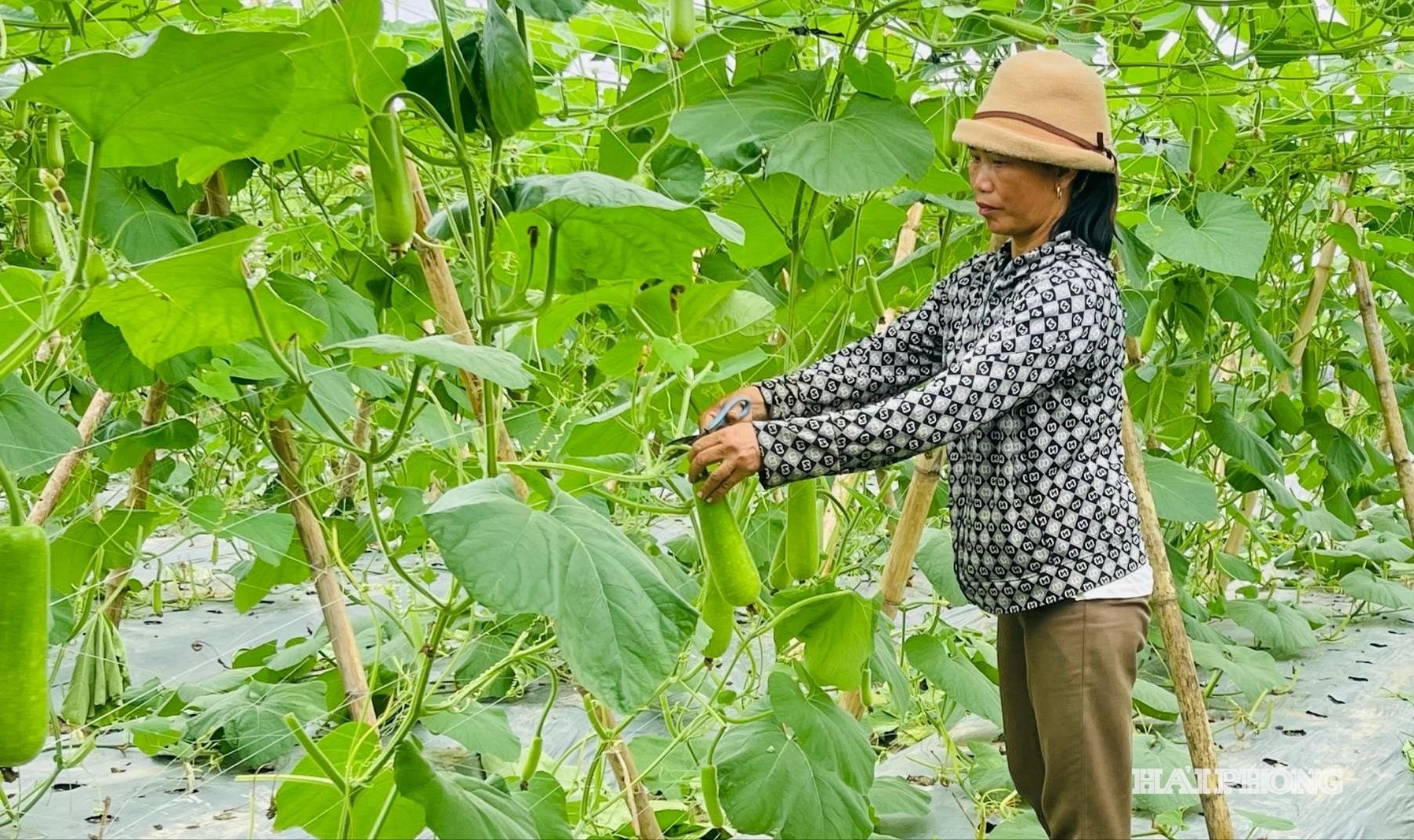
In late May, at a melon-growing area in An Hai Ward, farmer Nguyen Duc Thanh was busy tending a new crop inside a modern greenhouse system. Covering more than 1,300 square meters, the facility is equipped with drip irrigation and automated fertilization systems, allowing Korean oriental melons and Japanese muskmelons to grow uniformly and achieve high productivity. Previously, the land had been used for small-scale traditional farming.
In 2022, Thanh's family invested in high-tech agriculture. Improved control over pests, temperature, and nutrient management has helped reduce production costs by 40–60 percent while significantly enhancing product quality. According to Mr. Thanh, today’s consumers are concerned not only with taste but also with food safety and traceability. By adopting a closed-loop production process, his farm has achieved more consistent quality and gained positive market acceptance.
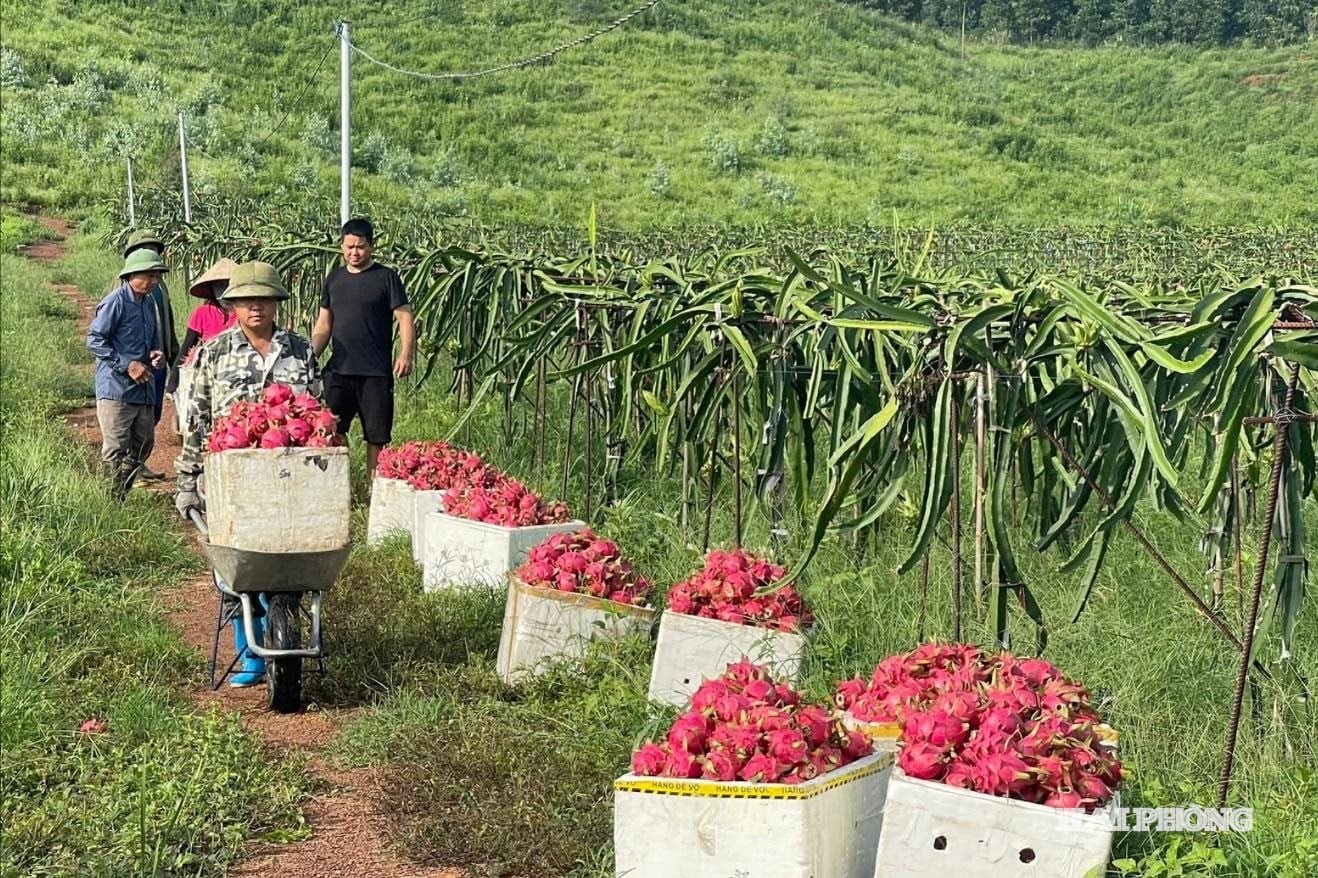
In Nguyen Trai Ward, farmer Hoang Van Toan spent many years cultivating lychee trees, but earnings remained unstable. In late 2019, he converted his entire orchard to red-fleshed dragon fruit production. With approximately 2,160 square meters of dragon fruit, his family now harvests seven to eight crops annually, generating significantly higher income than before.
Mr. Toan believes that the most important factor is changing the production mindset. Farmers must proactively adopt new technologies, from automated irrigation systems to artificial lighting techniques that stimulate off-season fruiting. As a result, dragon fruit from the area is not only sold domestically but is also gradually entering export supply chains.
Many fruit-growing areas across Hai Phong have shifted to production standards such as VietGAP and GlobalGAP. The city currently has more than 28,000 hectares of fruit trees, producing approximately 305,000 tons annually. Numerous lychee, longan, custard apple, banana, guava, and dragon fruit growing areas have been granted planting area codes, adopted traceability labeling systems, and are targeting export markets. In specialized farming zones, production value reaches between VND 300 million and VND 400 million per hectare per year, substantially higher than under traditional cultivation methods.
According to Ms. Luong Thi Kiem, Deputy Director of the Department of Agriculture and Environment, improving agricultural product value begins with improving product quality. The agricultural sector is focusing on controlling pesticide residues, increasing the use of organic fertilizers and biological products, and developing safe production zones.
Building a modern agricultural economy
The development of large-scale commodity agriculture, the application of high technologies, and the establishment of value chains are creating new opportunities for Hai Phong’s agricultural sector. Beyond forming fruit-growing areas that generate hundreds of millions of Vietnamese dong per hectare, the city is gradually shaping a modern agricultural economy.
The transformation taking place in fruit-growing regions is only one aspect of the broader agricultural restructuring underway in Hai Phong. The city has introduced a number of important resolutions and development plans to lay the foundation for large-scale commercial agriculture. Among the most notable are Resolution No. 07, issued by the Standing Committee of the City Party Committee on January 29, 2026, and Decision No. 1102 approving a project to transform agricultural production toward large-scale commodity-based farming for the 2026–2030 period, with a vision to 2045.
Under Project 1102, Hai Phong plans to establish 157 concentrated production zones covering more than 13,400 hectares while attracting 29 investment projects for infrastructure serving agricultural production, processing, and centralized slaughtering facilities. These initiatives are expected to provide the foundation for integrated value chains linking production, processing, and consumption, thereby enhancing the competitiveness of local agricultural products.
Of the more than VND 20.6 trillion planned for investment during the 2026–2030 period, state budget funding accounts for only about 3 percent, with the majority expected to come from businesses and strategic investors. This reflects the city’s determination to mobilize social and private-sector resources for agricultural development.
According to Mr. Bui Van Thang, Director of the Department of Agriculture and Environment, Hai Phong is making a significant shift from an agricultural production mindset to an agricultural economic mindset. Production must be closely aligned with market demand, consumer preferences, and export opportunities rather than focusing solely on output volume.
Hai Phong’s advantages include its concentrated fruit-growing areas and its well-developed seaport and logistics system. With stronger processing capacity and effective brand-building strategies, the city’s agricultural products have significant potential to expand into international markets.
From greenhouse melon farms in An Hai to dragon fruit orchards in Nguyen Trai and custard apple plantations in Luu Kiem and Tran Nhan Tong wards, a new face of Hai Phong agriculture is gradually taking shape. It is an agricultural sector built on value creation, brand development, and sustainable livelihoods for rural communities. As production becomes less fragmented and agricultural products are increasingly defined by quality and brand reputation, Hai Phong’s agriculture will gain greater opportunities to expand its presence in both domestic and international markets.
Tam Phuc