
Strategic infrastructure drives regional growth momentum
Hai Phong is strengthening regional connectivity and gradually affirming its role as a key growth driver for the Red River Delta and the country.
Unlocking regional growth momentum
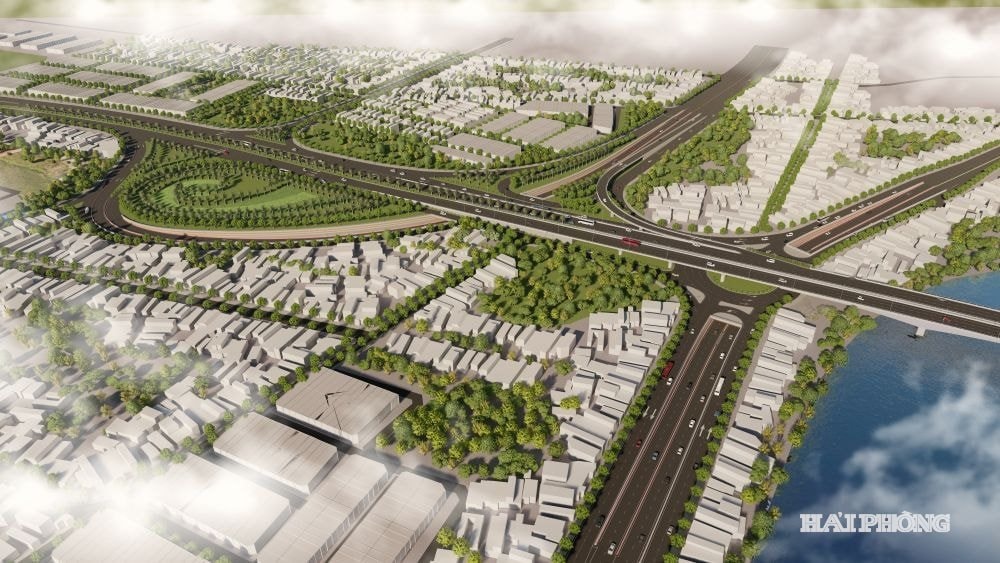
On May 14, the Hai Phong People's Committee simultaneously launched construction on three key transport projects with a combined investment of more than 11 trillion VND. The projects include routes linking National Highway 5 with National Highway 10 through Kien An and Vinh Bao districts, as well as the Van Uc 2 bridge component of the Ninh Binh–Hai Phong expressway project passing through Hai Phong.
The launch of the three projects is expected not only to help complete the city’s transport network and ease pressure on existing national highways, but also to strengthen regional and inter-regional connectivity.
More than three years after the implementation of Resolution No. 30-NQ/TW on socio-economic development and national defense and security in the Red River Delta through 2030, with a vision to 2045, along with other Politburo resolutions, Hai Phong has not only reinforced its role as a regional growth pole through strong socio-economic achievements, but has also left a strong mark in promoting regional connectivity to enhance spillover effects and tap local advantages and potential.
According to Le Anh Quan, Permanent Vice Chairman of the Hai Phong People's Committee, the city sees regional connectivity not only as a development requirement but also as a driver to better tap its strengths and advantages.
The city has proactively coordinated with neighboring localities to invest in strategic transport infrastructure and promote logistics, industrial and service connectivity, thereby creating broader growth momentum for the entire Red River Delta region.
To date, Hai Phong has coordinated investment in a series of major transport projects worth more than 32 trillion VND, including Dong Viet Bridge linking Bac Giang province, the Hoa River Bridge connecting Thai Binh province, Ben Rung and Lai Xuan Bridges connecting Quang Ninh Province, and Hai Hung and Nghin 2 Bridges linking Hung Yen Province.
The city is also actively participating in national strategic infrastructure projects, committing nearly 11 trillion VND to the Lao Cai–Hanoi–Hai Phong railway project and about 3.8 trillion VND to the Ninh Binh–Hai Phong expressway project. Alongside infrastructure investment, Hai Phong is one of three localities to complete planning adjustments on schedule in line with central government requirements, laying the foundation for synchronizing regional, sectoral and local planning.
.jpg)
Strengthening regional links and growth momentum
Under the adjusted Red River Delta regional plan for 2021–2030 with a vision to 2050, Hai Phong is expected to become a leading industrial, service and logistics growth pole in northern Vietnam, playing a pioneering role in high-tech industries, manufacturing, supporting industries and international port services.
Hai Phong serves as an international trade gateway for both the region and the country, associated with Lach Huyen deep-water port and the Lao Cai–Hanoi–Hai Phong–Quang Ninh economic corridor, while also developing into a modern logistics, energy and marine economic hub. This means Hai Phong is positioned not only to develop itself but also but also to serve as a growth driver for northern Vietnam.
Based on these development orientations, the city has translated them into specific targets, tasks and solutions. Among them is its commitment to becoming a modern, civilized, ecological and livable industrial port city while reinforcing its position as a center for marine economy, logistics and high-tech industries.
To realize these goals, Hai Phong continues to prioritize regional connectivity, proactively coordinating with localities across the Red River Delta, centrally-run cities, northern Vietnam and the country as a whole, while reinforcing its role as a growth pole in the Hanoi–Hai Phong–Quang Ninh economic triangle and coastal economic corridors.
The city plans to develop synchronized and modern infrastructure, including studying a transport link between Gia Binh Airport and Lach Huyen Port, completing coastal roads and routes connecting seaports, economic zones, industrial parks and neighboring localities; upgrading inland waterway ports and waterways linking Hai Phong with Quang Ninh, Hanoi and northern delta and midland provinces; and developing coastal and river-sea transport connecting Do Son, Cat Ba, Ha Long Bay and major river estuaries.
Hai Phong also aims to improve the operational capacity of the Hanoi–Hai Phong railway while coordinating implementation of the Lao Cai–Hanoi–Hai Phong, Yen Vien–Pha Lai–Ha Long–Cai Lan and Kep–Ha Long railway projects to strengthen connectivity between the Vietnam–China economic corridor and Hai Phong’s seaport system. At the same time, the city is promoting tourism and cultural connectivity.
However, alongside local efforts, Hai Phong said stronger and more synchronized regional coordination mechanisms from the central government are needed, particularly in decentralization and resource allocation for strategic inter-regional infrastructure projects.
With strong political determination and an open, proactive development mindset, Hai Phong is gradually affirming its role as a major growth pole of the Red River Delta.
Beyond driving local development, the city is also contributing to more substantive and effective regional connectivity, opening up new development space for northern Vietnam and the country as a whole.
Hai Phong News