

Vietnam passes resolution on 2026-2030 socio-economic development plan
National Assembly Chairman Tran Thanh Man has signed Resolution No. 25/2026/QH16 on the 2026-2030 socio-economic development plan.
Under the resolution, the National Assembly set an overall goal of achieving rapid and sustainable development, striving for average GDP growth of at least 10% per year while maintaining macroeconomic stability, controlling inflation and ensuring major economic balances, alongside improving living standards.
Vietnam aims by 2030 to become a developing country with modern industry and upper-middle income, while ranking among the world’s top 30 economies by GDP.
The resolution also focuses on building modern and sustainable development institutions and synchronized infrastructure networks, while improving science, technology, innovation, digital transformation and workforce quality.
It also calls for promoting Vietnamese culture and people, protecting the environment, adapting to climate change, ensuring democracy, equality, discipline and social safety, strengthening national defense and security, and enhancing Vietnam’s international position and prestige.
Key socio-economic targets include GDP per capita reaching $8,500 by 2030 and annual growth of 11-12% in the Index of Industrial Production (IIP).
Localization rates in several key industries are targeted at 40-45% by 2030, while Vietnam aims to rank among the top three ASEAN countries in the Competitive Industrial Performance (CIP) Index.
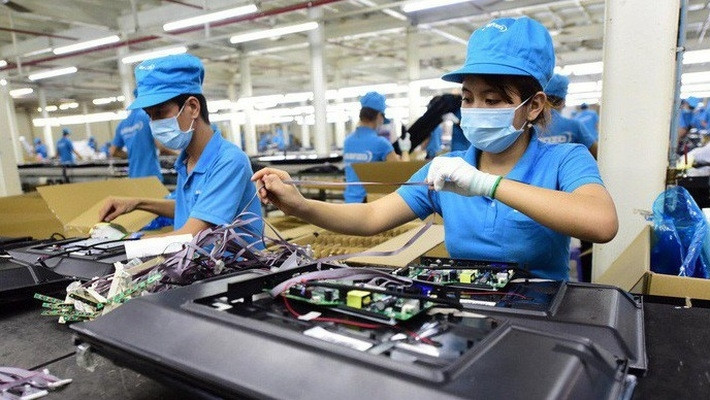
The share of manufacturing and processing industries in GDP is targeted at 28% by 2030, while international tourist arrivals are expected at 45-50 million.
The proportion of trained workers with degrees or certificates is targeted at 35-40%, while the multidimensional poverty rate is expected to decline by 1-1.5 percentage points annually. Vietnam also aims to raise its Human Development Index (HDI) to 0.8.
Key tasks and measures include improving development institutions to create growth breakthroughs, transforming the growth model, restructuring sectors and industries, and developing business sectors and new economic models.
The resolution also calls for promoting growth while maintaining macroeconomic stability, controlling inflation, ensuring major economic balances and preventing economic crises, alongside diversifying supply chains and capital channels.
Other priorities include promoting science, technology, innovation and digital transformation; developing an advanced Vietnamese culture rooted in national identity; modernizing the education system; improving training quality; attracting talent; developing synchronized and modern infrastructure; promoting urbanization and regional connectivity; ensuring sustainable social development and social welfare; protecting natural resources and the environment; and adapting to climate change.
Vietnam will also continue strengthening national defense and security, safeguarding national sovereignty, and pursuing an independent foreign policy focused on peace, friendship, cooperation, development, diversification and multilateralization.
The resolution stressed the need to reform governance and implementation to achieve “double-digit” economic growth, while strengthening communications and public outreach to foster social consensus.
Hai Phong News