
Vietnam–Japan cultural exchange expands cooperation opportunities across sectors
In recent years, cultural exchange between Hai Phong and Japanese partners has helped enhance mutual understanding and laid a foundation for promoting cooperation across multiple fields.
From experience to deeper connection
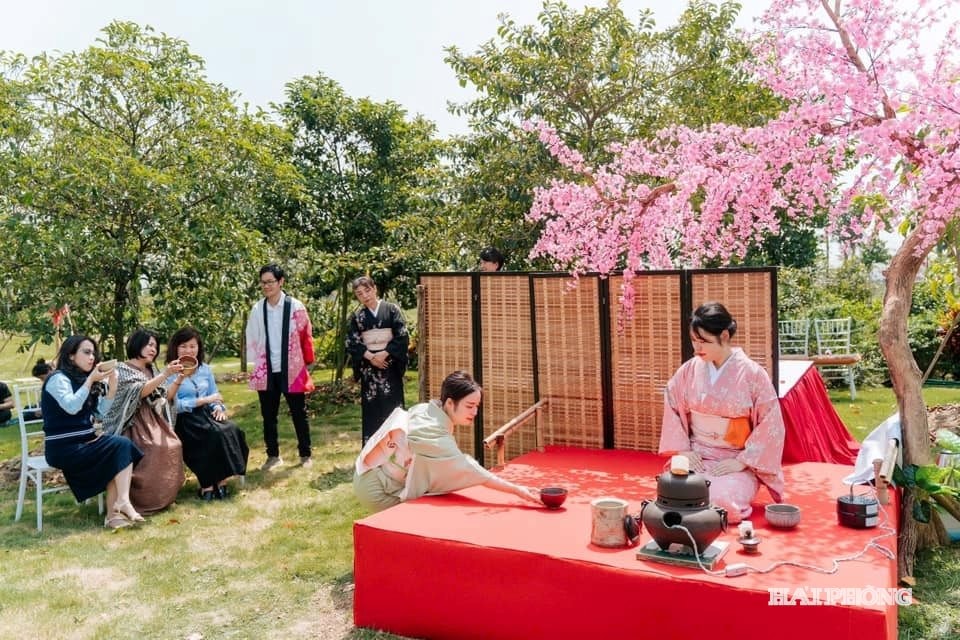
At the Vietnam–Japan Cultural Exchange Festival Hai Phong – Nam Cau Kien 2026, a “miniature Japan” was recreated within an industrial park through a Hanami-themed space. Here, visitors could admire cherry blossoms, experience the tea ceremony (Chanoyu), and fully immerse themselves in the culture of flower appreciation associated with the Japanese philosophy of slow and refined living.
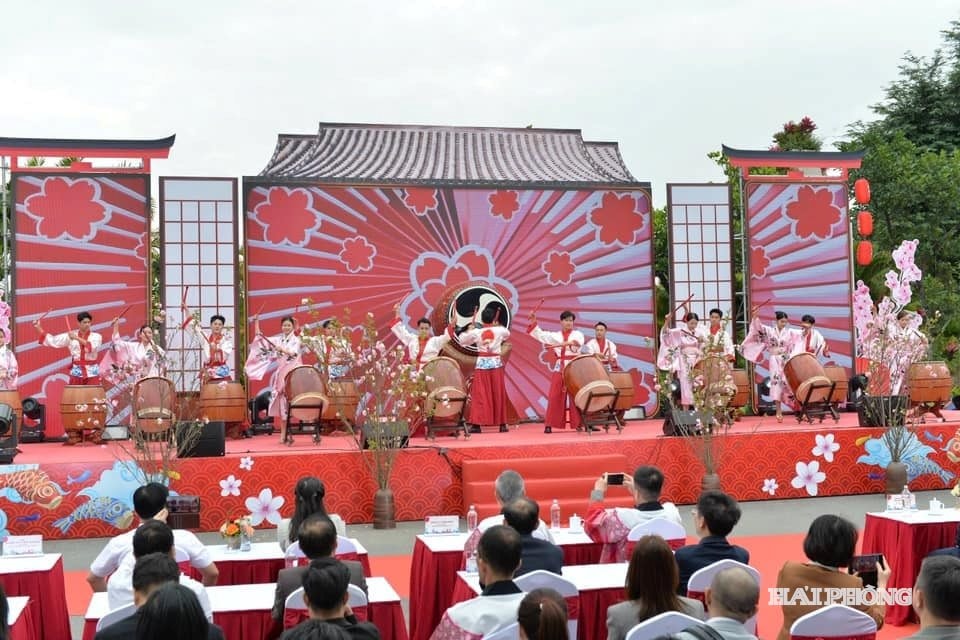
As one of many Hai Phong residents passionate about Japanese culture, Ms. Nguyen Bich Ngoc from Hong Bang Ward shared: “Previously, I only knew Japan through films. This time, with a part of its unique culture recreated right here in Hai Phong, participants can truly touch and experience it firsthand. Standing under cherry blossoms, enjoying the tea ceremony, listening to Taiko drums—it all feels very authentic, intimate, and captivating.”
In another area, the “Cool Japan” youth culture zone attracted a large number of students with manga, anime, and cosplay—reflecting the strong influence of Japanese pop culture on Hai Phong’s younger generation. Student Do Khanh Linh from Hung Vuong Primary School (Hong Bang Ward), excitedly shared: “I enjoyed watching the performances and joining the dances. The space is beautiful, with many fun activities that help me learn more about Japanese culture.”
This is not the first time Hai Phong residents have experienced distinctive Japanese cultural spaces in the port city. According to Mr. Pham Hong Diep, COB of SHINEC JSC, this is the second year the Vietnam–Japan Cultural Exchange Festival has been held in Nam Cau Kien. Through the event, the organizers aim to strengthen connections between business communities of the two countries, while promoting cultural values, cooperation, and sustainable development between Vietnam and Japan.
Beyond direct experiences at the festival, Vietnam–Japan cultural exchange activities in Hai Phong have also been expanded through academic and language platforms. Notably, the Japanese Speech Contest in Hai Phong has become a highlight over the past decade. More than just a language competition, it provides opportunities for students, university learners, and workers to express perspectives and share their understanding of Japanese culture and people, thereby strengthening mutual connection and understanding between the two nations.
Vu Chau Bao An, an 8th-grade student at Luong Khanh Thien Secondary School (Phu Lien Ward), shared: “The contest not only helps me improve my Japanese skills but also deepens my understanding of Japanese culture and people. It makes learning Japanese more enjoyable.”
Sharing the same view, Ms. Bui Nhu Quynh from FUJIFILM Manufacturing Hai Phong said: “Working long-term in a Japanese corporate environment has helped me better understand workplace culture, especially discipline, meticulousness, and responsibility. When applied appropriately, these factors improve work efficiency and foster a more professional mindset.”
Nurturing long-term relations
Japan has long been one of Vietnam’s key partners, particularly for Hai Phong. A large number of Japanese enterprises are currently investing in the city, with more than 200 projects underway. In practice, many Japanese companies in Hai Phong prioritize recruiting workers who have a foundation in the Japanese language and an understanding of corporate culture. This creates a “closed loop”: cultural exchange – mutual understanding – qualified human resources – sustainable cooperation.
Conversely, cooperation programs also help “nurture” cultural exchange through scholarships, student exchanges, and skills training. This demonstrates that Hai Phong is on the right track by not treating cultural exchange as a secondary activity. In the context of competition for investment attraction, this serves as a “soft advantage” with long-term impact.
Notably, cooperation between Hai Phong and Japanese localities, organizations, and businesses has been expanding strongly across various fields, including investment, trade, education and training, culture, and people-to-people exchange. Efforts to promote cooperation are driven not only by local authorities and government agencies but also by the active participation of the business community and social organizations.
Highly appreciating the initiative and partnership of SHINEC JSC in organizing the festival at Nam Cau Kien Ecological Industrial Park, Ms. Tran Thi Quynh Trang, Director of the Department of Foreign Affairs, stated that a pioneering industrial park creating an international cultural exchange space within a production zone not only reflects a vision for sustainable development but also helps position Nam Cau Kien as a new “hub for cultural exchange and international cooperation” in Hai Phong. This also serves as a vivid example of how businesses can accompany local authorities in people-to-people diplomacy and in strengthening Vietnam–Japan friendship.
Mr. Hiromatsu Mitsutaka, Third Secretary of the Embassy of Japan, commented that Hai Phong is one of the localities with dynamic cooperation with Japan, not only in investment but also in education, healthcare, human resource development, and especially cultural exchange. This forms a solid foundation for both sides to further expand practical and effective cooperation, while reinforcing the Vietnam–Japan friendship and deepening ties in the years ahead.
Bui Hanh