

Addressing human resource issue in industrial parks and economic zones
Hai Phong City is stepping up connections between training institutions and enterprises, aiming to build a higher-quality workforce.

Growing demand from practical needs
Alongside sustained high economic growth, the network of industrial parks and economic zones in Hai Phong continues to expand in both scale and quality. This area has become a key driver attracting large inflows of investment, especially in electronics, machinery, supporting industries, logistics, and related sectors.
At the same time, pressure on the labor supply has grown increasingly evident.
According to the Hai Phong Economic Zone Authority, there are now nearly 1,400 enterprises operating in the city’s industrial parks and economic zones, employing more than 360,000 workers. The latest survey shows that recruitment demand has reached over 35,000 workers, concentrated in electronics, machinery, textiles, garment, footwear, and leather industries. These figures highlight the rapid pace of production expansion and underscore the significant strain on the labor market.
Vision to 2030, Hai Phong plans to have 83 industrial zones focusing on high‑tech, green industry, and clean energy. This sets major requirements for the workforce in terms of quantity, quality, and occupational structure.
In this context, the labor‑supply challenge cannot be solved merely by expanding training capacity; it requires close collaboration between training institutions and enterprises, so as to narrow the gap between education and employment while timely meeting the development needs of industrial parks and economic zones.
Linking labor from practical experience
Responding to the urgent demands of the labor market, Hai Phong is intensifying practice‑oriented links between training institutions and enterprises. The 2026 Job for enterprises in industrial and economic zones, jointly organized by the Hai Phong Economic Zone Authority and the Department of Education and Training, has provided a practical solution, directly connecting labor supply and demand.
From the start of the event, the fair attracted more than 200 enterprises, nearly 20 training institutions, and over 2,500 students. The booths also attracted large crowds seeking information and holding direct discussions with recruiters, reflecting strong demand for job‑market connection and career orientation.
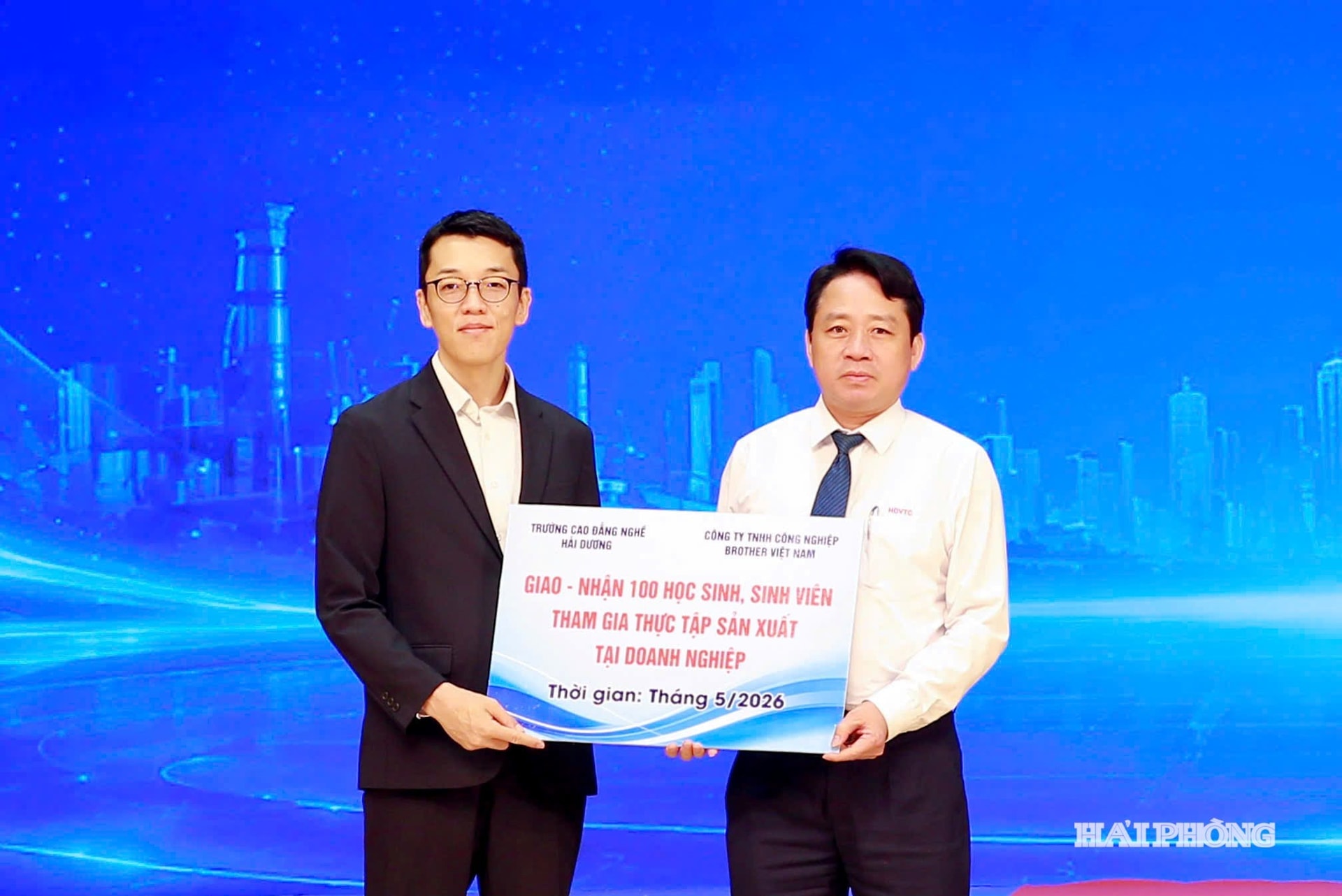
More than 70 memoranda of understanding were signed, and 300 students were immediately accepted for internships at enterprises right after the fair.
At the fair, suggestions from enterprises and training institutions not only pointed out shortcomings in training work but also proposed specific measures to strengthen school‑enterprise collaboration and improve the quality of human resources.
Hai Phong News