

Dong Quan Communal House
Dong Quan Communal House in Vinh Thuan Commune (Hai Phong) has a long history and is dedicated to Pham Viet Kinh, a distinguished mandarin of the Mac Dynasty.
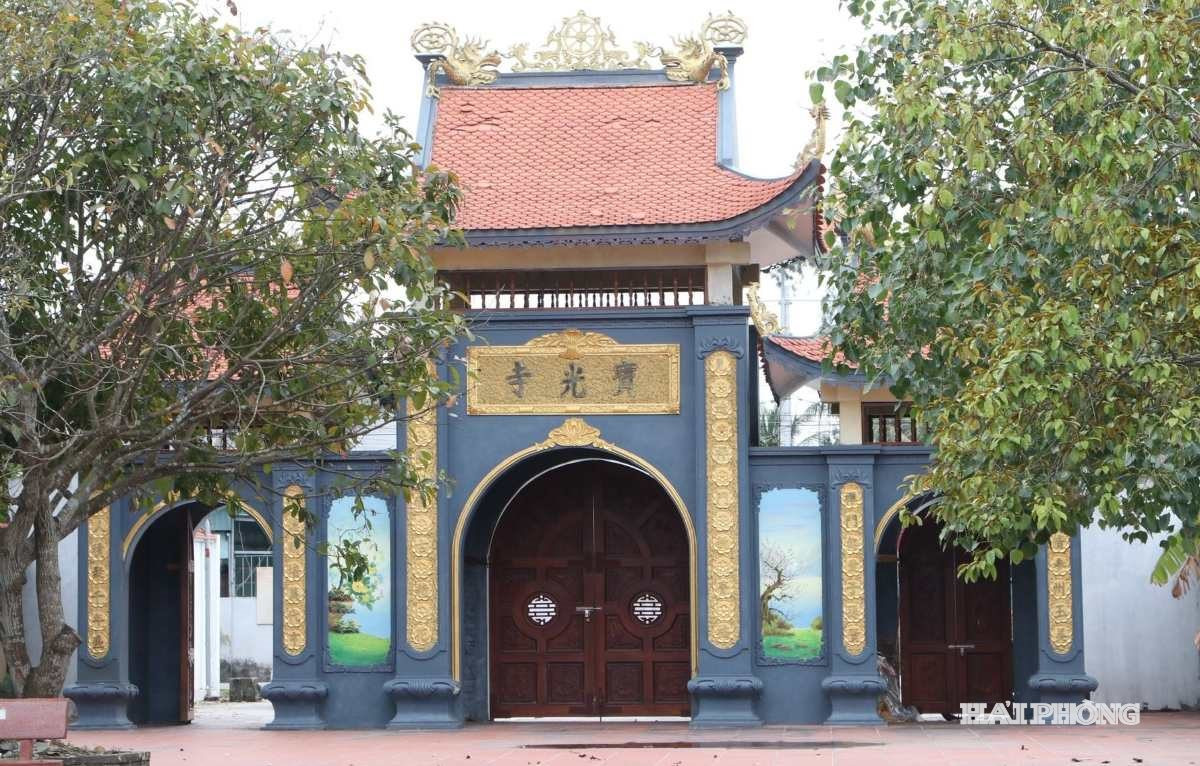
A communal house associated with a distinguished mandarin
The name Dong Quan Communal House is closely tied to the historical change of the village’s name. Around the mid-16th century, Dong Quan Village was originally called Gian Quan. After Pham Viet Kinh became an official under the Mac Dynasty and was granted the title Ky Quan Cong, he brought his wealth and privileges back to build pagodas and shared the benefits with the villagers. From then on, the village was renamed Dong Quan, meaning “sharing the official’s fortune.”
Dong Quan Communal House worships two deities: Thai Bao Dong Quan Cong Pham Phu Quan (Pham Viet Kinh, a local celebrity who served under both the Mac Dynasty and the Later Le Dynasty) and Trinh Khiet Thuan Can Linh Ung Phu Nhan. There is also an altar dedicated to Luong Quan Cong Pham Viet Trung, the son of Pham Viet Kinh.
According to Dai Viet Su Ky Toan Thu (1697), Volume XVIII (translated and published by the Vietnam Academy of Social Sciences in 1993, pp. 625, 628): “Pham Viet Kinh, titled Ky Quan Cong under the Mac, later submitted to the royal court and was granted the title Dong Quan Cong”; and “Previously, Pham Viet Kinh of Tu Ky District followed the court and was assigned troops and people in Chau Xuyet, Hoang Hoa District to join military campaigns…”.
The stele inscription Bao Quang Tu Chung Bi Ky (1578) also records his contributions: “In Dong Quan Village, Tu Ky District, Ha Hong Prefecture stands a renowned pagoda—Bao Quang Pagoda. Within it hangs a great bell—Bao Quang Bell. Who built the pagoda? Who completed the casting of the bell? It was Ky Quan Cong, Left Commander-in-Chief of the Nam Army, honored with great favor by the Queen Mother.”
Thus, Pham Viet Kinh, a local native, first served the Mac Dynasty and was granted the title Ky Quan Cong, later serving the Le Dynasty and receiving the title Dong Quan Cong. He made significant contributions to his homeland, notably sponsoring the construction and bell casting of Bao Quang Pagoda during the Mac period.
Through successive Vietnamese feudal dynasties, kings conferred royal decrees allowing local people to worship him. The communal house still preserves several such decrees, including those from the reigns of Tu Duc (1853, 1880), Dong Khanh (1887), Duy Tan (1909), and Khai Dinh (1924).
According to local tradition, the communal house was originally built shortly after Pham Viet Kinh’s death (late 16th to early 17th century). By 1945, due to historical upheavals, the original structure no longer existed.
In 1997, local authorities, residents, and the Pham family rebuilt the communal house. In 2020, after severe deterioration, it was further restored with contributions from the community and people living away from their hometown, resulting in its current architectural form.
Rich in cultural and historical value
Dong Quan Communal House stands on elevated, open land with a beautiful landscape, nestled within the curved bend of the Luoc River—an auspicious site believed to “gather water and blessings.”
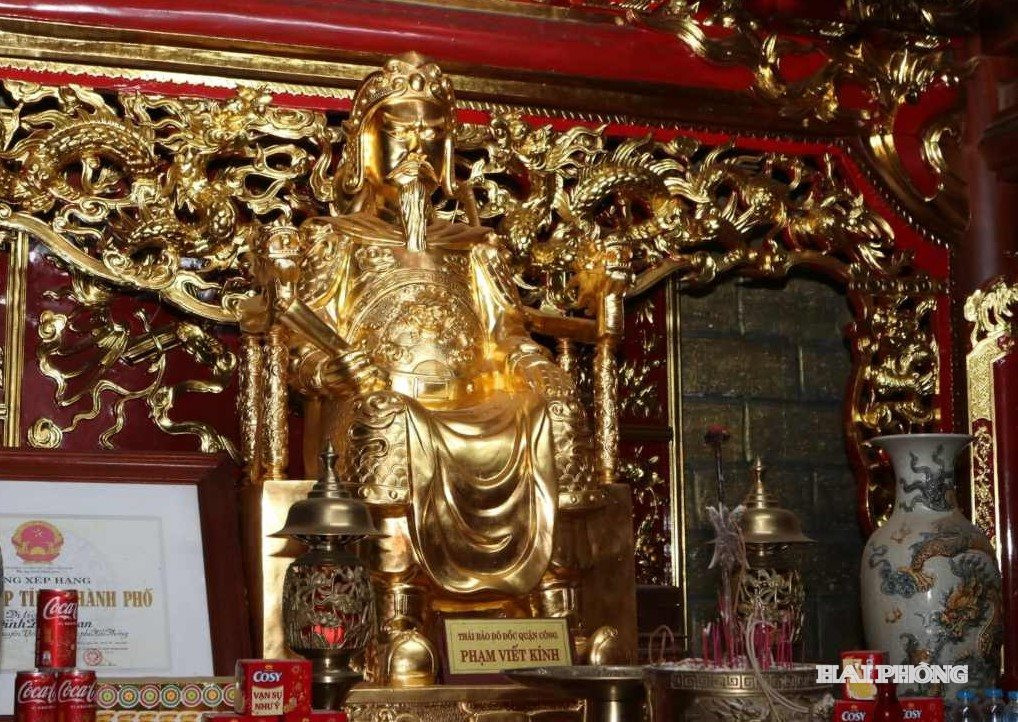
The structure is built in traditional architectural style, using ironwood, green stone, and laterite as its main materials. The carvings and decorative motifs on its architectural components reflect strong traditional artistic values. Dong Quan Communal House still preserves a number of relics and antiques, including stone steles, column bases, chests for royal decrees, and notably seven royal edicts.
The communal house also serves as a sacred cultural space for the local community to organize traditional festivals. Every year, villagers hold several ceremonies here, including the Ky An festival (from the 10th to the 12th day of the first lunar month), the death anniversary of the tutelary deity Pham Viet Kinh (16th day of the fifth lunar month), the death anniversary of his consort (15th day of the sixth lunar month), and the Ky Phuc ceremony (10th day of the eleventh lunar month). Among these, the Ky An festival is considered the main traditional festival of the communal house.
During the festival, in addition to preserving traditional rituals such as palanquin processions and ceremonial offerings, folk games like cockfighting, human chess, to swinging, blindfolded duck catching, and pot smashing are still maintained and promoted by local residents.
These folk games create a joyful atmosphere, recreate traditional cultural spaces, strengthen community bonds, and nurture pride and appreciation for the heritage passed down by previous generations.
Within the grounds, to the left of the communal house, stands Dong Quan Pagoda, which was recognized as a national architectural and artistic relic in 1992, forming a unique complex of religious and spiritual heritage in the locality.
On December 14, 2021, the Hai Phong People’s Committee issued Decision No. 3640, officially recognizing Dong Quan Communal House as a city-level historical relic.
Hai Phong News