
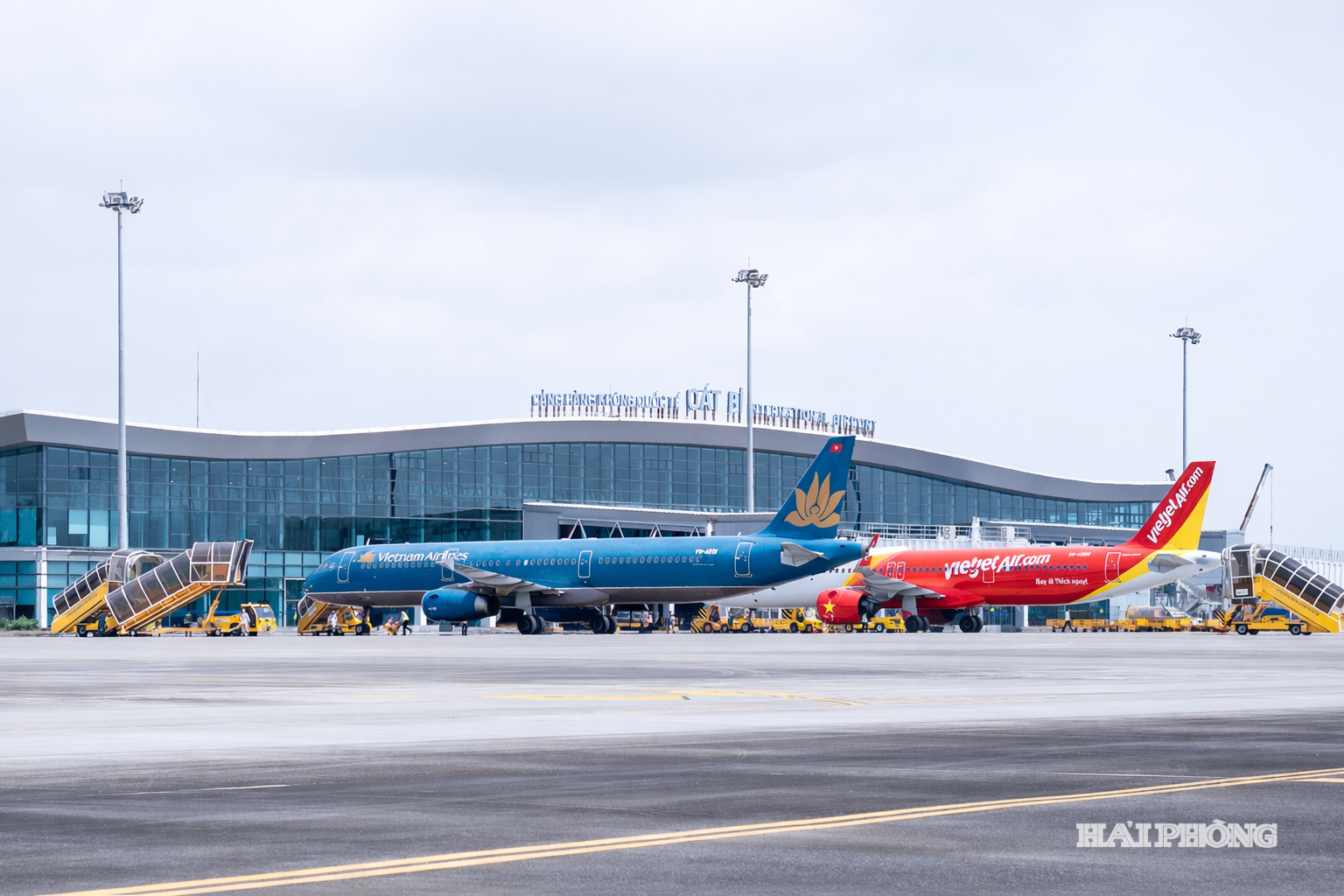
Cat Bi International Airport shapes role as ‘a rising aviation gateway’
Cat Bi International Airport is entering an accelerated investment phase with a series of large-scale projects.
Infrastructure leads the way for investment.
In the last days of March, construction sites at Terminal T2, the cargo terminal, and the aircraft parking expansion area at Cat Bi International Airport buzzed with urgent activities. Hundreds of engineers and workers have taken advantage of favorable weather to speed up progress on various items. Implementing multiple projects simultaneously demonstrates the city's determination to stay ahead in aviation infrastructure. Amid the city's sustained high economic growth, demand for travel, trade, and air cargo transport is rising rapidly, requiring the airport's capacity to match as soon as possible.
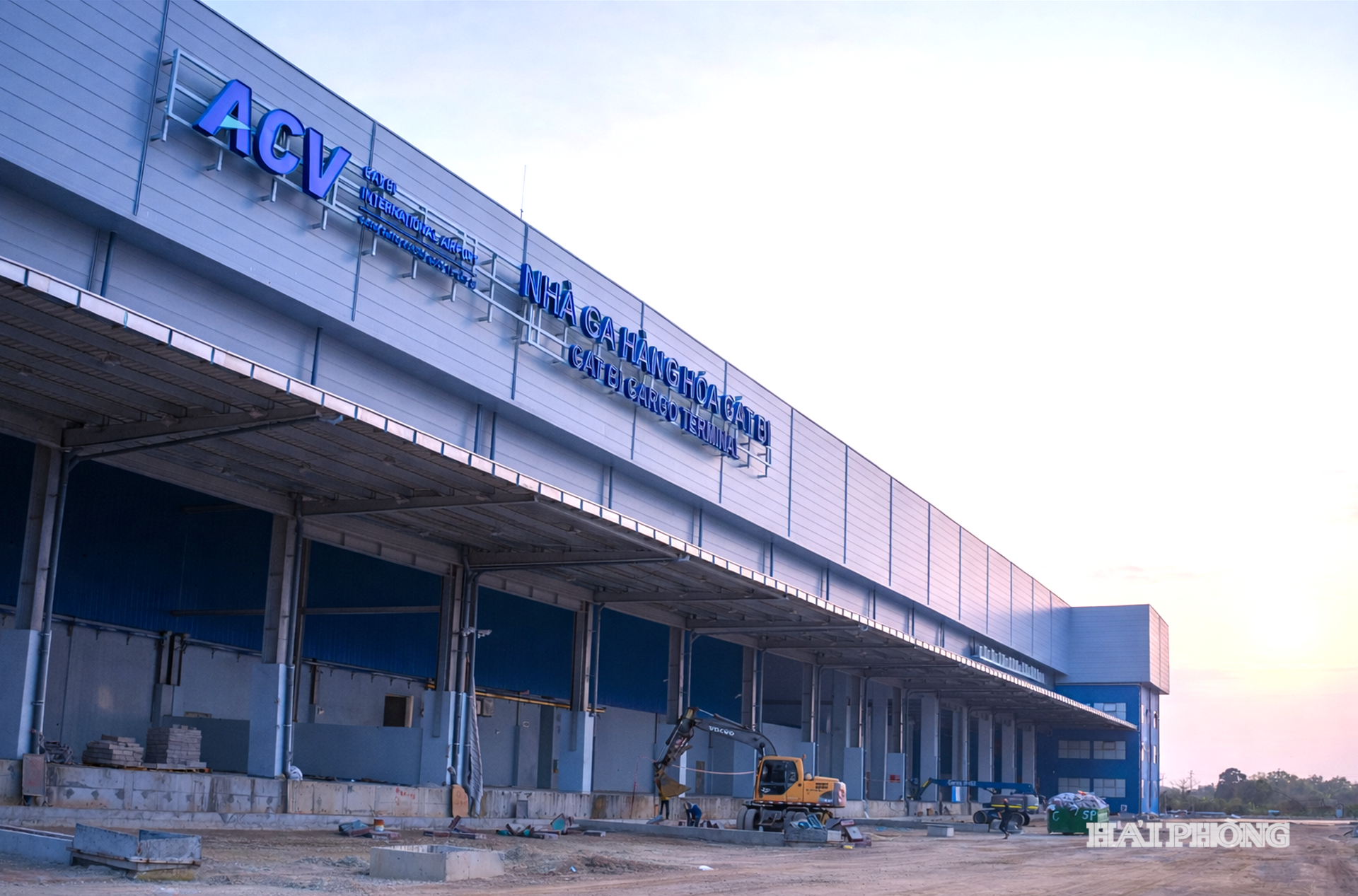
Currently, three key projects at Cat Bi, construction of r Terminal T2, aircraft parking expansion, and cargo terminal construction are being carried out synchronously. The Terminal T2, started in August 2025, has completed its foundation; the superstructure and main structure are expected to finish by May. Once operational, it will ease the load on the existing terminal and boost passenger service capacity.
According to Hai Phong city's master plan for 2021-2030, with a vision to 2050, Cat Bi International Airport will increase capacity to about 13 million passengers and 250,000 tons of cargo annually by 2030; by 2050, reaching about 18 million passengers and 500,000 tons of cargo. This includes expanding the airport area to over 490 hectares, building a second runway, increasing parking positions to about 40, and completing a synchronized technical infrastructure system.
Expanding growth space
Thanks to direct connections with the expressway system, seaports, railways, and waterways, Cat Bi International Airport has favorable conditions to develop into a regional passenger and cargo transshipment hub.
Once projects finish, the airport will evolve beyond transport into an ‘airport city’ model, integrating commerce, services, and logistics - a common trend at major global aviation hubs.
Beyond tourism, logistics will benefit directly. As Northern Vietnam's major seaport hub, Hai Phong combined effectively with air transport will form a complete multimodal logistics chain. High-value goods like electronics, pharmaceuticals, and perishables will gain options, enhancing business competitiveness.
Hai Phong News