
Strengthening green transport transition
Hai Phong is gradually affirming its leading role through a new direction: shifting to a green, sustainable, and environmentally friendly transport model.
Foundation of modern economy
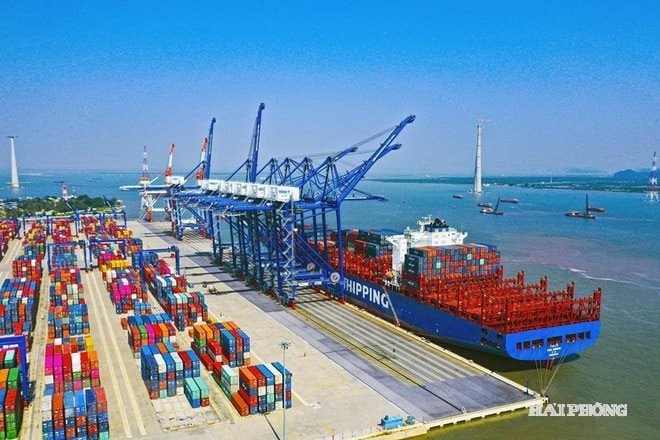
For the 2026-2030 period, Hai Phong identifies green transformation as one of key tasks for the entire political system. The goal is to build the city into a modern, smart industrial and seaport center, positioning seaports as a pillar but based on high technology and environmental protection. The city also aims to meet stringent ‘carbon credit’ standards to achieve true green transformation.
Accordingly, Hai Phong not only targets cargo throughput growth but also orients toward reducing road transport's share, while boosting inland waterway and rail transport, which are modes with emissions 3-5 times lower per ton of cargo. Establishing next-generation logistics centers at Nam Do Son and Lach Huyen is seen as a strategic step to realize this goal.
In practice, green transformation is no longer just on paper but is evident in projects by leading enterprises like Macstar Group and Vietnam Maritime Corporation (VIMC). Notably, Macstar Group operates a coastal container route connecting Hai Phong - Nghi Son. Shifting from road to waterway significantly eases pressure on National Highway 10 and delivers clear environmental benefits. One coastal container voyage carries the equivalent of 80-135 tractor-trailers; over about 200 km, each trip cuts 15-20 tons of CO2. Businesses also save 15-30% on logistics costs and reduce traffic accident risks by up to 90%.
Logistics experts note that emission reductions has only environmental significance but also direct competitive advantages. As the Carbon Border Adjustment Mechanism (CBAM) is widely applied from 2026, exported goods using ‘green transport streams’ can save substantially on carbon taxes.
Ensuring smooth ‘Green transport flows”
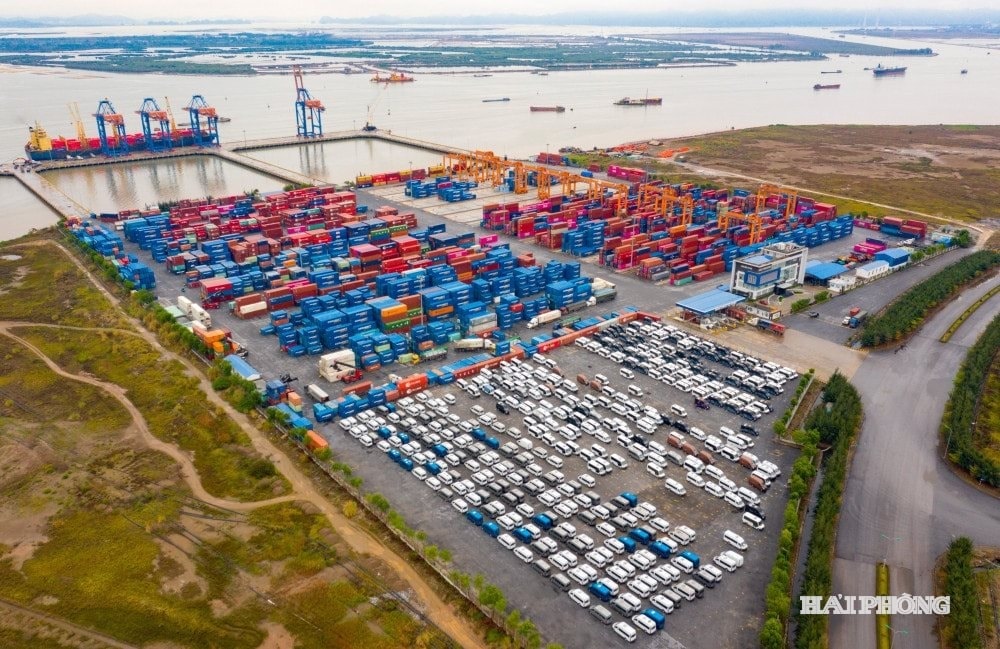
Despite great potential, green transport in Hai Phong still faces many barriers. One key bottleneck is inland waterway infrastructure, such as the An Thai Bridge with low clearance, hindering large container barges during high-water seasons.
Faced with this reality, the city has taken decisive steps in management decentralization. From September 2025, Hai Phong was granted authority over the national inland waterway system, enabling proactive dredging of channels, bridge upgrades, and infrastructure completion for 3,000-ton barges to operate smoothly. The city is also studying policies to waive or reduce seaport infrastructure fees for inland waterway cargo to encourage businesses to switch to low-emission modes.
By 2030, Hai Phong aims to raise the inland waterway transport share above 15%, while accelerating infrastructure projects like the direct rail line to Lach Huyen port. Expanding green transport networks is not just a trend but an inevitable path for the city to maintain its leading economic role. With government and business collaboration, Hai Phong's ‘green transport’ on seas and rivers are expected to flow ever more smoothly and sustainably.
Hai Phong News