
Addressing the challenge of high-quality logistics workforce in Hai Phong
Hai Phong is facing a significant demand for high-quality logistics personnel.

Growing demand for quality
In recent years, Hai Phong’s transport and port infrastructure has experienced rapid development. The presence of deep-water terminals in Lach Huyen, along with modern industrial parks such as VSIP, DEEP C, and Trang Due, has turned the city into a “magnet” attracting multinational corporations.
This fast economic growth is placing significant pressure on the quality of human resources, especially in the logistics sector. According to industry studies and statistics, the city currently has nearly 250 enterprises operating in logistics, employing about 175,000 workers. However, the current workforce has not kept pace with the sector’s growth.
According to forecasts from the Vietnam Logistics Business Association, by 2030 the logistics sector in Vietnam could face a shortage of up to 2 million workers. Meanwhile, high-quality logistics personnel in Hai Phong currently meet only 40–45% of enterprises’ demand.
Reality at major “gateways” shows that requirements for human resources are changing fundamentally. At Tan Vu Port Branch (Hai Phong Port)—a key container-handling hub in northern Vietnam—the deployment of Smart Gate systemsand the modernization of IT infrastructure require dispatchers and technical workers to master Terminal Operating System (TOS) software in real time.
Similarly, at Lach Huyen International Port (TC-HICT)—which receives ultra-large transoceanic container ships—there is strong demand for personnel capable of operating automated yard cranes, coordinating supply chains using AI, and understanding international regulations.
The shortage of high-quality logistics labor is also a common challenge for businesses across the supply chain. Mr. Do Huy Hoang, Director of AOE Logistics Company, said that to meet business expansion needs, the company regularly recruits and receives many job applications each year. However, it remains difficult to find personnel who can immediately work with European partners or operate complex Warehouse Management Systems (WMS) without extensive retraining.
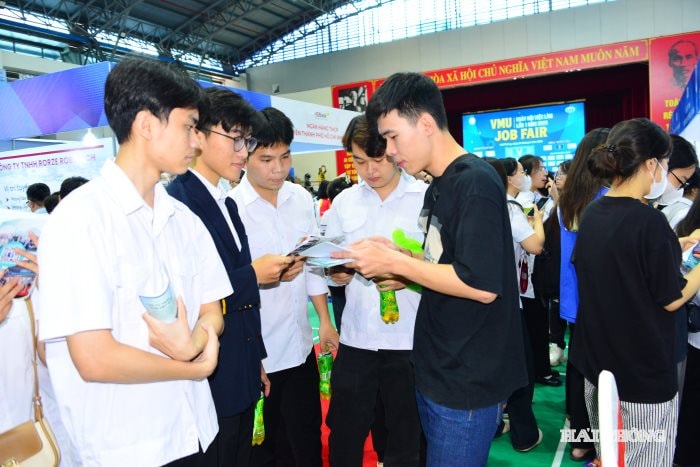
Hai Phong has become an important link in the global supply chain as new-generation free trade agreements (FTAs) enter their most intensive stage of implementation. According to the Hai Phong Logistics Association, to meet workforce demand, businesses should directly “order” practical, job-ready skills from training institutions instead of waiting to recruit graduates afterward. At present, logistics personnel in Hai Phong are expected to combine three essential elements: strong professional expertise, specialized foreign language proficiency, and a mindset oriented toward sustainable development.
Innovation to meet development demands
Recognizing that training is the foundation, the Vietnam Maritime University has undergone a strong transformation in recent years. Rather than focusing solely on theoretical instruction, the university has promoted a “University–Enterprise” partnership model.
Students are able to practice at the Mekong–Japan Logistics Training Center, where they can access simulations of modern seaport operations at an international level. Associate Professor Dr. Pham Xuan Duong, the university’s president, stated that the program aims to provide the market with “three-in-one” logistics professionals: those with strong technical expertise, good foreign language skills, and the ability to master digital technologies. Training programs are designed to closely reflect real operations at ports such as Tan Vu and Lach Huyen, enabling graduates to quickly adapt to work.
Proactive engagement from businesses is also a crucial factor in solving the workforce challenge. Several major companies in Hai Phong, such as Gemadept and Saigon Newport Corporation, have launched scholarship funds and signed agreements to accept students for paid internships.
In particular, as green logistics becomes a mandatory requirement for exporting to demanding markets, businesses in Hai Phong are increasingly focusing on internal training in sustainable management. Optimizing cargo flows to reduce emissions and using renewable energy at seaports require workers to adopt innovative and forward-looking thinking.
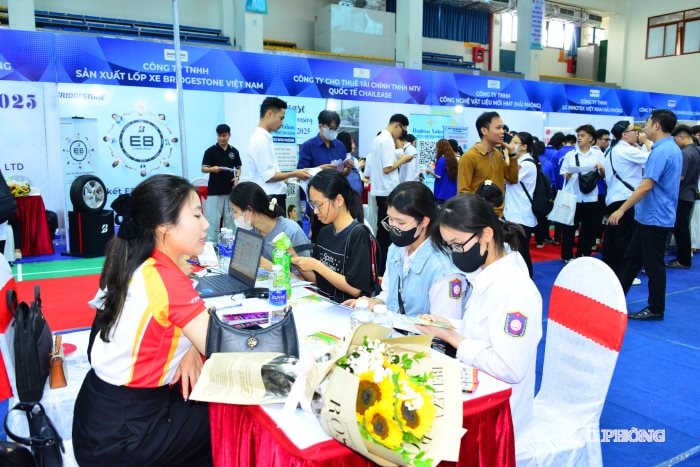
To strengthen connections and promote the matching of labor supply and demand in the logistics sector, on March 21, 2026, the Vietnam Logistics Human Resources Development Association will organize Valoma Job Fair 2026 – Logfair under the theme “Connecting Talent – Leading the Future.”
The event will be held simultaneously in five major localities: Ho Chi Minh City, Hanoi, Da Nang, Hai Phong, and Dak Lak Province. This nationwide activity aims to strengthen effective connections between businesses, universities, and students, contributing to the development of high-quality logistics human resources for Vietnam in the context of deeper international economic integration.
Within the framework of the event, a variety of professional activities will take place, including recruitment booths and exhibitions by logistics companies, on-site job interviews, seminars and specialized workshops on industry trends, as well as career counseling and professional skills training programs for students.
Through these activities, businesses will have opportunities to promote their employer brands and directly access a young and high-quality workforce. Training institutions can strengthen the connection between academic programs and real-world practice, while students will gain better access to job opportunities, internships, and clearer career orientation.
The strong growth of the logistics sector is opening many opportunities for Hai Phong to become a leading logistics hub in the region. However, to realize this goal, the city must effectively address the challenge of developing a high-quality workforce.
Strengthening cooperation between businesses and training institutions, innovating education programs to better align with industry practices, and receiving policy support from local authorities will be crucial factors in building a capable logistics workforce, thereby promoting the sustainable development of Hai Phong’s logistics sector in the coming period.
Thu Hang