
Enhancing workforce of the “smokeless industry” in Hai Phong
With a target of welcoming more than 16 million visitors in 2026, Hai Phong is having a golden opportunity to affirm its position as an international tourism hub.
Growth pressures
Entering 2026, tourism in Hai Phong is undergoing strong transformation after the Yen Tu – Vinh Nghiem – Con Son, Kiep Bac complex of historical sites and scenic landscapes was officially recognized by UNESCO as a World Heritage site, together with the Ha Long Bay – Cat Ba Archipelago world natural heritage site. The city’s tourism infrastructure is also entering a phase of synchronized development with the stable operation of several international-standard resort complexes in Vu Yen Island, Dragon Hill (Do Son) and Cat Ba Island.
According to surveys conducted by travel companies and accommodation providers, after the disruptions caused by the pandemic, many skilled tourism workers moved to other industries. Although training institutions in the city continue to graduate thousands of students each year, the practical skills of new graduates still fall short of the requirements of hotels and accommodation facilities.
Currently, the city already has 10 five-star hotels and many newly operational high-end tourism villas, creating a strong demand for high-quality human resources. In particular, the tourism sector needs workers who are not only proficient in foreign languages but also knowledgeable about digital technologies to meet the operational demands of smart tourism models.
The presence of leading global hotel management brands in Hai Phong such as Pullman, Sheraton and Wyndham has also set higher standards for service quality.
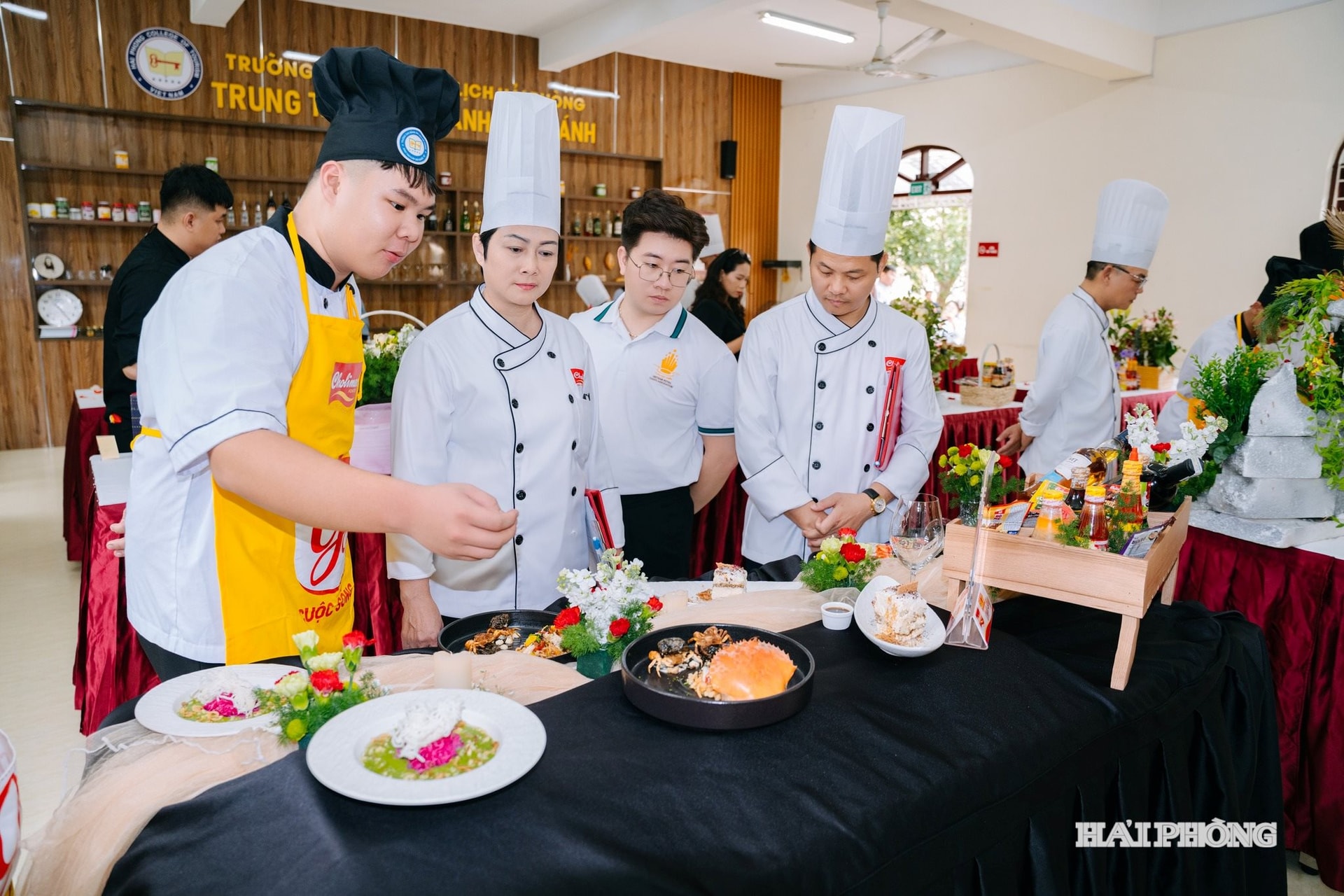
Many travel companies have also expressed their expectation that training institutions place greater emphasis on specialized skills such as event management, MICE tourism (meetings, incentives, conferences and exhibitions), and service skills for international visitors from emerging markets such as India and the Middle East.
According to experts, the tourism development strategy of Hai Phong for 2026–2031 demands a major shift in training. Ms. Nguyen Thi Ha, Director of Hai Ha International Tourism and Media Joint Stock Company, noted: "Hai Phong is aiming to become a livable city of Southeast Asian. Therefore, the workforce must be standardized according to ASEAN tourism professional standards. In particular, with the orientation of ‘365-day tourism,’ personnel need diverse knowledge ranging from marine tourism to spiritual tourism and the night-time economy.”
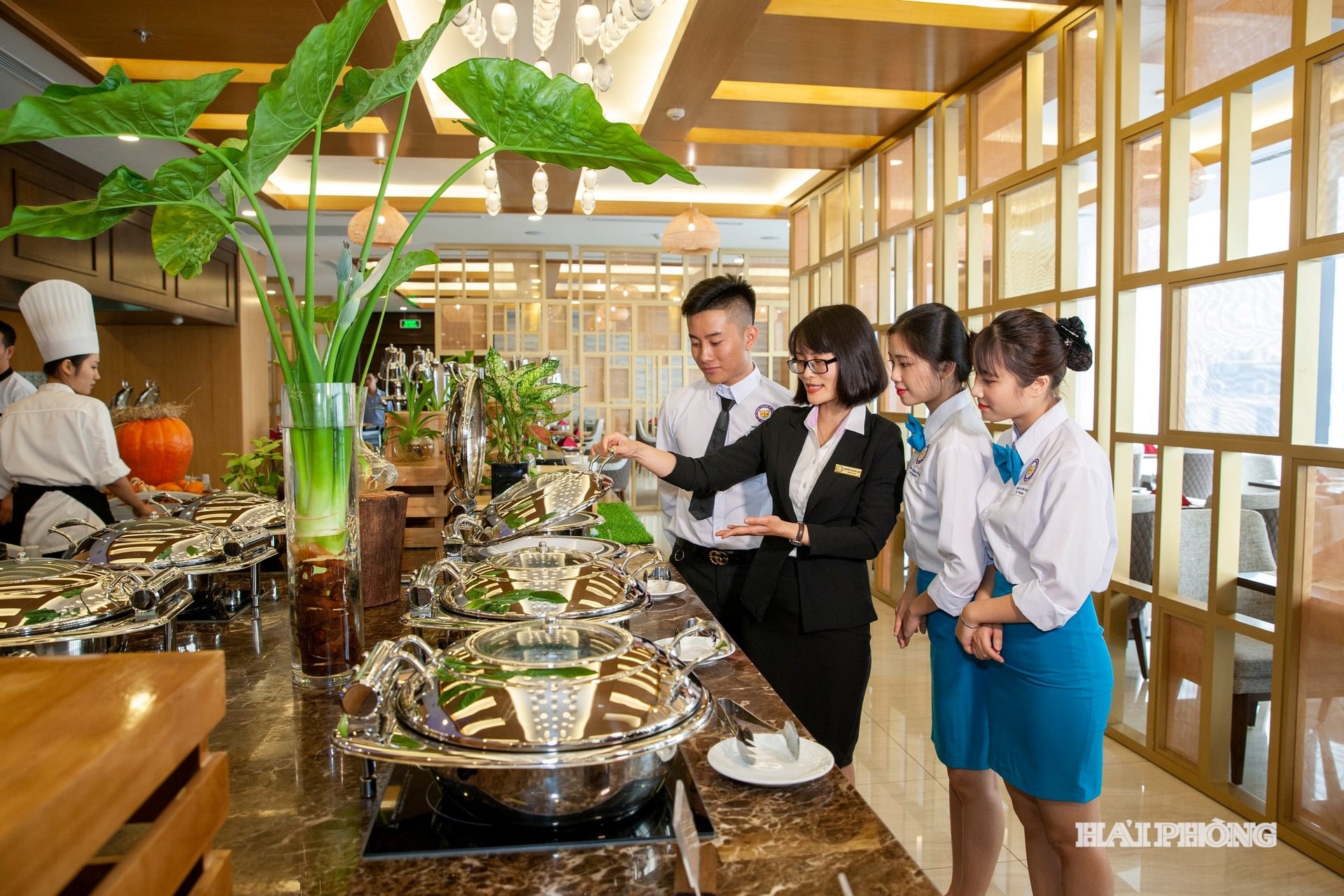
Leaders of the Hai Phong Tourism College said the school has proactively adjusted its curriculum toward a “dual training” model, allocating more than 70% of the program to practical training at major partner corporations such as Sun Group and Vingroup. This is considered the most effective way for students to gain real-world experience and reduce retraining time for businesses.
Development aligned with the city’s strategy
To achieve the target of welcoming more than 16 million visitors and moving toward 25 million visitors by 2030, Hai Phong is focusing on four key human resource development solutions, particularly training programs linked with major projects and new tourism products.
The city prioritizes workforce development for rapidly growing segments such as golf tourism, yacht tourism, and night-time economy services. Students are provided with opportunities to study and practice directly at modern tourism infrastructure in Vu Yen Island and Do Son so that training skills closely match real working conditions.
Training institutions such as Hai Phong Tourism College are also strengthening strategic cooperation agreements with major corporations including Sun Group, Vingroup, Flamingo Group and Accor, along with luxury cruise operators on Lan Ha Bay, Tuan Chau and Ha Long Bay. Under these partnerships, businesses directly participate in developing training programs, assign department managers to teach courses, and accept students for internships from their first year, helping them adapt early to professional environments.
Ms. Mai Thi Hue, Vice Principal of Hai Phong Tourism College, said that with the push for “green tourism” and “digital tourism,” the city aims that by 2026, 100% of tourist sites will no longer use single-use plastics. As a result, current training programs have integrated knowledge on environmental protection and sustainable tourism development, while digital skills, AI applications and hotel management software are being introduced to both direct and indirect tourism workers.
Beyond domestic training, Hai Phong is expanding cooperation with provinces in the Red River Delta and international partners to exchange students and lecturers. The transfer and adoption of international curricula will help the city’s tourism workforce confidently welcome high-quality international visitors.
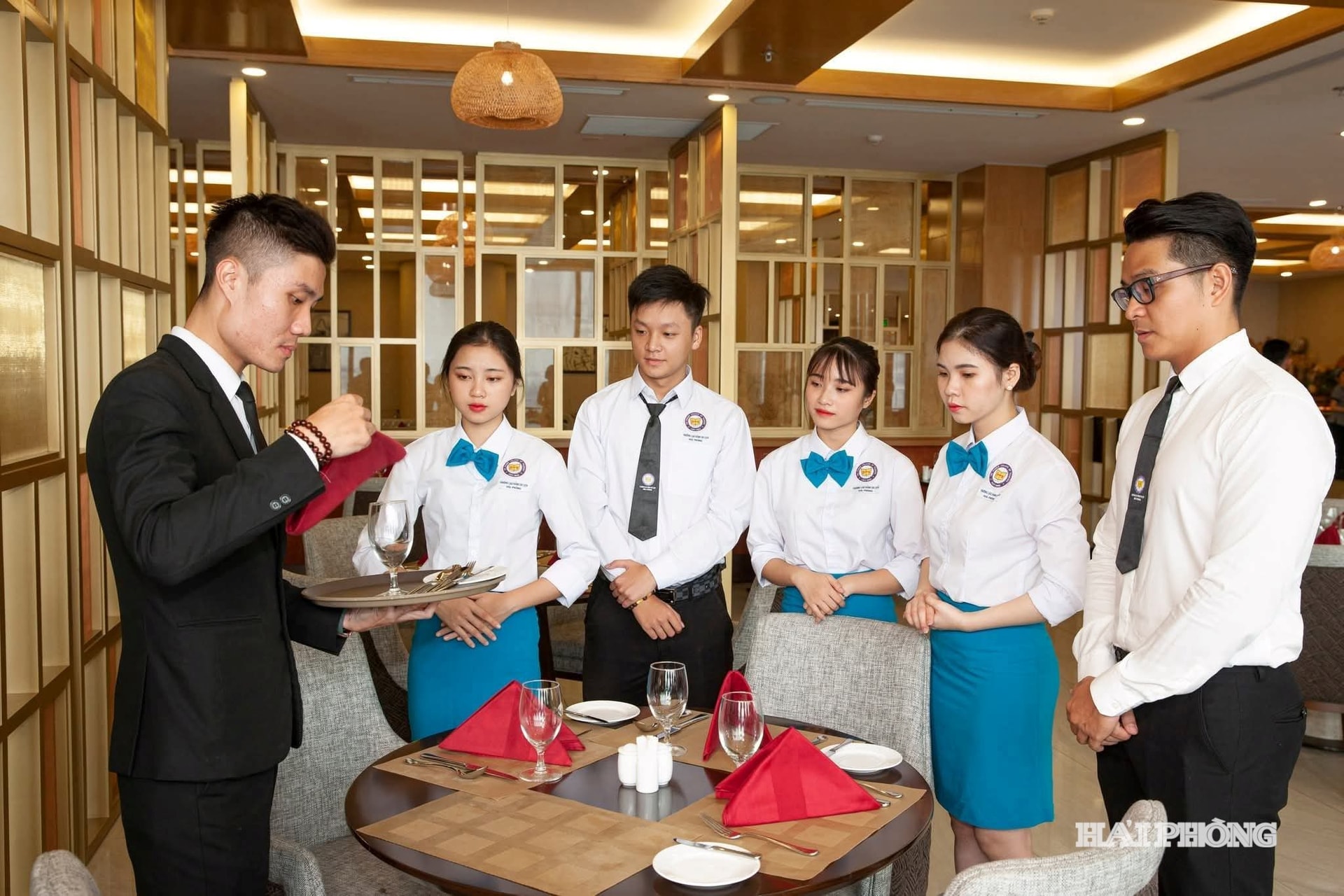
The city has approved a plan to allocate more than VND 4.5 billion from the 2026 budget to support training and human resource development for small and medium-sized enterprises (SMEs) operating in the area. The program also covers businesses involved in tourism, start-ups and corporate management, with a total of 119 training courses scheduled to be organized during the year.
These training programs aim to improve service quality across the entire city, from high-end hotels to homestay models in rural, coastal and island areas.
Investment in human resources forms the foundation for the sustainable development of tourism in Hai Phong in the future. With well-planned steps and close coordination among local authorities, training institutions and the business community, the city’s tourism workforce will not only improve its professional capacity but also become dedicated and professional ambassadors of local culture. Through these efforts, Hai Phong is gradually affirming its position as a “Friendly – Attractive – Dynamic – Integrated” destination on the global tourism map.
Thu Hang