

Further shaping the digital health landscape to better serve the public
More than 34 million electronic health records have been integrated into VNeID, and 1,210 hospitals have deployed electronic medical records. These advances are gradually shaping the landscape of digital healthcare and unlocking numerous benefits for citizens in 2026.

The year 2025 is considered a pivotal year for digital transformation in healthcare, as the Ministry of Health submitted to the Government the promulgation of Decree No. 102/2025 dated May 13, 2025, on the management of medical data, and issued Circular No. 13/2025 guiding the implementation of electronic medical records.
At the same time, the Ministry established a Steering Committee on breakthroughs in science and technology development, innovation, and digital transformation in healthcare, and implemented Plan No. 02 dated June 19, 2025.
Mr. Nguyen Le Phuc, Deputy Director of the Department of Science, Technology and Training under the Ministry of Health, said that in terms of data development, 12 specialized databases have been upgraded, refined, and basically connected to the national integrated database. These databases cover maternal and child health, child management, medical examination and treatment, food safety, the national immunization program, social assistance, HIV/AIDS prevention, persons with disabilities, healthcare facility environments, and health workforce management, among others. The Ministry of Health reported that these databases have been completed in line with criteria set by the Ministry of Public Security, connected with C06, and are awaiting data cleansing.
The application of information technology across the healthcare system has been accelerated. Approximately 1,210 out of 1,650 public and private hospitals have announced the implementation of electronic medical records. As of the end of January 2026, more than 34 million electronic health records integrated into the VNeID application have been created, updated, and utilized nationwide. The electronic health record enables citizens to conveniently track their medical history and health status.
Health insurance-covered medical examinations and treatment using chip-based citizen ID cards and the VNeID application have been implemented at 100% of medical examination and treatment facilities nationwide. The health insurance assessment system maintains connectivity with 99.5% of healthcare facilities. All hospitals have deployed hospital information systems, and 100% of healthcare facilities and medical training institutions under the Ministry of Health have implemented cashless payment methods.
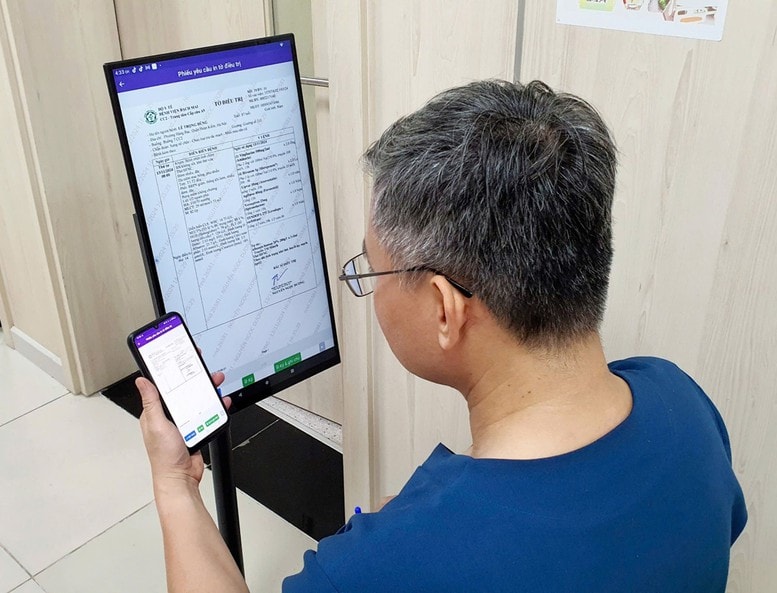
100% of the Ministry of Health’s dossiers are now processed in an electronic environment, and 100% of leaders at department and agency level and above have been issued digital signatures. The Ministry has also completed an electronic data management repository to support the settlement of administrative procedures.
On the National Data Exchange Platform, the Ministry has established all 4 out of 4 connected service systems, including synchronization of civil servant and public employee data, citizen authentication and COVID-19 vaccination data, public postal service integration, and enterprise information lookup. Decision No. 4048 dated December 31, 2025, was issued to deploy two shared platforms: a telemedicine consultation support platform and an electronic health record platform.
The Ministry has also proposed integrating and sharing additional datasets on VNeID, including birth certificates, driver health certificates, pharmacy identification data, prescriptions, vaccination records, data on medical practitioners and healthcare facilities, and maternal and child health monitoring books. Standardizing and interconnecting data helps reduce time and costs, minimizes the need for citizens to resubmit existing documents already available in the system, and supports big data analysis for policymaking.
According to Mr. Nguyen Le Phuc, Deputy Director of the Department of Science, Technology and Training, the synchronized nationwide implementation of electronic medical records has been identified as a key task for 2026. Once completed, patients will no longer need to store paper documents, worry about losing test results, and will be able to monitor health indicators, medical history, drug allergies, and manage their health information throughout their lifetime. Timely sharing of clinical data among healthcare facilities will enhance cost transparency, reduce overuse of tests and medications, and improve the effectiveness of health insurance management.
However, the digital transformation process still faces many challenges. Some leaders of medical examination and treatment facilities have not been sufficiently proactive; funding and IT human resources remain limited, especially in financially autonomous public hospitals in Groups 3 and 4. Procedures for project preparation, appraisal, approval, and procurement of IT projects in many localities remain cumbersome. Nationwide, there are more than 18 electronic medical record software providers, but their capacity to meet implementation needs is uneven. The ability of healthcare workers and patients to use software systems also requires time for training and adaptation.
The Deputy Director affirmed that despite these challenges, the achievements in 2025 demonstrate that the legal framework and technical foundation for digital transformation in healthcare have largely been established. Entering 2026, the health sector will continue reviewing and refining regulations while accelerating the rollout of electronic medical records, aiming toward comprehensive healthcare for the population in the context of national digital transformation.
Hai Phong News