
Vietnam’s Kitchen Gods Ceremony: A timeless cultural tradition
The 23rd day of December according to the lunar calendar has long been deeply embedded in the cultural and spiritual life of the Vietnamese people.
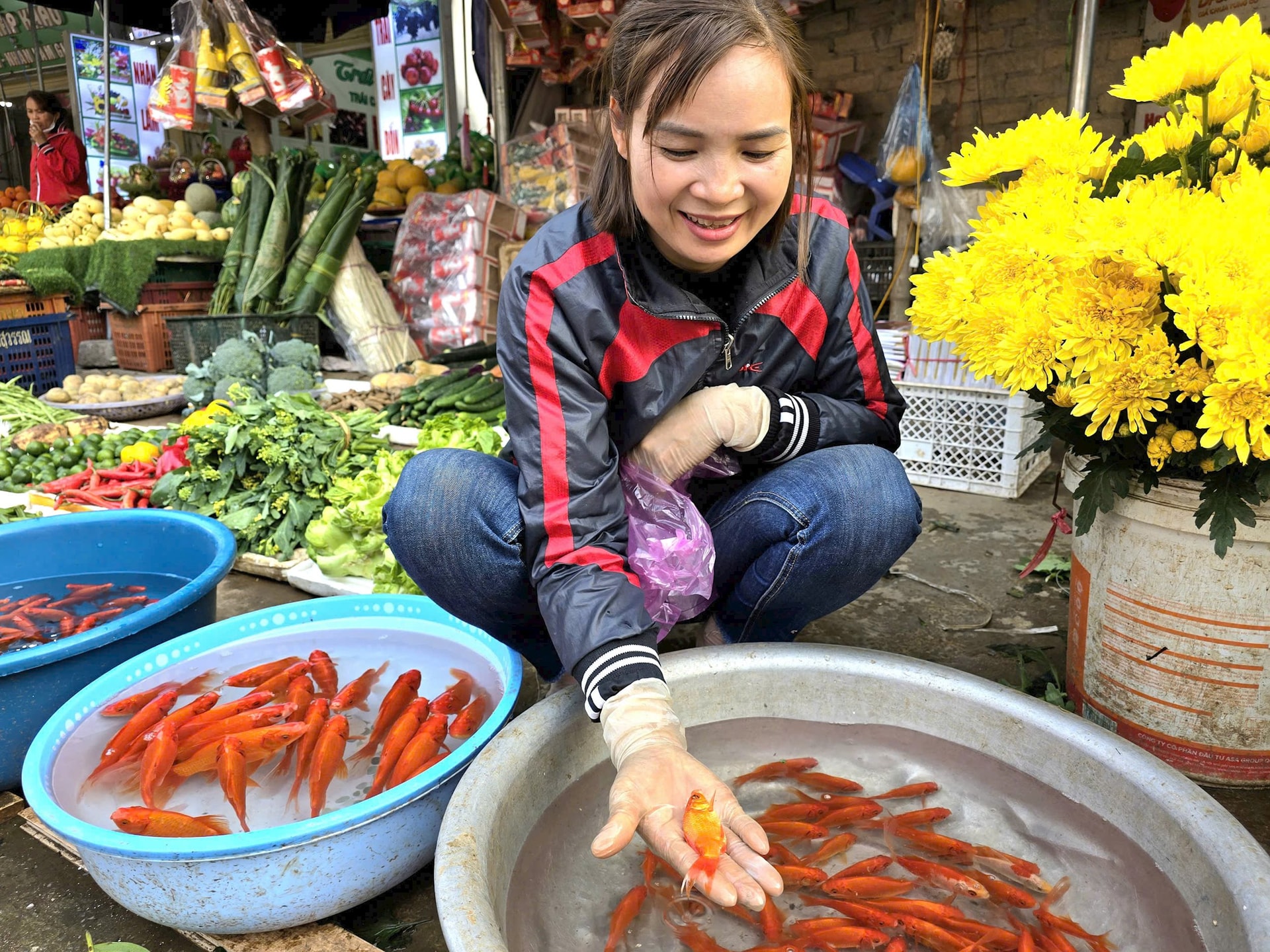
On this day, families perform rituals to bid farewell to the Kitchen Gods (Ong Cong – Ong Tao) as they return to Heaven to report to the Jade Emperor on events that have taken place throughout the year. The occasion also signals the official start of the Lunar New Year festive season.
Legend has it that the Kitchen Gods consist of three deities, two male and one female, who oversee household kitchens, safeguard family order, and record the merits and shortcomings of each household. As a result, the kitchen is regarded not only as a place for cooking but also as a symbol of warmth, unity, and happiness in Vietnamese families.
Beyond a spiritual ritual, the Kitchen Gods ceremony embodies profound humanistic values. Through the ceremony, families express wishes for a peace and prosperity in the new year. In traditional belief, carp serve as the vehicle that carries the Kitchen Gods to Heaven. Therefore, releasing live carp symbolizes farewell wishes, hopes for good fortune. In many localities, the ritual signals the approach of the Lunar New Year.
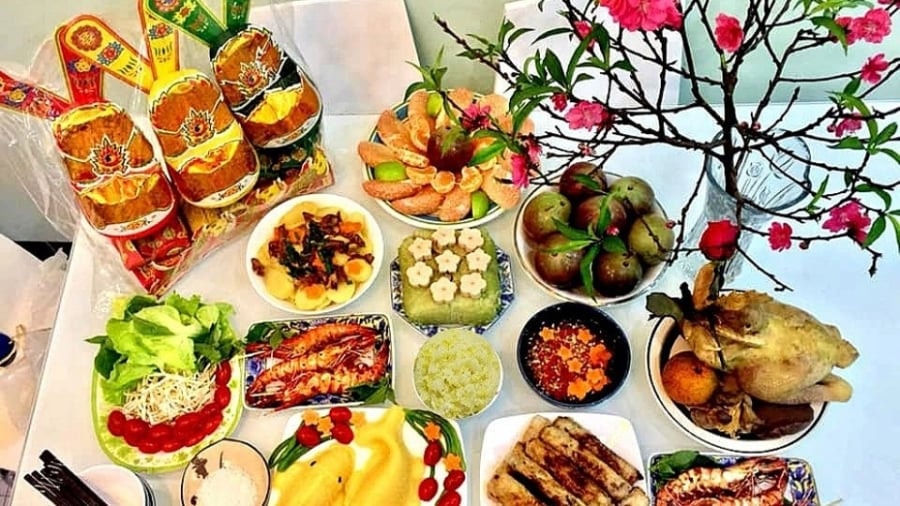
Traditionally, the ceremony is held on the 23rd of December according to the lunar calendar, although busy households may hold the ceremony earlier, on the 21st or 22nd. Many families choose auspicious hours such as the hours of Mao (5–7 a.m.), Thin (7–9 a.m.), Ty (9–11 a.m.), or Ngo (11 a.m.–1 p.m.), with the hours of Ty and Ngo often considered the most favorable and sacred, in line with the belief that the Kitchen Gods begin their journey to Heaven at these times.
Offerings vary by region but typically include incense, flowers, water, betel leaves and areca nuts, vegetarian or meat-based dishes, live carp, as well as votive paper items for the Kitchen Gods. Cultural experts emphasize that sincerity is the most important, rather than the offerings.
Before the ceremony, households usually tidy up their kitchens as a sign of respect for the kitchen gods. The occasion also marks the beginning of year-end house cleaning in preparation for the Lunar New Year.
In recent years, alongside maintaining traditional customs, many communities and households have placed greater emphasis on environmental responsibility during the ritual. Carp are gently released at designated locations, while people are encouraged to avoid discarding plastic bags or other waste into rivers and lakes in an effort of protecting the environment.
Despite the pace of modern life, the Kitchen Gods ceremony continues to preserve its core values, ushering in a warm and festive Lunar New Year season.
Hai Phong News