
Hai Phong – An attractive destination for FDI flows
A high-quality workforce, a well-developed transport network, and seamless connectivity between industrial parks and clusters and a modern seaport system are key factors making Hai Phong an attractive destination for FDI inflows.
Hai Phong as a Convergence Point
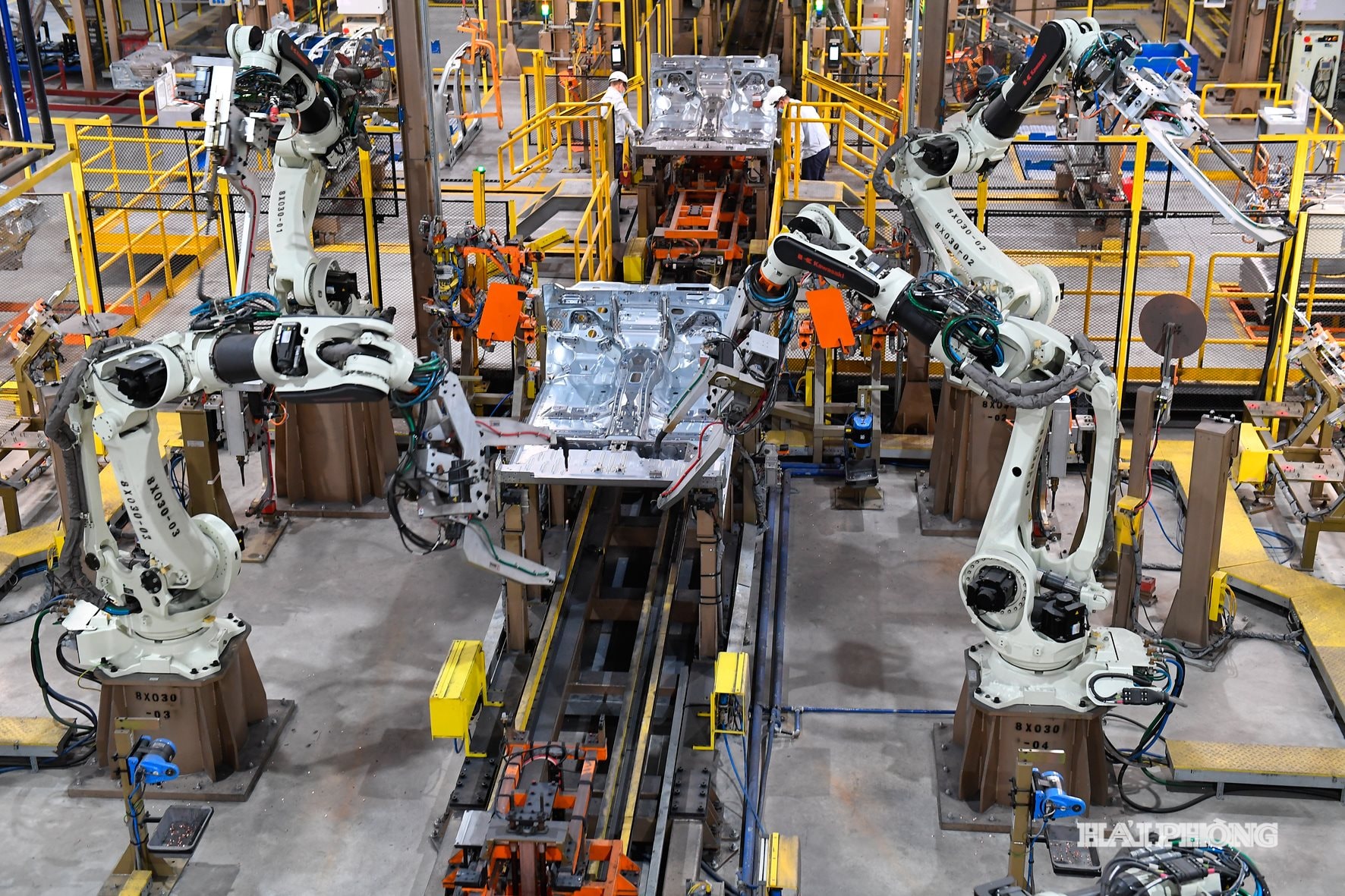
In 1995, shortly after Viet Nam and the United States officially normalized diplomatic relations, Ford Motor became one of the pioneering U.S. companies to invest in Viet Nam. In the same year, the Ford Viet Nam joint venture laid the first foundations for its automobile assembly plant. The Ford Hai Duong production line officially came into operation in early Q4 of 1997.
Also in 1995, LG made its first move into Viet Nam through a joint venture producing audiovisual equipment in Hung Yen Province, followed by home appliance manufacturing in Hai Phong in 1997.
Since 2015, LG has invested in building and consolidating these facilities into a large-scale high-tech complex in Hai Phong, transforming the city into a strategic manufacturing hub for the entire region.
LG Group currently operates three major subsidiaries—LG Display, LG Electronics, and LG Innotek—at Trang Due Industrial Park. These companies not only occupy 25% of the park’s total area but also provide employment for nearly 27,000 workers. LG alone contributes up to 88% of Trang Due Industrial Park’s total revenue and accounts for 65% of its cumulative investment capital. LG’s total investment in Hai Phong has exceeded USD 10.65 billion.
In July 2012, Japan’s Bridgestone Group broke ground on the Bridgestone Viet Nam Tire Manufacturing Plant at Dinh Vu Industrial Park. At that time, this was the largest foreign direct investment project in Hai Phong, with a total investment of USD 575 million. One year later, Bridgestone increased its investment to more than USD 1.2 billion following the commencement of Phase 1.
This billion-dollar project by Bridgestone—one of the world’s leading tire and rubber manufacturers—marked the beginning of the second wave of Japanese investment in Viet Nam in general and Hai Phong in particular. While the first wave, following Viet Nam’s economic opening, primarily targeted the domestic consumer market, the second wave from 2012 to 2014 was driven by major corporations with a clear orientation toward global markets.
From these large-scale projects, it is evident that FDI inflows into Hai Phong have gradually shifted from extensive growth to intensive development, marked by a notable increase in high-tech, high–value-added projects. These examples represent just three out of the 1,740 valid FDI projects currently operating and “converging” in Hai Phong.
Beyond bringing in substantial capital, these projects have also contributed to technology transfer, enhanced production capacity, and the shaping of the city’s key industrial sectors.
FTZ as a Key Highlight
According to Mr. Ruchik Shah, General Director of Ford Viet Nam, Hai Phong holds a strategic position within the Hanoi–Hai Phong–Quang Ninh economic development triangle. The city integrates all five modes of transport: road, rail, inland waterways, maritime, and air, and is home to the Lach Huyen deep-water port complex, the key import–export gateway of northern Viet Nam.
Hai Phong’s seaport system, particularly the Lach Huyen deep-water port cluster, serves as the import–export gateway for the entire Northern Key Economic Region, creating highly favorable conditions for international trade.
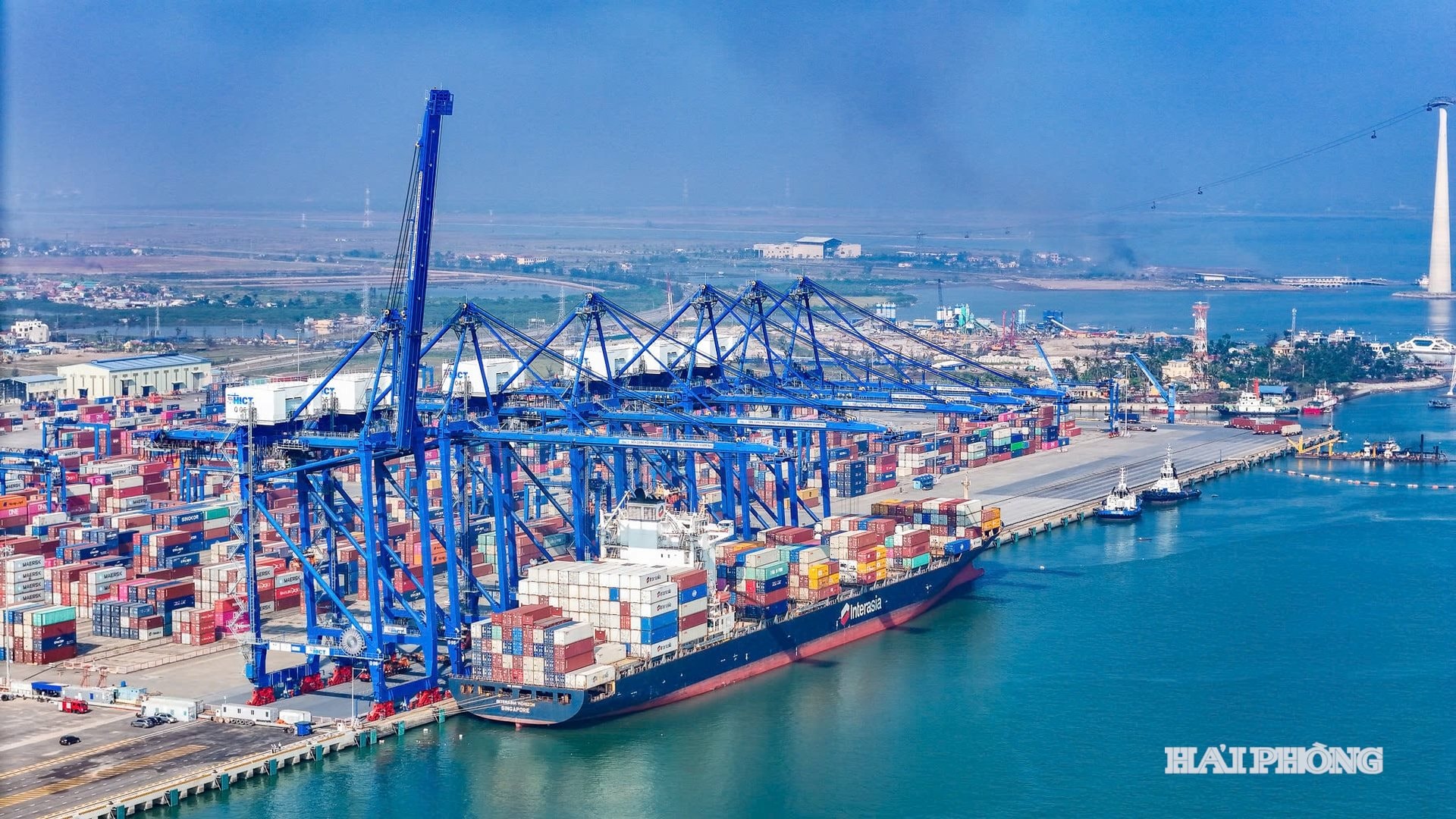
A modern logistics hub, a contemporary seaport system, an integrated transport network, together with a system of 43 industrial parks and 80 industrial clusters, have created Hai Phong’s attractive investment destination on Viet Nam’s FDI map.
Within Hai Phong’s FDI attraction landscape, a new highlight with long-term strategic significance is the establishment of the Hai Phong Free Trade Zone (FTZ) under Decision No. 4068 dated October 13, 2025, issued by the City People’s Committee. The Hai Phong FTZ covers a total area of 6,292 hectares, arranged across three non-contiguous strategic locations, linked to two key economic zones: the Dinh Vu – Cat Hai Economic Zone and the Southern Coastal Hai Phong Economic Zone.
This is the first FTZ model in northern Viet Nam, developed based on international experience combined with Hai Phong’s practical conditions and distinctive advantages. It opens up a new space for FDI attraction with an approach different from traditional industrial parks.
From the perspective of European investors, Mr. Bruno Jaspaert, Chairman of the European Chamber of Commerce in Viet Nam (EuroCham Viet Nam) and CEO of the DEEP C Industrial Parks Complex, noted that if implemented in line with standards harmonized with European Union regulations, the Hai Phong FTZ would become an attractive destination for European investors, who are seeking new production and distribution hubs in Asia.
The core differentiation of the Hai Phong FTZ lies not only in its scale or location, but in the way the model is expected to reshape the investment environment, making it more open and flexible compared to traditional industrial parks. Within the FTZ, investors will not only gain access to production land, but also benefit from new mechanisms related to customs, logistics, trade, finance, and supply chain support services.
Representatives of several FDI enterprises believe that amid the restructuring of global production networks by multinational corporations, the trend toward establishing transshipment, distribution, and product finishing centers is becoming increasingly evident. If operated in line with its intended orientation, the Hai Phong FTZ could meet this demand and become a connection point between manufacturing, logistics, and international trade—rather than merely a location for factories.
However, the FTZ also places higher demands on governance capacity, infrastructure quality, and policy consistency. The attractiveness of an FTZ does not stem from its name, but from the ability to effectively implement preferential mechanisms, streamlined procedures, and seamless coordination among regulatory authorities. This presents a clear requirement for Hai Phong to move toward deeper-quality FDI attraction, aligned with the goal of sustainable development in the coming period.
According to data from the Hai Phong Tax Department, as of the end of 2025, the city had 1,768 valid FDI projects in operation, with total registered capital of USD 50.79 billion. Total profits generated by the FDI sector reached VND 48,263 billion by 2024. In 2025 alone, the sector is expected to contribute approximately VND 16,500 billion to the state budget, of which corporate income tax accounts for VND 8,800 billion. These contributions have helped Hai Phong’s economy continue to affirm its role as one of the country’s leading growth engines, with GRDP growth in 2025 reaching 11.81%, ranking second nationwide and marking the 11th consecutive year of double-digit growth.
Ha Kien